

By
Director of Climate Science & Impact
5 min read


Taking place in Antalya, Türkiye, from 9-20th November 2026, COP31 will bring governments together to advance global climate action – but its implications will extend well beyond national climate policy.
Decisions made at COP influence investment, regulations, and supply chains – meaning that what happens at COP31 impacts your business both directly and indirectly.
Ecologi’s Climate Commitments Report 2026 found that nearly nine in ten (84%) UK businesses are experiencing climate-related impacts, with 70% of these reporting associated losses in turnover exceeding 1% of annual revenue. At the same time, 83% of businesses say measurable progress towards net-zero protects future revenue and business resilience.
COP31 is the biggest climate event of the year, which means that for businesses everywhere who are both experiencing the costs of climate change and discovering the opportunities of climate action, what happens at COP matters.
Here’s the Ecologi team’s analysis of what businesses should be looking out for this year.
What is COP31 and when is it happening?
COP31 is the 31st Conference of the Parties to the UN Framework Convention on Climate Change. It will take place in Antalya, Türkiye, from 9-20th November 2026.
COPs bring governments together to negotiate international climate policy. Governments use the process to set and strengthen national climate commitments, while businesses, investors and other organisations increasingly use COPs to announce initiatives, partnerships and investment.
Who will host COP31?
This year’s conference has a joint presidency, meaning that whilst Türkiye will host the conference, Australia will lead the negotiations. The main figureheads from each country are:
COP31 President: Murat Kurum, the Turkish Minister of Environment, Urbanization and Climate Change.
COP31 President of Negotiations: Chris Bowen, Australia's Minister for Climate Change and Energy.
COP31 will have a particular focus on implementation: rather than making lots of new announcements, it will focus on turning existing climate commitments into practical action.

What are the aims of COP31?
COP31 is being positioned as a COP of implementation: turning existing climate commitments into practical, tangible action. Both Türkiye and Australia have emphasised accelerating delivery of the Paris Agreement rather than simply setting new targets.
The COP31 Action Agenda focuses on areas including clean energy, electrification, green industry, climate finance, resilient cities, food systems, oceans and waste.
For businesses, three priorities stand out:
Accelerating the clean energy transition through electrification, renewable energy, grids and energy storage.
Mobilising climate finance and investment, helping direct capital towards the transition: investing in clean technologies and removing incentives for fossil fuels.
Building resilience, recognising that countries, businesses and communities must prepare for increasing climate impacts.
The broader aim is to turn climate commitments into investment, implementation and measurable results. For businesses, COP31 will therefore provide an important signal of where policy, capital, technology and markets are heading.
Why does COP31 matter for businesses?
The decisions and commitments made at COP31 can influence the cost of doing business and the opportunities available to invest and grow. As just a few examples:
Reducing the cost of energy. If COP31 successfully accelerates the shift away from fossil fuels (by far the most effective lever to addressing climate change) then it will stimulate yet further investment into renewables, grids and battery storage and will help make your business’s energy cheaper, cleaner, more secure and less exposed to volatile fossil fuel prices.
Increasing the cost of carbon-intensive operations. Announcements at COP and stronger national climate policies following it could further increase the costs associated with producing emissions, through carbon pricing, regulation, energy standards and other transition measures.
Making accessing capital easier for sustainable businesses. As governments and financial institutions direct more capital towards the transition, businesses without credible climate plans could face increasing pressure from lenders, investors and customers to decarbonise – making sustainability the norm, rather than the exception.
Opening up new demand, markets and funding streams. COP31 is explicitly focused on mobilising climate finance and turning climate targets into investment opportunities. This could create new opportunities for businesses investing in energy efficiency, clean technology, resilience and low-carbon infrastructure. Businesses providing low-carbon products, services and technologies could benefit from growing demand and new markets.
Bringing climate change to the fore for consumers. Every year, COP is the biggest climate event of the year, attracting world leaders and generating front-page news. Awareness of climate change reaches a high-point, and with fresh memories of this year’s record-breaking summer, businesses should expect ever-more pressure from clients and customers to become sustainable.
Our research shows that businesses are already feeling the costs of climate change – with 84% of UK businesses able to identify increased costs caused by climate change and nature loss in the past 2 years.
So what happens at COP31 also matters to businesses because it will dictate the global response to climate change – which we know is already costing businesses money hand over fist.
The faster we can stop climate change, the less financially exposed every business will be.
Will Ecologi be attending COP31?
Yes. We’ll be sending Sam Jackson, our Director of Climate Science and Impact, to Antalya to cover COP31. Sam will be there for the first week of COP31 (8th-15th November), taking part in events and roundtables throughout the week and meeting with our clients and partners.
If you’d like to meet Sam in Antalya, please contact us.
Seven steps to prepare your business for COP31
1) Measure emissions
A clear, verified baseline is the foundation of any credible climate strategy, and it matters more as carbon pricing and stricter reporting rules take hold. Without accurate Scope 1, 2 and 3 data, it is difficult to know where costs and risks are concentrated, or to prove progress to investors and customers. Ecologi's carbon accounting platform maps emissions sources and builds a full footprint against GHG Protocol standards, giving businesses a starting point to build a strategy from.
2) Identify climate risks
This is not a hypothetical concern: 84% of UK businesses already report climate-related impacts, and 70% of that group have seen turnover losses exceeding 1% of annual revenue. Mapping physical risks, such as supply chain disruption, alongside transition risks, such as new regulation or carbon pricing, helps a business understand where it is most exposed. Regulatory compliance support across frameworks including SECR, CSRD, PPN 006 and CDP can help translate that exposure into the specific disclosures a business will need to prepare.
3) Set credible targets
Net zero means cutting emissions by at least 90% against a baseline, then neutralising the remaining residual emissions, per the SBTi's Corporate Net-Zero Standard: vague ambitions no longer meet the bar investors and regulators expect.
Credible targets also matter commercially, as 83% of UK businesses say measurable net-zero progress protects future revenue and resilience. Ecologi supports businesses in modelling credible emissions reduction pathways and setting near-term and long-term targets that meet SBTi criteria for ambition, boundary and coverage, right through to submission for SBTi validation, helping targets withstand scrutiny rather than accusations of greenwashing.
4) Build a transition plan
A target without an implementation route is just an intention. Ecologi's Carbon Reduction Plans, delivered through Ecologi Zero, turn emissions data and targets into a tailored plan with support from in-house climate experts, helping businesses stay compliant with frameworks like PPN 06/21 and SECR while building a credible, long-term emissions management strategy.
5) Consider nature and resilience
Emissions reduction alone does not cover the full picture: 84% of UK businesses have identified increased costs from climate change or nature loss in the past two years, and COP31's resilience agenda reflects that reality. Alongside cutting direct emissions, funding high-integrity climate action beyond a company's own value chain, now formalised under the SBTi's Ongoing Emissions Responsibility (OER) framework, and supporting nature-based restoration such as reforestation, peatland and blue carbon projects helps build resilience against the impacts a business cannot fully eliminate. Ecologi's Impact Shop and nature-based restoration funding approaches, guided by the Oxford Principles, give businesses a route to fund this work with confidence in its integrity.
6) Prepare credible communications
How a business communicates its climate action matters as much as the action itself, particularly as investors, regulators and procurement teams increasingly check that spend and claims match a genuine, science-based standard rather than taking broad statements at face value. Underfunded or vague claims now carry real scrutiny risk, not just reputational upside. Ecologi's Public Impact Ledger, company profile dashboards and custom communications toolkit give businesses a transparent, evidenced way to report progress to customers, investors and regulators alike.
7) Identify commercial opportunities
COP31's direction of travel does not only raise costs; it also opens up new demand, markets and funding streams for low-carbon products and services. Businesses with credible climate action can access the growing pool of customers for whom a credible climate response shapes purchase decisions, alongside a growing pool of green financing from equity investors and lenders. Learn more about these rewards and opportunities in our 2026 Climate Commitments Report here.
Climate leadership starts with Ecologi’s 3Rs Framework
Mapped against Ecologi's 3Rs framework, this checklist is not seven separate tasks but one connected approach to climate leadership.
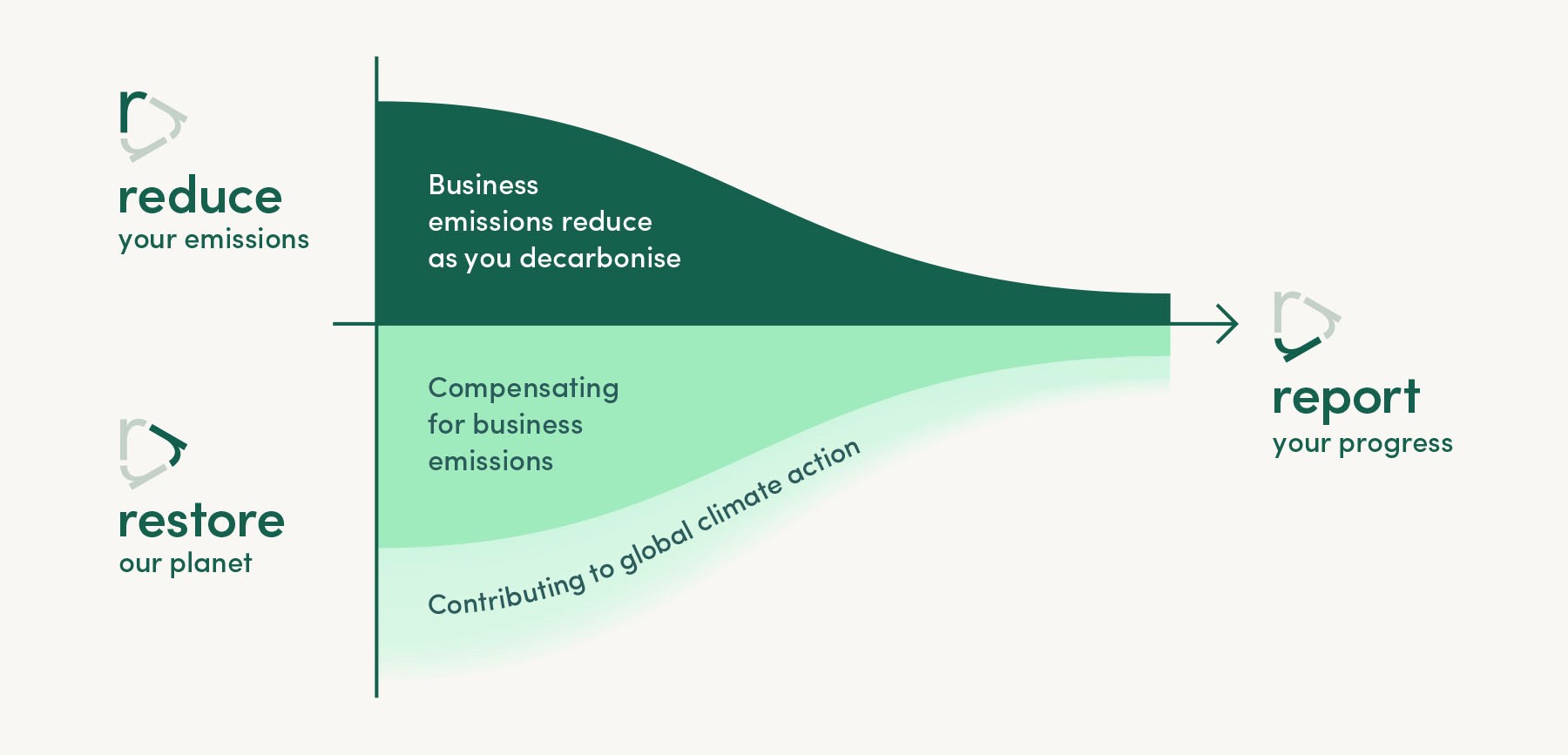
Measuring emissions, identifying climate risks, setting credible targets and building a transition plan all sit under Reduce, the foundation everything else builds on. Considering nature and resilience sits under Restore, funding climate action beyond the value chain through nature-based restoration in line with Ongoing Emissions Responsibility (OER), while preparing credible communications sits under Report, keeping stakeholders informed with transparent, evidence-based updates. Identifying commercial opportunities cuts across all three Rs rather than belonging to one, the commercial upside that follows when reducing, restoring and reporting are done well.
We’ve supported over 16,000 businesses on their climate journey helping them to navigate the complexities of a climate strategy with a focus on long-term impact and return on investment. If you're ready to embed the 3Rs Framework into your operations, schedule a call with our team to explore how we can support your business wherever you are on your climate journey