Blog

Just how bad is it? UK heatwaves 2026 and the wake-up call for business resilience

Climate 101

Blog

Just how bad is it? UK heatwaves 2026 and the wake-up call for business resilience

Climate 101

From Risk to Reward: How UK businesses are building resilience to deliver long-term value
Sam Jackson

Director of Climate Science & Impact

5 min read

From Risk to Reward: How UK businesses are building resilience to deliver long-term value

We may be going back to work, but we’re not going back to business-as-usual.

It's almost September, and businesses across the country are going back to work after the summer break, refocused on commercial targets and goals for the rest of the year.

But we're not going back to business-as-usual. In truth, the unprecedented summer we've just had means we're not going "back" at all. Let’s take a look at how extraordinary this summer was, and what that means for businesses in the future.

Just how bad is the UK's summer 2026 heatwaves?

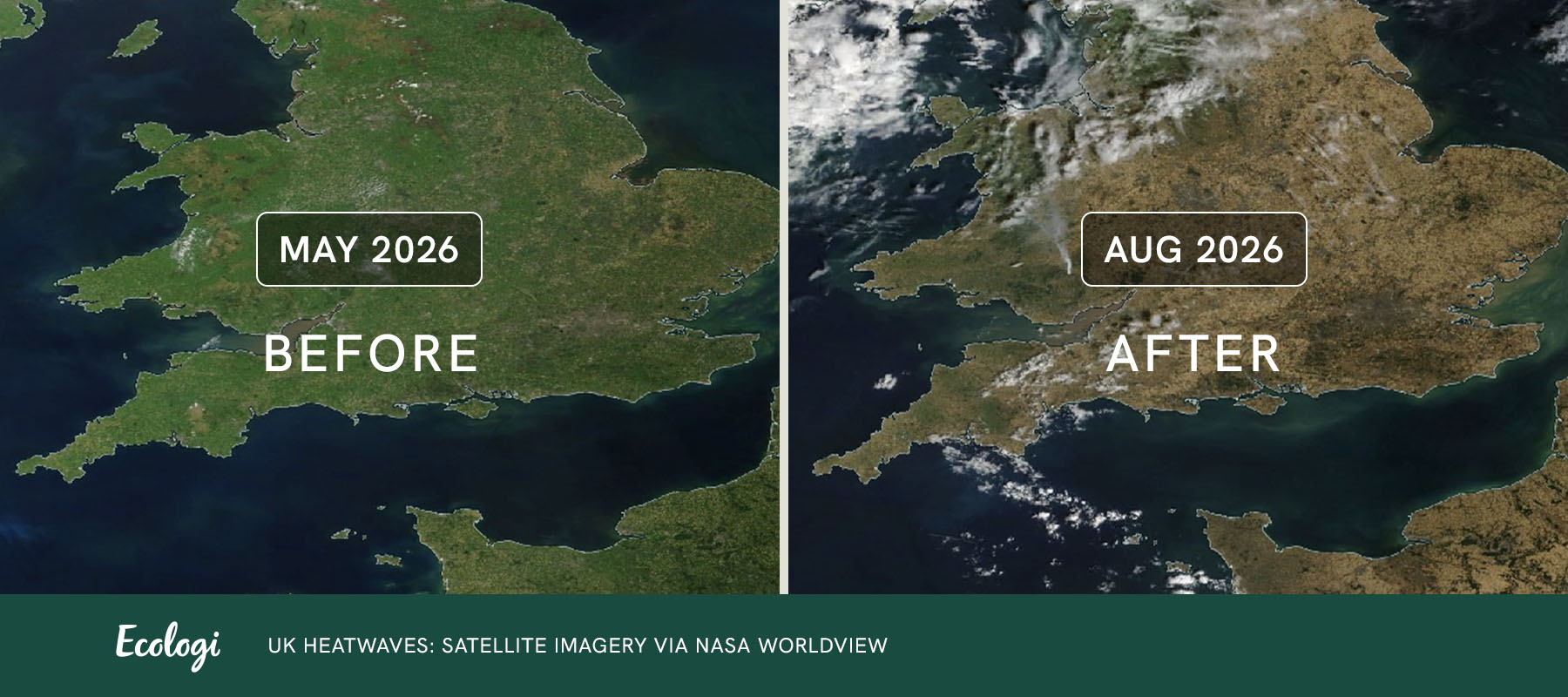
Here in the UK, we were all aware of how remarkable this summer felt whilst we experienced it, but we need to zoom out a little bit to gain a wider understanding of just how out-of-the-ordinary it was. To hand-pick just a few statistics from this summer (all adapted from official Met Office data): 

  • Heatwaves spanning from late May to late August, with virtually no rain in much of England for the duration.

  • Monthly highest temperature records broken for each of May, June and July. 

  • Highest number of days exceeding 36ºC (four days) and 37ºC (three days), and the joint-highest number of days exceeding 38ºC (two days - joint with 2022).

  • Temperature extremes reaching 38.1ºC – the fifth highest temperature ever recorded in the UK – recorded at Kew Gardens on 13th August.

  • Likely warmest UK summer ever – so far around 1.9ºC above the UK average and very likely to beat 2025’s previous record.


Despite observing the same conditions all through the summer, as a nation, I think we have some complacency – we tend to consider ourselves somehow outside of, or insulated from, the climate crisis. At Ecologi, every time we share satellite imagery or data about how the climate and ecological crisis is impacting the UK, we receive a huge range of both supportive and negative responses - which include angry science-denial to nihilistic cynicism. Even now, news coverage of heatwaves leads with photographs of people gleefully tanning at the beach.

But this year’s extreme weather proves the UK won’t escape the sharp end of climate change’s impacts. We are neither special nor exempt, and burying our heads in the sand will change nothing. The same is true in our businesses – because whilst we’d love for the stable climate of yesterday to keep supporting our businesses to survive and thrive, that world is gone, and it isn’t coming back.

Here in the UK, we were all aware of how remarkable this summer felt whilst we experienced it, but we need to zoom out a little bit to gain a wider understanding of just how out-of-the-ordinary it was. To hand-pick just a few statistics from this summer (all adapted from official Met Office data): 

  • Heatwaves spanning from late May to late August, with virtually no rain in much of England for the duration.

  • Monthly highest temperature records broken for each of May, June and July. 

  • Highest number of days exceeding 36ºC (four days) and 37ºC (three days), and the joint-highest number of days exceeding 38ºC (two days - joint with 2022).

  • Temperature extremes reaching 38.1ºC – the fifth highest temperature ever recorded in the UK – recorded at Kew Gardens on 13th August.

  • Likely warmest UK summer ever – so far around 1.9ºC above the UK average and very likely to beat 2025’s previous record.


Despite observing the same conditions all through the summer, as a nation, I think we have some complacency – we tend to consider ourselves somehow outside of, or insulated from, the climate crisis. At Ecologi, every time we share satellite imagery or data about how the climate and ecological crisis is impacting the UK, we receive a huge range of both supportive and negative responses - which include angry science-denial to nihilistic cynicism. Even now, news coverage of heatwaves leads with photographs of people gleefully tanning at the beach.

But this year’s extreme weather proves the UK won’t escape the sharp end of climate change’s impacts. We are neither special nor exempt, and burying our heads in the sand will change nothing. The same is true in our businesses – because whilst we’d love for the stable climate of yesterday to keep supporting our businesses to survive and thrive, that world is gone, and it isn’t coming back.


How does the UK heatwave 2026 compare to previous years?

On its own, a run of hot weeks can feel like just any other summer: memorable for a month, but forgotten by November. Again, to truly appreciate the scope and scale of change, we must take a look back through time. Stats from the last five years are collected in the table below:


2026

2025

2024

2023

2022

Highest temperature recorded

38.1ºC*

35.5ºC

34.8ºC

32.2°C

40.3ºC

Mean summer temperature

16.5ºC*

16.1ºC

14.4°C

15.4ºC

15.7ºC

Mean summer temperature rank vs. historic record

TBC
(very likely a new record)

1st

(warmest)

42nd

9th

5th

Rainfall - percentage of seasonal average

~75%* (June +July only)

84%

95%

111%

62%

Meteorological summer (June, July and August) statistics for the last five years (2022-2026). All data retrieved or adapted from official Met Office statistics. Data for 2026 correct to 21st August – asterisks denote provisional summer (JJA) figures. Where official figures are provided with multiple decimal places, these are rounded to one decimal place.


Appreciating the immediate context around this summer, we start to develop a picture of change. Back in 2022, the UK experienced its hottest-ever temperature (40.3ºC in Coningsby, Lincolnshire), hotter than the previous record by over 1.5ºC. The summer that year was extremely dry - and yet the following summer was both cooler and much wetter.

Following the record-breaking heat of 2022, maximum summer temperatures have been increasing since 2023, and the summer has been getting drier too. This year will extremely likely have been the hottest summer in UK history. So the real threat is not just that the weather is changing, it’s that the weather is becoming more extreme, with greater and more violent swings between hotter/drier and cooler/wetter. This trend is projected to continue into the future under climate change in the UK. 

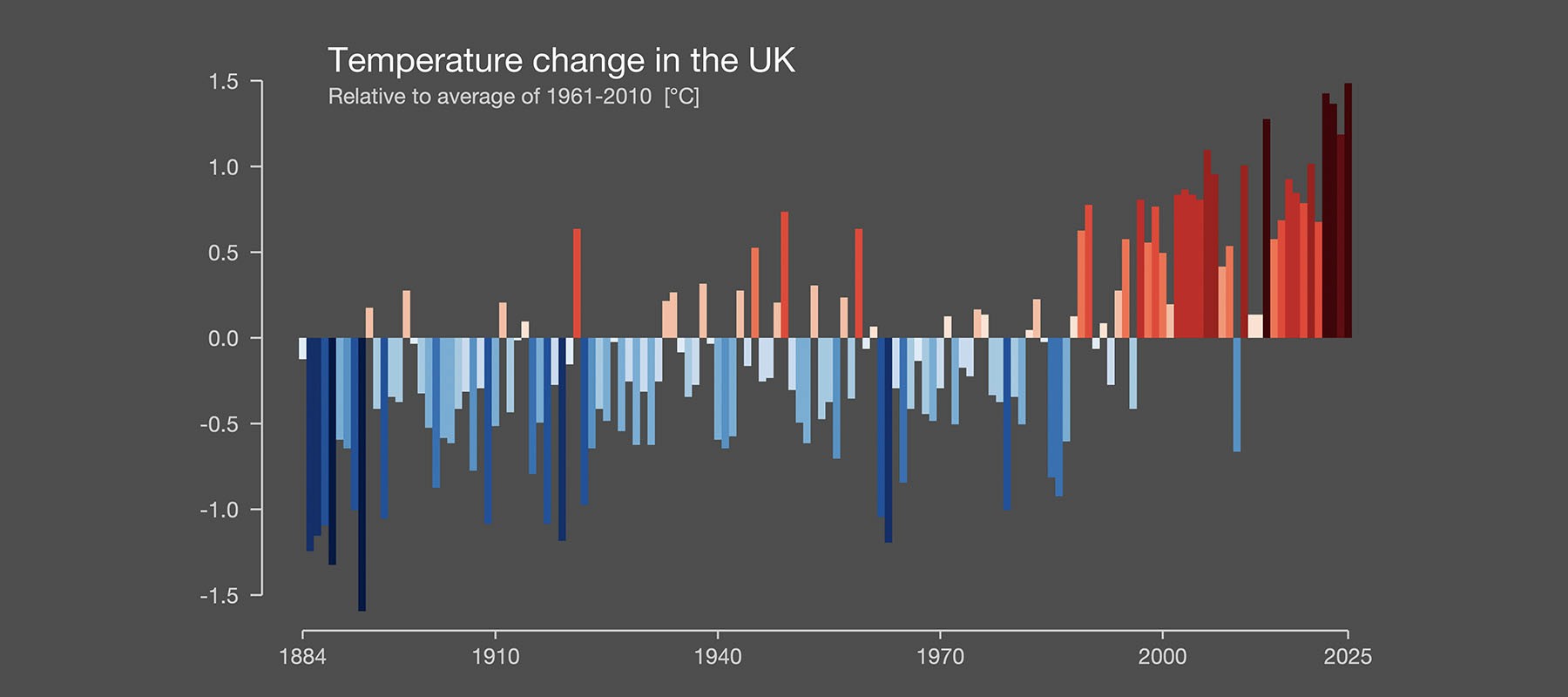
Yet still, these are only five years – and so they cannot provide the long-term trend. It is only when we extend our view back through the historical records that worrying trends really start to emerge.
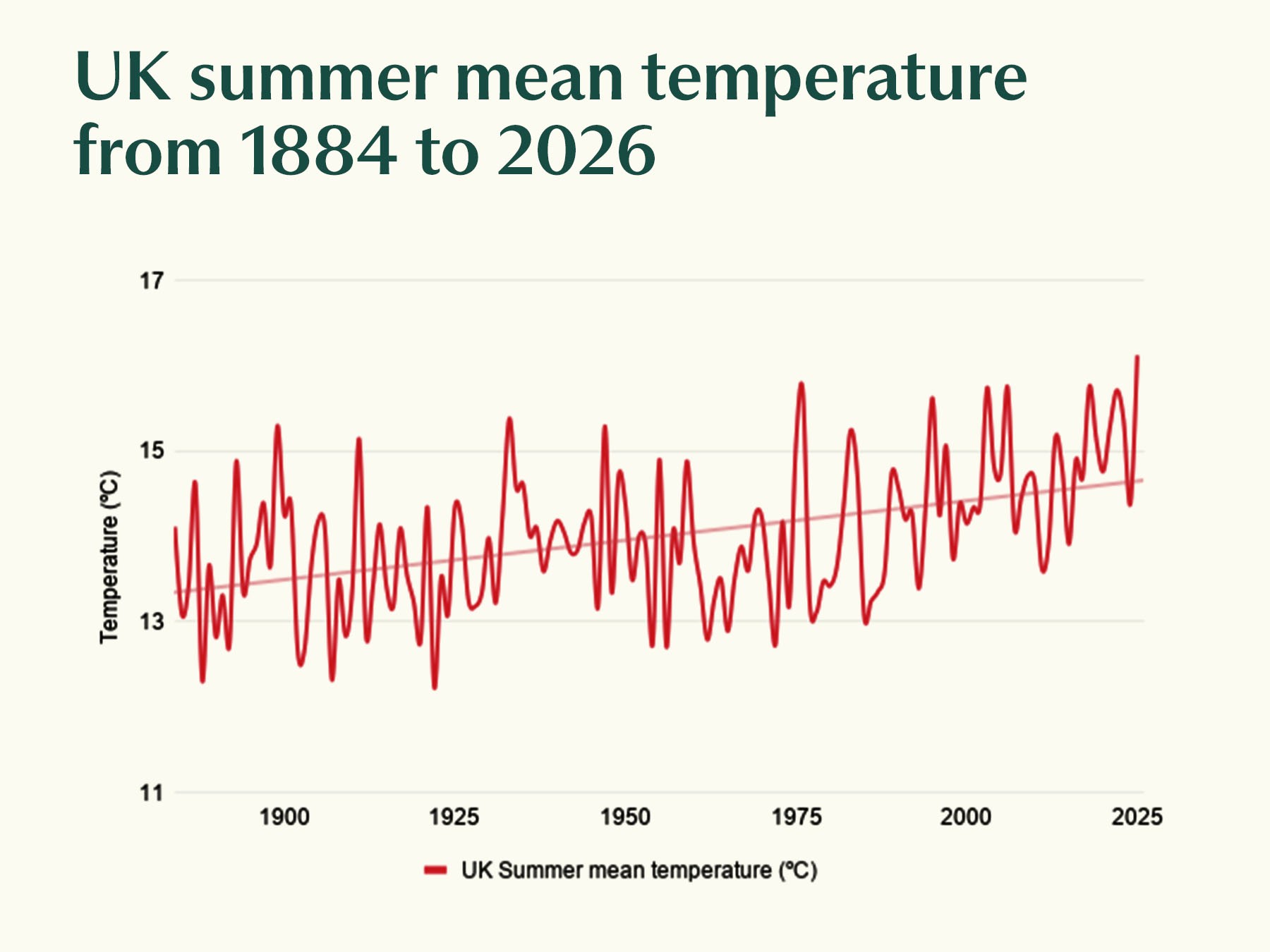
Time series of observed mean UK summer (June, July, August) temperatures from 1884 to 2026, with linear trend line. Note that finalised mean temperature records for August 2026 have not been recorded at the time of writing. Source: adapted from Met Office.

Looking at observations of average summer temperatures since 1884, we can see in no uncertain terms that there is a steady upward trend. At the same time, we are at risk of passing multiple global tipping points which could ‘tip’ the climate here in the UK and globally into even more volatile states, for example if our continued warming of the planet causes a collapse in the Atlantic Meridional Overturning Circulation (AMOC).

And this is where things become truly worrying for businesses - because not only is the formerly-abstract threat of climate change manifesting in material and costly ways (through supply chain disruption, productivity loss, threats to health and wellbeing, and more) but the future is becoming both more extreme and more difficult to predict.

The economy likes predictability, because it allows businesses and government to confidently forecast the future and – at its most fundamental – consistently generate growth. That predictability is exactly what business resilience depends on, and it is exactly what a destabilising climate takes away.

Without a stable foundation, that becomes impossible and suddenly what was previously an ‘over there’ kind of problem becomes very real and very immediate to businesses trying to survive and thrive in an already-challenging global economy. Without that foundation, our economic house of cards can only tumble down.

An example of how this will ultimately impact us as consumers,  British farmers are already ringing the alarm bells, with harvests significantly reduced in yield and quality due to the drought. But the problem isn’t just at home farmers further afield in mainland Europe are also suffering from severe drought and wildfires. This will impact the availability, and likely higher prices, of groceries in our supermarkets.  


On its own, a run of hot weeks can feel like just any other summer: memorable for a month, but forgotten by November. Again, to truly appreciate the scope and scale of change, we must take a look back through time. Stats from the last five years are collected in the table below:


2026

2025

2024

2023

2022

Highest temperature recorded

38.1ºC*

35.5ºC

34.8ºC

32.2°C

40.3ºC

Mean summer temperature

16.5ºC*

16.1ºC

14.4°C

15.4ºC

15.7ºC

Mean summer temperature rank vs. historic record

TBC
(very likely a new record)

1st

(warmest)

42nd

9th

5th

Rainfall - percentage of seasonal average

~75%* (June +July only)

84%

95%

111%

62%

Meteorological summer (June, July and August) statistics for the last five years (2022-2026). All data retrieved or adapted from official Met Office statistics. Data for 2026 correct to 21st August – asterisks denote provisional summer (JJA) figures. Where official figures are provided with multiple decimal places, these are rounded to one decimal place.


Appreciating the immediate context around this summer, we start to develop a picture of change. Back in 2022, the UK experienced its hottest-ever temperature (40.3ºC in Coningsby, Lincolnshire), hotter than the previous record by over 1.5ºC. The summer that year was extremely dry - and yet the following summer was both cooler and much wetter.

Following the record-breaking heat of 2022, maximum summer temperatures have been increasing since 2023, and the summer has been getting drier too. This year will extremely likely have been the hottest summer in UK history. So the real threat is not just that the weather is changing, it’s that the weather is becoming more extreme, with greater and more violent swings between hotter/drier and cooler/wetter. This trend is projected to continue into the future under climate change in the UK. 

Yet still, these are only five years – and so they cannot provide the long-term trend. It is only when we extend our view back through the historical records that worrying trends really start to emerge.

Time series of observed mean UK summer (June, July, August) temperatures from 1884 to 2026, with linear trend line. Note that finalised mean temperature records for August 2026 have not been recorded at the time of writing. Source: adapted from Met Office.

Looking at observations of average summer temperatures since 1884, we can see in no uncertain terms that there is a steady upward trend. At the same time, we are at risk of passing multiple global tipping points which could ‘tip’ the climate here in the UK and globally into even more volatile states, for example if our continued warming of the planet causes a collapse in the Atlantic Meridional Overturning Circulation (AMOC).

And this is where things become truly worrying for businesses - because not only is the formerly-abstract threat of climate change manifesting in material and costly ways (through supply chain disruption, productivity loss, threats to health and wellbeing, and more) but the future is becoming both more extreme and more difficult to predict.

The economy likes predictability, because it allows businesses and government to confidently forecast the future and – at its most fundamental – consistently generate growth. That predictability is exactly what business resilience depends on, and it is exactly what a destabilising climate takes away.

Without a stable foundation, that becomes impossible and suddenly what was previously an ‘over there’ kind of problem becomes very real and very immediate to businesses trying to survive and thrive in an already-challenging global economy. Without that foundation, our economic house of cards can only tumble down.

An example of how this will ultimately impact us as consumers,  British farmers are already ringing the alarm bells, with harvests significantly reduced in yield and quality due to the drought. But the problem isn’t just at home farmers further afield in mainland Europe are also suffering from severe drought and wildfires. This will impact the availability, and likely higher prices, of groceries in our supermarkets.  


How extreme heat and drought is already impacting UK businesses

Ecologi’s research earlier this year found that among 1,600 UK business leaders we surveyed, 84% could identify a direct climate or nature impact on their business in the past two years, and of that group, 70% stated that these impacts had cost them over 1% of revenue in the past year.
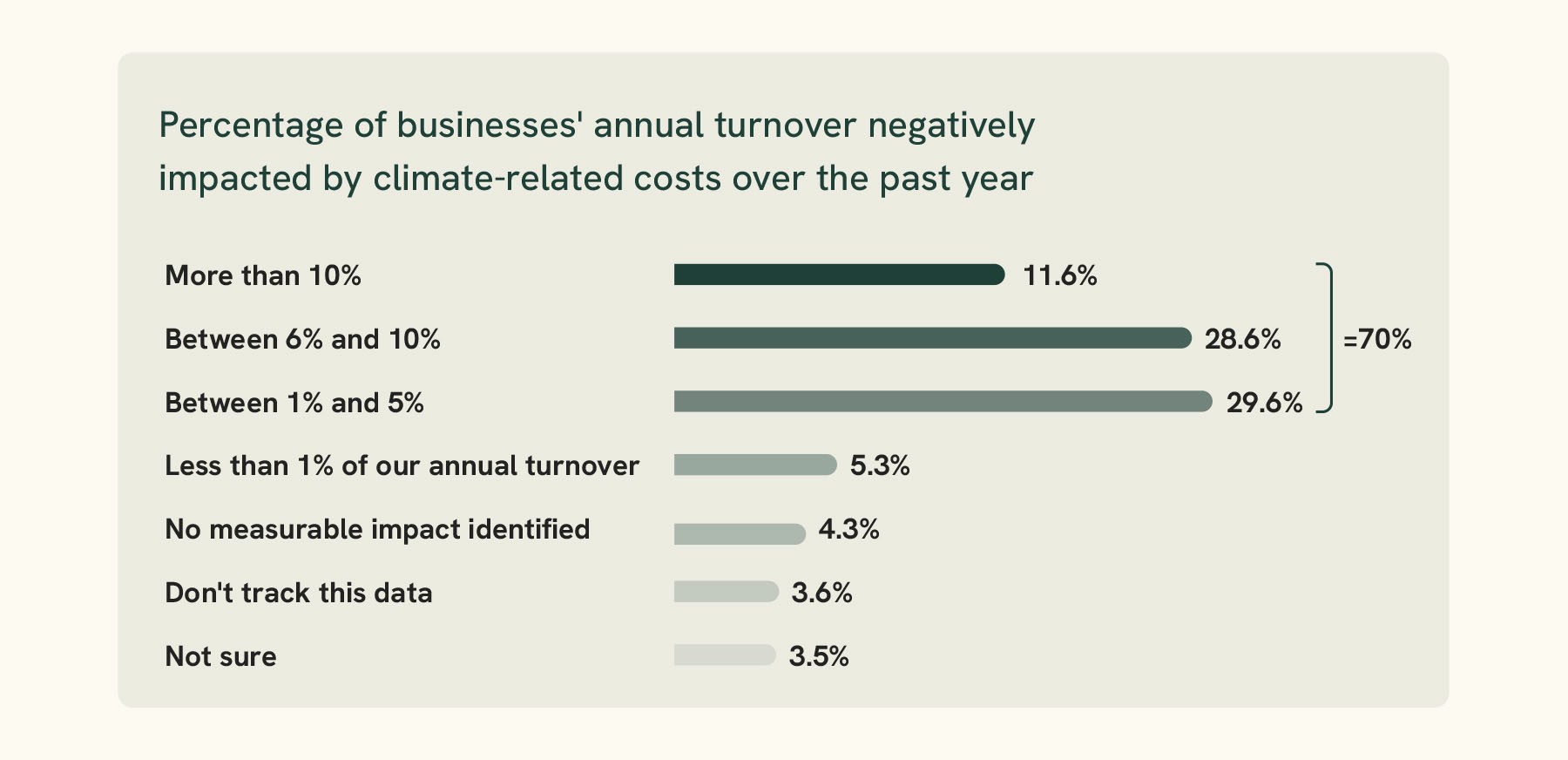
Despite this significant impact to the bottom line, it is highly concerning that only 58% of businesses acknowledged their operational dependence on nature. 

These aren't abstract numbers. They are early signs of how exposed UK business resilience really is to a changing climate. Through knock-on effects of the extreme heat and lack of rain, the UK has experienced a summer of travel disruptions (including derailed trains in East Sussex and one in Essex), out of control wildfires, thousands of excess deaths, and an upcoming failed harvest which will cause further food inflation. Lives, livelihoods and property have been destroyed, supply chains disrupted, journeys cancelled, infrastructure and assets placed under threat.

These are the real, material impacts that impact every business, and everyone. We may not see the full impact until early next year. 

The research for our 2026 Climate Commitments Report was conducted in the spring – but I suspect that if we had conducted our research in August rather than in March, we'd find that our 1,600 businesses would be even more aware of and awake to the costs of climate change.
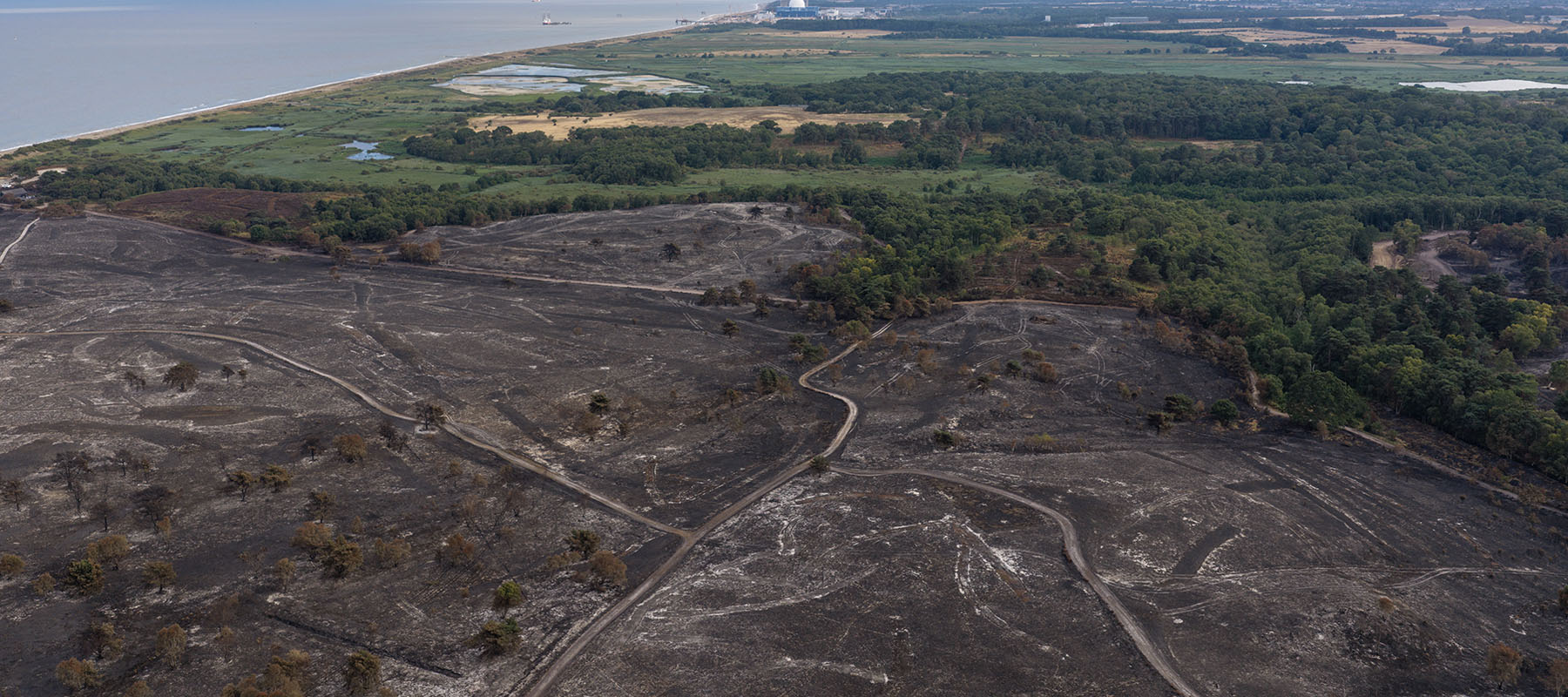
Above: burnt forest floor near the coastline and Sizewell power station (August 2026).

Ecologi’s research earlier this year found that among 1,600 UK business leaders we surveyed, 84% could identify a direct climate or nature impact on their business in the past two years, and of that group, 70% stated that these impacts had cost them over 1% of revenue in the past year.

Despite this significant impact to the bottom line, it is highly concerning that only 58% of businesses acknowledged their operational dependence on nature. 

These aren't abstract numbers. They are early signs of how exposed UK business resilience really is to a changing climate. Through knock-on effects of the extreme heat and lack of rain, the UK has experienced a summer of travel disruptions (including derailed trains in East Sussex and one in Essex), out of control wildfires, thousands of excess deaths, and an upcoming failed harvest which will cause further food inflation. Lives, livelihoods and property have been destroyed, supply chains disrupted, journeys cancelled, infrastructure and assets placed under threat.

These are the real, material impacts that impact every business, and everyone. We may not see the full impact until early next year. 

The research for our 2026 Climate Commitments Report was conducted in the spring – but I suspect that if we had conducted our research in August rather than in March, we'd find that our 1,600 businesses would be even more aware of and awake to the costs of climate change.

Above: burnt forest floor near the coastline and Sizewell power station (August 2026).

How UK businesses can build climate resilience

All this paints a bleak picture. But whilst businesses are aware of the risks and damages of climate change, we also find business leaders are aware of the upsides of taking climate action – not just on securing a liveable future for our planet, but also from a commercial perspective as well. 

The better news is business resilience can be built and Ecologi’s climate experts can help you. Here is where to start: 

  • Comprehensively assess climate and nature risks: without this, you’re flying blind. Most businesses still don't know exactly how exposed they are – which sites, suppliers, or revenue lines are most at risk from extreme weather – and without this, you can’t hope to adapt and respond accordingly.

  • Build out your transition plan: with a better understanding of where you are exposed, a transition plan tells you what you're going to do about it. Achieve board buy-in, plan out concrete milestones and targets with owners and dates attached, and build from there. 

  • Invest in nature recovery: 75% of businesses we surveyed agreed that investing in nature within their value chain is an investment in their own business resilience. Once you start seeing nature as part of the infrastructure of your business, it can become your most important ally in building your business resilience.

  • Report transparently: publishing your progress (including where you have fallen short) keeps you accountable, keeps your investors and customers informed, and keeps the pressure on the wider market to move at the same pace.

  • Form coalitions with your peers: a key thing to remember is that no business exists alone. The businesses making the fastest progress are the ones sharing data, pooling investment, and pushing for the same policy change together, rather than each quietly managing their own risk in isolation. For example, Media in Service of Nature brings together brands, agencies and media owners using a small portion of ad spend to restore nature. 

All this paints a bleak picture. But whilst businesses are aware of the risks and damages of climate change, we also find business leaders are aware of the upsides of taking climate action – not just on securing a liveable future for our planet, but also from a commercial perspective as well. 

The better news is business resilience can be built and Ecologi’s climate experts can help you. Here is where to start: 

  • Comprehensively assess climate and nature risks: without this, you’re flying blind. Most businesses still don't know exactly how exposed they are – which sites, suppliers, or revenue lines are most at risk from extreme weather – and without this, you can’t hope to adapt and respond accordingly.

  • Build out your transition plan: with a better understanding of where you are exposed, a transition plan tells you what you're going to do about it. Achieve board buy-in, plan out concrete milestones and targets with owners and dates attached, and build from there. 

  • Invest in nature recovery: 75% of businesses we surveyed agreed that investing in nature within their value chain is an investment in their own business resilience. Once you start seeing nature as part of the infrastructure of your business, it can become your most important ally in building your business resilience.

  • Report transparently: publishing your progress (including where you have fallen short) keeps you accountable, keeps your investors and customers informed, and keeps the pressure on the wider market to move at the same pace.

  • Form coalitions with your peers: a key thing to remember is that no business exists alone. The businesses making the fastest progress are the ones sharing data, pooling investment, and pushing for the same policy change together, rather than each quietly managing their own risk in isolation. For example, Media in Service of Nature brings together brands, agencies and media owners using a small portion of ad spend to restore nature. 

Why business-as-usual is no longer an option

The sum of all this is that as we reach September and the rains start to arrive, whilst we may be going back to work, we’re not going back to business-as-usual. 

More than this, we’re not going back because we can’t. The climate we each grew up in – that our ancestors, and all of humanity grew up in – is not coming back. That stable terrain that our businesses thrived in – and which our economy and all our current business models are entirely dependent on – is not coming back.

Ours is now a world of compounding destabilising forces, all conspiring to topple the fragile structures and economies we have built. The impacts will not be marginal, and this summer in the UK we had our first real taste of how this extreme heat can start to cause our systems and processes to break down.

Business-as-usual was only ever viable because the climate underwriting it was stable – and as of 2026, it is not. Resilience now means building for a climate that swings harder each year, not one that returns to normal.

The sum of all this is that as we reach September and the rains start to arrive, whilst we may be going back to work, we’re not going back to business-as-usual. 

More than this, we’re not going back because we can’t. The climate we each grew up in – that our ancestors, and all of humanity grew up in – is not coming back. That stable terrain that our businesses thrived in – and which our economy and all our current business models are entirely dependent on – is not coming back.

Ours is now a world of compounding destabilising forces, all conspiring to topple the fragile structures and economies we have built. The impacts will not be marginal, and this summer in the UK we had our first real taste of how this extreme heat can start to cause our systems and processes to break down.

Business-as-usual was only ever viable because the climate underwriting it was stable – and as of 2026, it is not. Resilience now means building for a climate that swings harder each year, not one that returns to normal.

Climate leadership starts with Ecologi’s 3Rs Framework

At Ecologi, we lead on climate, so you can lead in business. By translating complexity into clarity and embedding progress into the design, the Ecologi 3Rs framework approach empowers businesses on their climate journey to act confidently with clear guidance to:

  • Invest responsibly in both reducing emissions and restoring our planet by funding high quality climate projects.

  • Report progress transparently in alignment with global guidelines and be recognised for doing so.

  • Realise the business and commercial benefits that a climate strategy and plan can deliver.
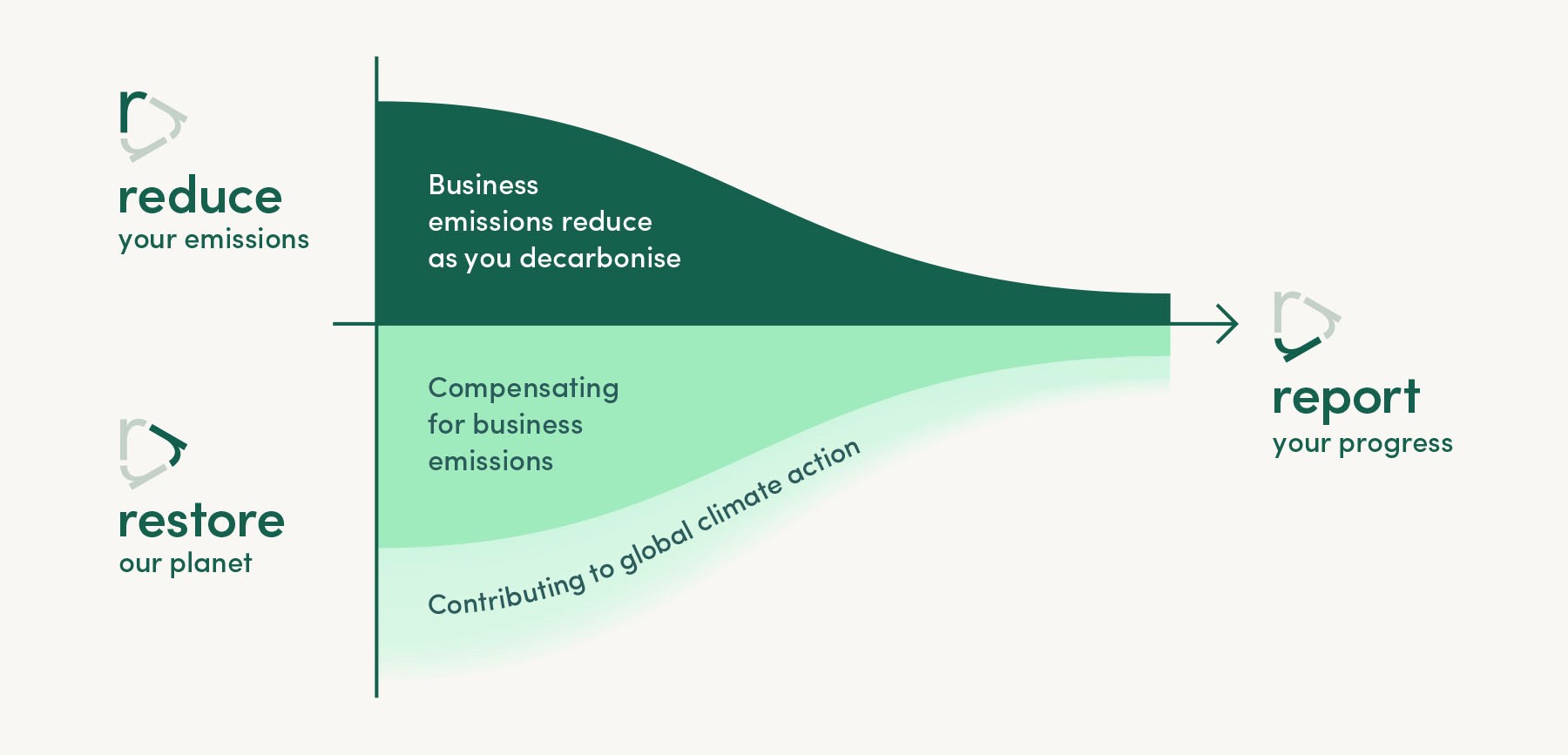
We’ve supported over 16,000 businesses on their climate journey helping them to navigate the complexities of a climate strategy with a focus on long-term impact and return on investment. If you're ready to embed the 3Rs Framework into your operations, schedule a call with our team to explore how we can support your business wherever you are on your climate journey.

At Ecologi, we lead on climate, so you can lead in business. By translating complexity into clarity and embedding progress into the design, the Ecologi 3Rs framework approach empowers businesses on their climate journey to act confidently with clear guidance to:

  • Invest responsibly in both reducing emissions and restoring our planet by funding high quality climate projects.

  • Report progress transparently in alignment with global guidelines and be recognised for doing so.

  • Realise the business and commercial benefits that a climate strategy and plan can deliver.

We’ve supported over 16,000 businesses on their climate journey helping them to navigate the complexities of a climate strategy with a focus on long-term impact and return on investment. If you're ready to embed the 3Rs Framework into your operations, schedule a call with our team to explore how we can support your business wherever you are on your climate journey.

Related articles

Is your business ready
to take climate action?

If this article has inspired your business to start its climate journey, talk to our team today.

Is your business ready
to take climate action?

If this article has inspired your business to start its climate journey, talk to our team today.

Is your business ready
to take climate action?

If this article has inspired your business to start its climate journey, talk to our team today.