
Why the most credible climate strategies go beyond buying carbon credits

By
Director of Climate Science & Impact
8 min read


Introduction
Most businesses that engage with the voluntary carbon market focus on one thing: buying carbon credits to match some or all of their emissions on a tonne-for-tonne basis. That is an important part of a credible climate strategy, but it is not the whole picture.
Ongoing Emissions Responsibility (OER), the framework endorsed by the Science Based Targets initiative (SBTi) for how businesses should contribute to global climate action outside their own value chain, has two approaches, not one.
The first is verified mitigation outcomes and covers the tonne-for-tonne component: buying and retiring high-quality carbon credits, aligned with the Oxford Principles.
The second – the contribution budget approach – is different in kind. It asks businesses to drive additional finance into climate solutions that go beyond what the carbon credit market can currently fund or measure.
This article focuses on the second approach: what it is, what qualifies, how to allocate your budget, and why ignoring it leaves your carbon credit strategy incomplete.
What is the contribution budget approach?The contribution budget approach is defined by the SBTi in version 2 of the Corporate Net-Zero Standard and asks businesses to drive additional finance into the scale-up of nascent climate solutions and enabling activities to unlock the systemic transformation needed to achieve net-zero by mid-century globally. Unlike the verified mitigation approach – which focuses on buying and retiring verified carbon credits on a tonne-for-tonne basis – the contribution budget approach covers a broader range of climate investment: impact funds, nature restoration, early-stage carbon removal technology, climate adaptation, biodiversity projects, and enabling activities like policy advocacy or environmental legal defence. The impact does not have to be measured in tonnes of CO2e. Businesses report financial contributions made and the anticipated outcomes of the projects they support. |
A note on timing: this article relates to the latest instructions from the SBTi Corporate Net-Zero Standard V2. Previously, similar activity to OER was described as Beyond Value Chain Mitigation (BVCM) and did not form part of the net-zero standard.
Why contribution beyond tonne-for-tonne matters
Scaling technologies the carbon market cannot yet fund
The voluntary carbon credit market as it exists today is good at funding projects with measurable, verifiable outcomes - forest protection, methane capture, certain types of carbon removal. What it is less well suited to is funding early-stage climate technologies and approaches that do not yet have the methodological frameworks to generate tradable ex-post credits.
Direct air capture, enhanced weathering, ocean-based carbon removal, and other nascent carbon dioxide removal technologies all need significant capital to develop and scale. Without private-sector investment at this stage, the pipeline of high-quality removal credits that businesses will need in the 2030s and 2040s, as the Oxford Principles for Net Zero Aligned Carbon Offsetting require portfolios to shift towards removals with durable storage, simply will not exist in sufficient volume or at accessible prices. Contribution budget investment today is, in part, an investment in the supply of credible climate solutions your business will need later.
Adaptation and the limits of mitigation alone
There are two necessary components to climate action: mitigation and adaptation. Mitigation - reducing and removing greenhouse gases - is essential, but it does not address the impacts that are already locked in. Adaptation is about helping communities, ecosystems and infrastructure adjust to a changing climate, and is a critical and chronically underfunded area of global climate action.
The contribution budget approach explicitly includes activities that support climate adaptation, resilience and address loss and damage. For businesses, this matters for two reasons. First, the communities and ecosystems that are most vulnerable to climate impacts are often connected to global supply chains and natural systems that businesses depend on. Investing in their resilience makes strategic sense. Second, adaptation funding is increasingly recognised by frameworks like the TNFD as part of credible corporate nature and climate strategies.
Biodiversity and the broader picture
Climate and nature are deeply interconnected. Many of the most effective nature-based carbon projects, such as forests, wetlands, seagrass meadows, peatlands, also deliver significant biodiversity benefits. But biodiversity cannot be reduced to carbon. Ecosystems that are healthy and biodiverse are more resilient, store carbon more effectively over the long term, and provide the natural infrastructure that human economies depend on.
The contribution budget approach creates the space to fund nature restoration and biodiversity projects that may not generate tradeable carbon credits but deliver substantial co-benefits for climate, nature and people. In a world where mandatory biodiversity disclosure is expanding, this kind of investment also has growing strategic value for businesses.
What qualifies under the contribution budget approach
The contribution budget approach is broader and more flexible than the verified mitigation outcomes approach. In practice, it covers a wide range of activities.
The official list includes:
Buying more credits or funding philanthropically
Of course, many businesses that opt to establish a contribution budget will opt to form part of their portfolio with additional verified mitigation outcomes (credits) – and this is totally fine. All the same rules and guardrails from the verified mitigation outcome approach apply – except that under this approach, ex ante credits are allowed: that is, those for which the carbon avoidance/removal benefit has not yet been realised.
Low- or zero-carbon R&D
This is funding the technology pipeline itself rather than any specific project's output. Think R&D, pilot programs, and early-stage deployment for things that aren't commercially mature yet – the Standard specifically calls out areas like energy storage, hydrogen infrastructure, carbon capture, and low-carbon materials. The logic is that some climate solutions won't scale or become cheap enough without someone funding the unglamorous, expensive early research first.
Mitigation-enabling outcomes
Activities that support the systemic changes needed for a net-zero economy. This could include funding climate-related research, supporting standards development, contributing to industry coalitions working on sectoral decarbonisation, or investing in the institutional infrastructure that makes high-integrity climate action possible at scale.
For businesses with the scale and influence to participate meaningfully in these activities, they represent some of the highest-leverage climate investments available.
Adaptation and resilience
Funding adaptation and resilience is about helping people and places cope with climate impacts that are already happening. The Standard is explicit that this should prioritise climate-vulnerable regions and communities, places facing the worst impacts with the least capacity to handle them. Often the same projects for adaptation and resilience will also provide mitigative effects: like coastal wetland restoration.
Loss and damage
Providing funds to support the response to, and recovery from, unavoidable climate-related losses and damages, prioritising those least responsible for emissions and most affected by impacts.
How to allocate your contribution budget
Risk diversification
One of the practical advantages of contribution budget investment is that it diversifies your overall climate portfolio away from the risks inherent in the carbon credit market. Even high-quality carbon credits carry project-level risks: permanence risk, regulatory risk, and methodological revision. Contribution activities, particularly those channelled through impact funds with broad project portfolios, carry a different and generally lower risk profile.
A well-structured OER strategy that combines a robust carbon credit portfolio with thoughtfully allocated broader contributions is more resilient overall than one that concentrates all climate investment in carbon credits alone. It is also a more complete and defensible story to tell to investors, customers and reporting bodies.
Deciding what to fund
The most impactful contribution budget spending tends to share certain characteristics: it addresses areas that are genuinely underfunded by the carbon market; it produces co-benefits beyond carbon, including for nature and communities; it is transparent about the outcomes it expects to achieve; and it connects to the systemic changes needed for a net-zero economy rather than delivering isolated project outcomes.
For most businesses, a combination of an impact fund (for breadth and ease of reporting) and one or two direct contributions to organisations or causes with a close connection to the business's sector or supply chain (for depth and authenticity) is a practical and credible approach.
Risks of ignoring the contribution budget approach
Underfunded innovation
The carbon removal technologies that net-zero pathways depend on are not going to develop without sustained private sector investment. If businesses collectively treat contribution budgets as optional or secondary, concentrating all their climate finance in the established carbon credit market, the pipeline of durable, high-quality removal solutions that the market will need in the 2030s and 2040s will be underfunded.
This is a systemic problem for the climate, but it’s also a practical risk for any business building a long-term carbon credit strategy. The Oxford Principles require portfolios to shift substantially towards carbon removal with durable storage as the net-zero target date approaches. If that supply does not develop at the required pace and scale, the credits that businesses need will be scarce and expensive. Early investment in nascent removal technologies is, in part, a hedge against that supply risk.
Narrow portfolio exposure
A corporate climate strategy built entirely on tonne-for-tonne carbon credit purchases is a narrow one. It is exposed to the specific risks of the voluntary carbon market (price volatility, quality variation, methodological revision) without the diversification that contribution budgets provide.
It is also increasingly insufficient from a stakeholder expectations perspective. Investors, customers and accreditation bodies are beginning to look at the breadth of a business's climate contribution, not just the number of credits retired. A strategy that includes structured investment signals a deeper level of engagement with the systemic challenge of climate change and is harder to dismiss as a box-ticking exercise.
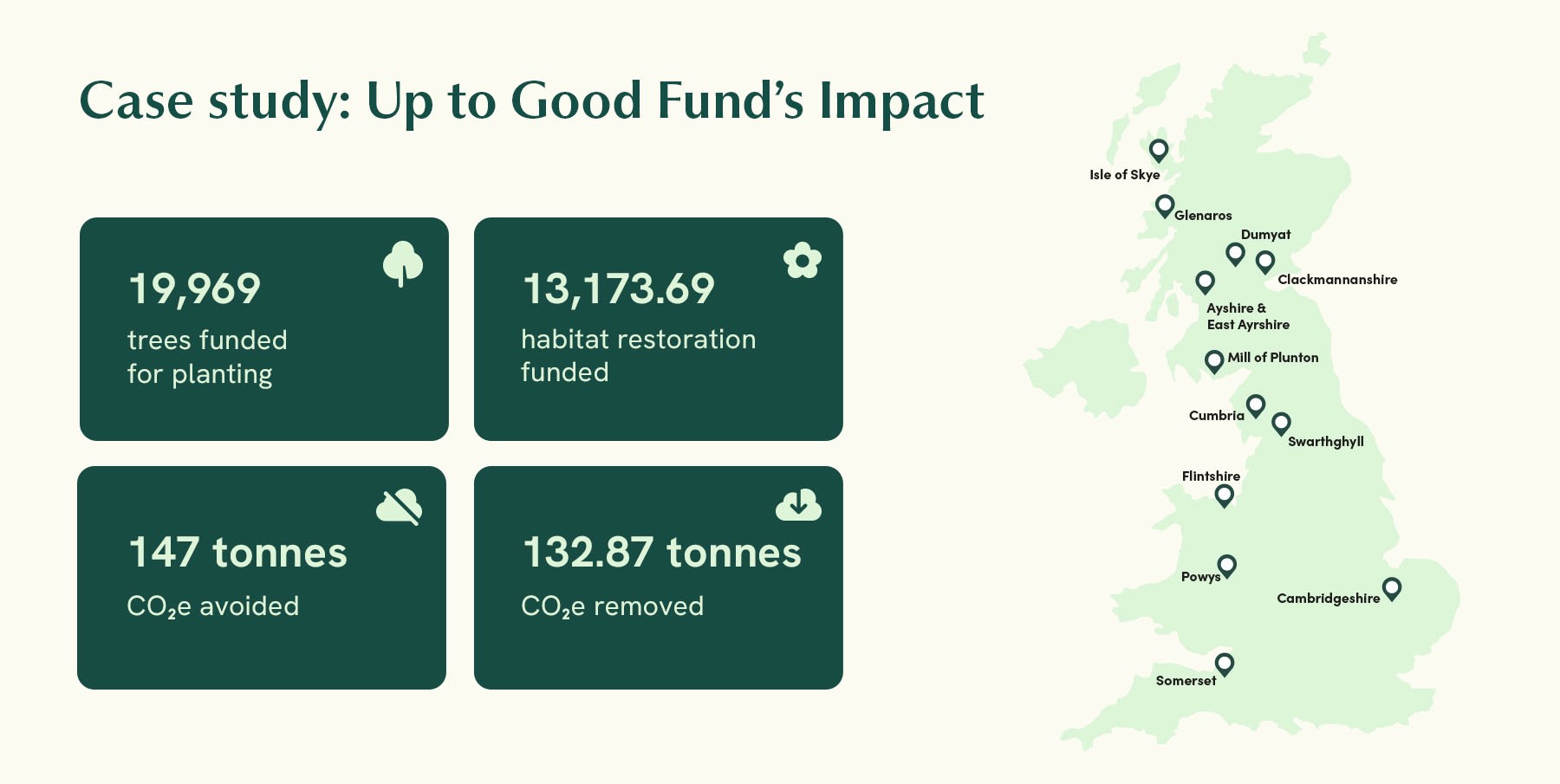
OER Contribution Case Study: How giffgaff & MG OMD integrate nature recovery into their advertising & media ecosystem.
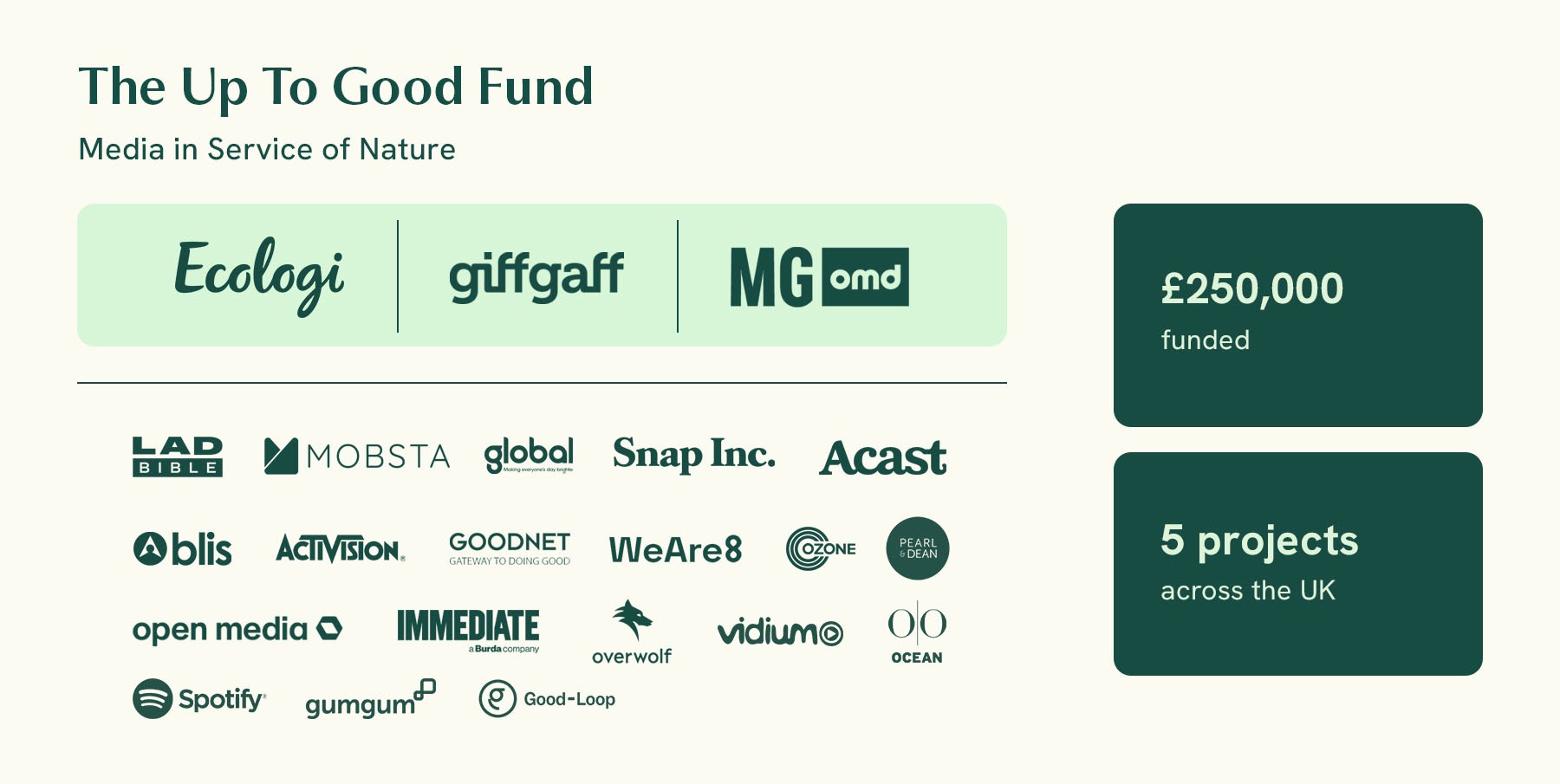
In late 2023, giffgaff and MG OMD established the Up To Good Fund, a pioneering new mechanism to embed UK nature recovery into their media campaigns. Since its inception, 11 media owners have joined the Fund, proving that UK nature recovery can sit alongside campaign performance. Endorsed by Ad Net Zero, the fund provides a blueprint for more brands, agencies & media owners to collaboratively fund high impact UK climate and nature projects, supporting recovery at scale. See their full case study here.
What this means for your strategy next
The contribution budget approach is the part of your climate investment that funds the solutions the carbon market cannot yet reach - the technologies, the ecosystems, the communities and the systemic conditions that a net-zero world depends on.
Designing your contribution budget allocation does not need to be complicated. Identify the types of climate solutions that resonate with your business's sector, values and stakeholder expectations. Choose vehicles, whether impact funds, direct philanthropy or enabling contributions, that are transparent, outcome-focused and credible to the frameworks your investors and customers are using to assess you.
The businesses that will look back on this decade with credibility are those that used their climate budgets to do more than the minimum. The contribution budget approach is where a carbon credit strategy stops being a risk management exercise and starts being a genuine contribution to the systems change the climate needs.
Work with Ecologi
Designing the contribution component of an OER strategy - identifying the right projects and vehicles, and integrating it with a credible verified emissions outcomes portfolio - is where many businesses need the most support.
Ecologi helps businesses build complete OER strategies that go beyond carbon credits, with carefully curated impact funds, expert guidance on budget allocation, and a transparent approach to reporting outcomes. If you want to ensure your climate investment is working as hard as it should be, speak to one of our climate experts to get started.