



By
Impact Project Analyst
6 min read
Biochar is biomass, wood, plant material, or similar organic waste, heated in a low-oxygen environment until it turns into a stable, carbon-rich solid that locks carbon away for centuries.
When people think about biochar, they often focus on its ability to remove carbon from the atmosphere. While carbon removal is undoubtedly one of its greatest strengths, the quality and integrity of a biochar project begins long before a single tonne of carbon is stored. It starts with the decisions made around feedstock sourcing, production methods and, ultimately, where the biochar ends up.
During our recent site visit to Brodie Biomass Ltd (BBL) in Surrey, we explored exactly how these decisions influence not only carbon storage, but also ecosystem health and local livelihoods.
Biochar feedstock sourcing: a local, circular economy model
Brodie Biomass is a sustainable farming enterprise based near Brockham, Surrey, producing high-quality biochar using advanced pyrolysis technology. The company is currently the only UK biochar producer to hold both European Biochar Certificate (EBC) certification and Soil Association approval.
Unlike many industrial biomass facilities that transport feedstock over large distances, Brodie's model is intentionally local.
The majority of its biomass is sourced from tree surgeons operating within a 25 mile radius of the facility. These arboricultural arisings would traditionally have relatively low value, often ending up as mulch, low-grade biomass fuel or waste. Instead, they become the raw material for durable carbon removal.
Alongside these locally sourced tree surgery residues, Brodie also utilises timber from its own managed woodlands, creating an integrated system where woodland management, biochar production and carbon removal reinforce one another.
This approach creates several benefits simultaneously:
keeping valuable biomass within the local economy
reducing transport emissions associated with feedstock collection
supporting local tree surgeons through an additional revenue stream
encouraging improved woodland management
Brodie Biomass founder Alex Brodie explains, local tree surgeons are already winning additional contracts because clients increasingly recognise the value of ensuring tree offcuts are used for carbon removal rather than simply disposed of.
Rather than extracting resources from the landscape, the system creates a circular economy where local biological waste becomes a long-term climate solution before many of its nutrients are eventually returned back to local soils.
Why feedstock quality determines biochar quality
One message became clear throughout our visit: Quality feedstock creates quality biochar.
Research consistently shows that feedstock selection is one of the biggest factors influencing both the environmental performance and long-term stability of biochar. Different biomass types contain different chemical compositions, mineral contents and moisture levels, all of which affect the characteristics of the final product.
At Brodie Biomass, considerable effort is invested before the feedstock even enters the pyrolysis reactor.
Only woodchips between 10 mm and 20 mm are selected for production, ensuring consistency throughout the process. The chips are then carefully dried to a moisture content between 8% and 12%, creating optimal conditions for efficient pyrolysis and reducing unnecessary energy losses.
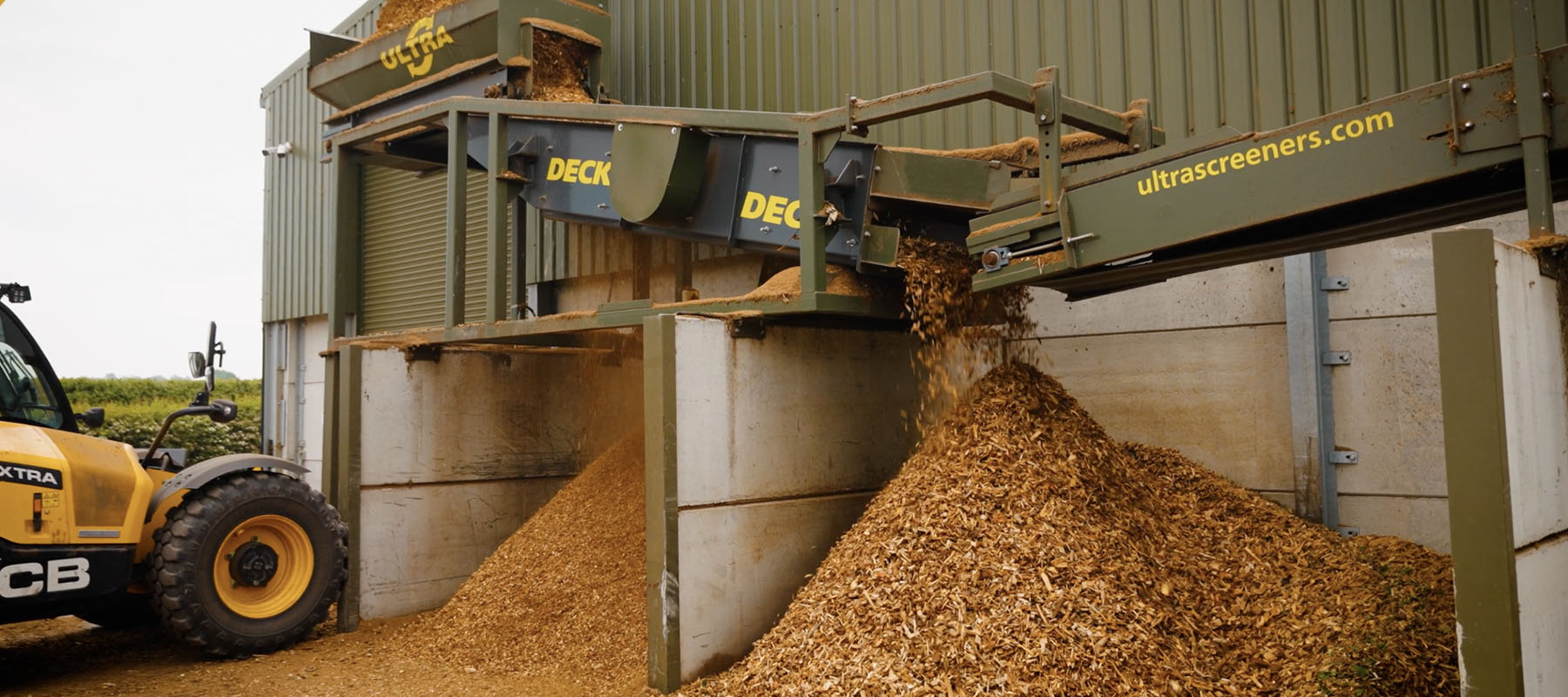
This rigorous pre-processing delivers two important outcomes. Firstly, it creates a more consistent, higher-quality biochar with predictable physical and chemical characteristics. Secondly, it improves the overall carbon efficiency of production by reducing variability and minimising emissions during processing.
As Alex summarised during our discussions:
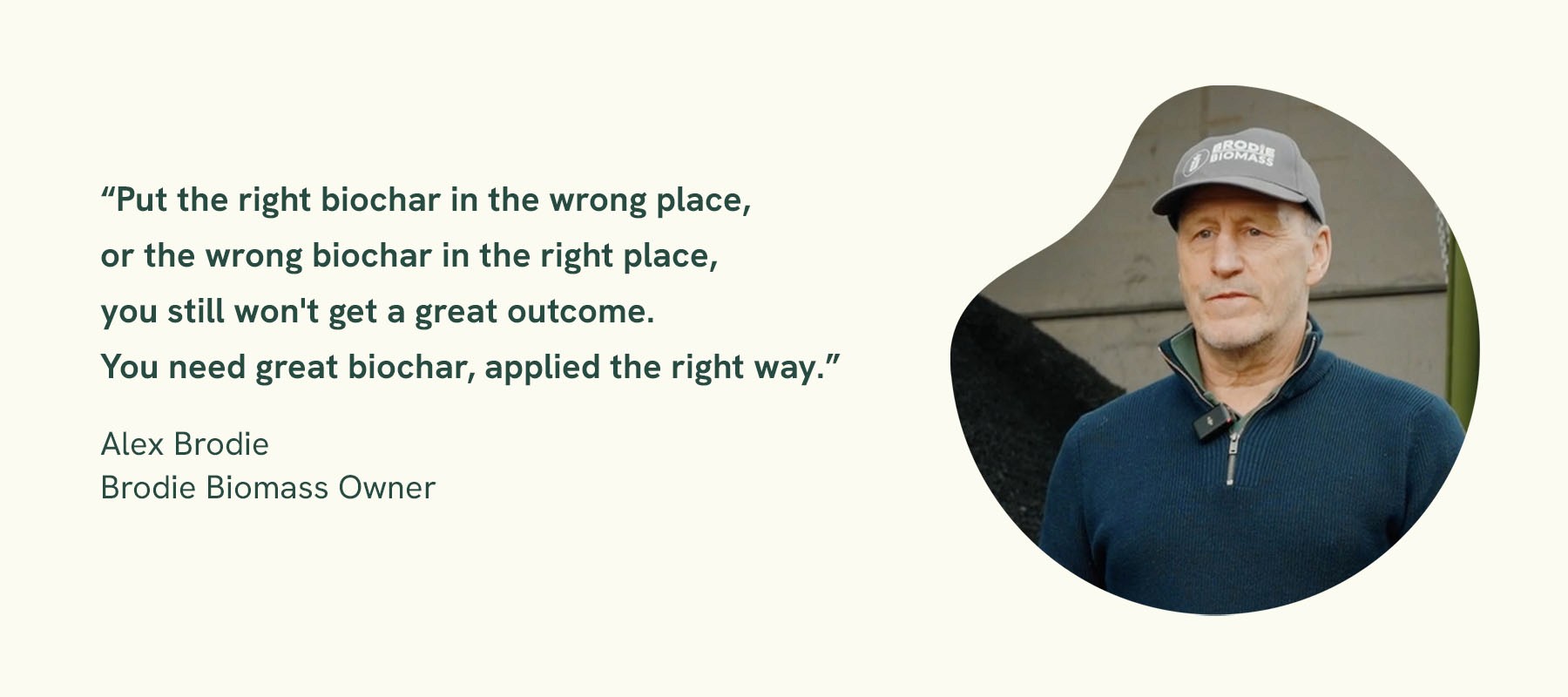
"The most important factors in biochar production are the feedstock type and the pyrolysis conditions."
Those two decisions largely determine everything that follows, from the amount of carbon stored to how suitable that biochar will be for different end uses.
Biochar pyrolysis: how carbon removal is locked in for centuries
Once prepared, the feedstock enters the pyrolysis reactor. Pyrolysis heats biomass in a low-oxygen environment, preventing combustion and instead converting much of the carbon into a highly stable solid material known as biochar. Because the carbon remains locked within this stable structure rather than being released as carbon dioxide, biochar can remain stored for hundreds to thousands of years when used appropriately.
However, different pyrolysis processes produce different results. Production temperature, residence time and oxygen availability all influence the resulting biochar's stability, carbon content and suitability for different applications.
This is why robust quality control throughout production is essential – not simply for generating carbon credits, but for ensuring the product performs exactly as intended once it reaches its final destination.
Biochar applications: from soil health to carbon sequestration
According to the International Biochar Initiative (IBI), biochar’s primary application is as a soil amendment for increasing soil fertility while ensuring long-term carbon storage. However, there are a myriad of applications of biochar beyond soil such as water filtration, livestock farming as a dietary supplement in animal feed or bedding along with recent exploration in construction as an additive in building materials, especially in cement, to improve various properties of building materials, which Brodie is currently exploring. Research suggests that biochar-containing building materials have a great potential for carbon footprint reduction; however,the sector remains nascent with knowledge gaps persisting about biochar and its long-term impact in application. Nevertheless, it is widely recognised that there is considerable potential for biochar and its use across a variety of diverse sectors.
Matching biochar type to application (there's no "one-size-fits-all")
One of the most interesting insights from our visit was that there is no universally "best" biochar.
Instead, different biochars are suited to different applications.
Alex explained that while much attention is understandably placed on biochar's role in carbon removal, its agricultural applications continue to grow rapidly.
One example they've observed is the use of biochar within horse stables, where it has been shown to absorb moisture, bind ammonia and significantly reduce unpleasant odours. These properties improve stable conditions while also creating opportunities for nutrient recycling once the biochar is eventually incorporated into soils.
Biochar is also increasingly being explored in water filtration, livestock production and even low-carbon construction materials, where it may help reduce the embodied carbon of concrete and other building products.
Biochar carbon removal and project design: why lifecycle matters
For carbon removal projects, permanence is only one part of the story.
The overall climate benefit depends on emissions across the entire lifecycle, from transporting the feedstock through production and finally to the biochar's end application.
Life Cycle Assessments (LCAs) therefore form a critical part of biochar project verification and are required before credits can be issued. Brodie Biomass uses a cradle-to-grave assessment covering feedstock transport, pyrolysis and final application.
Their current monitoring demonstrates a weighted average net removal of approximately 2.35 tonnes of CO₂ per tonne of dry biochar produced, illustrating the importance of designing every stage of the production process to maximise climate benefit.

How a Biochar Carbon Credit is Created
Independent Verification
Before any credits can be issued, the production facility is independently audited to ensure it meets recognised standards such as Puro.earth, Isometric or the European Biochar Certificate (EBC). Samples of each batch are laboratory tested to confirm the biochar meets strict quality and carbon permanence requirements.
Credit Issuance
Once verified, the amount of carbon permanently removed is calculated and certified by an independent auditor. Carbon removal credits are then issues on a recognised registry, where every credit is uniquely recorded.
Tracking & Retirement
Each credit is tracked from production through to its final application. When a business purchases and retires a credit, it is permanently removed from circulation, ensuring it cannot be sold or claimed twice.
Can biochar scale across the UK?
Biochar is attracting growing attention as one of the UK's most promising engineered carbon removal pathways. Yet scaling responsibly presents important challenges. Rather than relying on ever-larger centralised production facilities requiring feedstock to travel long distances, Alex believes projects like Brodie Biomass are best replicated horizontally across the country. In other words, many locally embedded facilities.
Each facility would:
source biomass from nearby waste streams
produce biochar locally
apply biochar within the surrounding region
create employment within rural communities
minimise transport emissions
strengthen local circular economies
This decentralised approach could allow the sector to grow while reducing concerns around unsustainable biomass sourcing, excessive transport distances and competition for feedstocks.
Of course, every project is different. Feedstock availability, woodland management practices, local industries and end-use markets vary significantly across the UK. There is therefore no single blueprint for scaling biochar, but projects rooted in local supply chains may offer one of the most resilient pathways for expansion.
Biochar's climate impact goes beyond carbon storage
Biochar is often discussed through the lens of carbon removals, and rightly so. The IPCC identifies carbon dioxide removal as an essential component of credible pathways to net zero.
However, our visit to Brodie Biomass reinforced that high-quality biochar projects deliver far more than carbon storage alone.
Thoughtful feedstock sourcing supports better woodland management and strengthens local businesses. Careful production methods improve carbon permanence and product quality. Appropriate end applications enhance soils, livestock systems and potentially even low-carbon construction.
Ultimately, the value of a biochar project lies not in any one stage of the process, but in how all of these decisions work together.
Because when quality feedstock, rigorous production and thoughtful application come together, biochar becomes much more than a carbon removal technology, it becomes a practical example of how climate action can also strengthen local economies and support healthier natural systems.
How UK businesses can support the growth of biochar
The UK biochar sector is still in its early stages, but demand for high-quality carbon removals is growing rapidly. Businesses have a unique opportunity to help shape the market by supporting projects that deliver genuine climate impact while strengthening local economies and improving natural systems.
One of the most effective ways organisations can support the sector is by committing to long-term purchases of high-quality biochar carbon removals. Long-term demand gives project developers the confidence to invest in new facilities, expand production capacity and secure finance for future growth. It also helps address one of the biggest challenges facing the UK biochar industry today: scaling supply while maintaining high standards.
Businesses can also prioritise UK-produced biochar where it aligns with their climate strategy. Purchasing domestic removals keeps investment within the UK economy, supports rural employment, reduces transportation emissions and contributes towards developing national carbon removal infrastructure.
However, buyers should remember that not all biochar projects are created equal. The integrity of a project depends on a combination of sustainable feedstock sourcing, efficient production methods, robust monitoring and verification, and appropriate end use. High-quality projects should demonstrate transparent life-cycle assessments, independent third-party verification and certification under recognised standards such as the European Biochar Certificate (EBC), Puro.earth, Verra, or Isometric. Beyond purchasing carbon removals, businesses can support the wider biochar ecosystem by encouraging innovation across supply chains. Industries that generate suitable biomass residues, landowners managing woodlands, agricultural businesses, local authorities and construction companies all have the potential to play a role in developing new feedstock streams and end-use applications.
Ultimately, the future of biochar in the UK will depend on collaboration. Project developers, researchers, policymakers and voluntary buyers each have an important role to play in ensuring the sector grows responsibly. By investing in high-quality projects today, businesses are not only purchasing durable carbon removals,they are helping establish an industry that has the potential to deliver lasting benefits for the climate, biodiversity, rural economies and resilient supply chains for decades to come.
Work with Ecologi
We are proud to offer carbon removal credits from Brodie Biomass. If your business is exploring biochar or other carbon removal projects, connect with our climate experts to talk through the options.
This article is co-authored by Abby Vincent and Lucy London Gemmell.
References
https://www.sciencedirect.com/science/article/pii/S2590123024006881
https://www.ipcc.ch/2024/06/18/nominations-scoping-meeting-cdr/
https://www.sciencedirect.com/science/article/pii/S2590123024006881
https://www.sciencedirect.com/science/article/abs/pii/S0301479722002778
https://link.springer.com/article/10.1007/s42773-022-00182-x
https://www.sciencedirect.com/science/article/pii/S2352009423000305
https://www.sciencedirect.com/science/article/abs/pii/S0301479722002778
https://assets.publishing.service.gov.uk/media/68e9104457038b5739b98668/the-biochar-platform.pdf
https://www.sciencedirect.com/science/article/abs/pii/S0048969724055980
https://link.springer.com/article/10.1007/s42773-022-00182-x#ref-CR106
https://biochar.easy-cert.cloud/analytical-result/M326WEX6VK/W2R58M76M7
https://theicct.org/wp-content/uploads/2025/08/ID-441-%E2%80%93-Cerulogy-biochar_report_final.pdf