

Director of Sustainability Marketing
10 min read




The climate challenge requires a range of innovative solutions. As businesses work to decarbonise their value chains, they must also invest in emissions avoidance or removal projects beyond their own operations. The Science Based Targets initiative (SBTi) refers to this as beyond value chain mitigation.
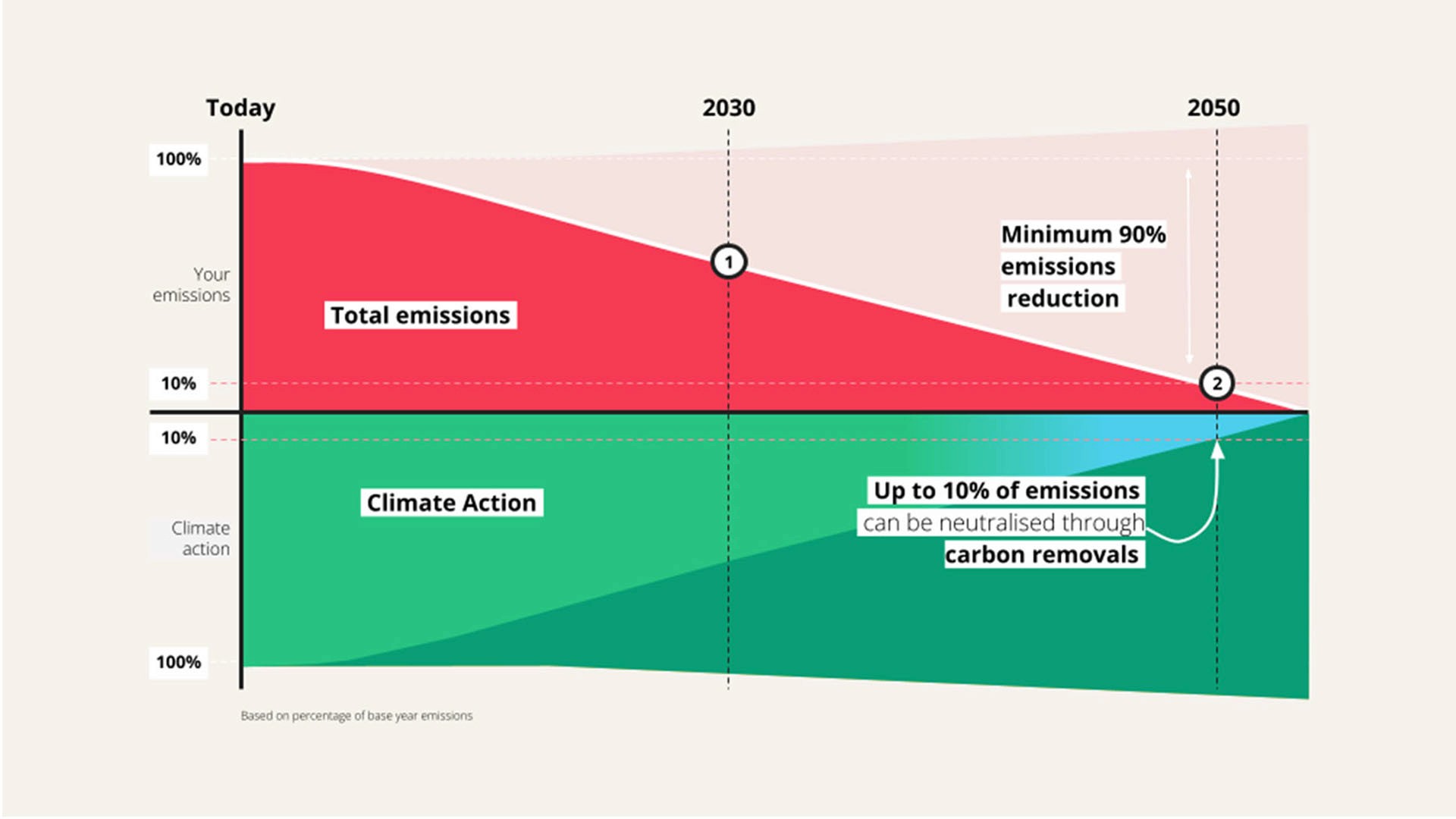
Reducing operational emissions is essential, but it can take time. So while on the journey to net-zero, it is also important for businesses to make an immediate impact by funding high-quality climate action today. Purchasing carbon credits helps businesses do just that.
Purchasing carbon removal credits is particularly relevant towards the later stages of the net-zero journey. Once a business has reduced its emissions by at least 90%, carbon removal credits can be used to balance remaining, unavoidable emissions and reach net zero.
What are carbon credits?
Carbon credits provide funding, often referred to as carbon finance, to projects in exchange for activities that avoid or remove greenhouse gas emissions from the atmosphere. These projects can also deliver wider benefits such as community development, protecting vulnerable ecosystems, or installing energy-efficient technology.
When your business purchases carbon credits, it directly funds these projects. After purchase, the credit is permanently retired, meaning it cannot be reused or resold.
Carbon credits are generally categorised as either carbon avoidance or carbon removal credits. Each carbon credit represents one metric tonne of greenhouse gas emissions that has either been avoided, for example by switching to renewable energy, or removed from the atmosphere, such as locking carbon safely away through the production of biochar.
How are carbon credits created?
The process begins with project developers designing projects with the aim of avoiding or removing carbon dioxide, or carbon dioxide equivalent, emissions.
When a developer establishes their project, such as a solar power plant, they can choose to follow a stringent assessment methodology developed by a recognised carbon standards organisation, such as the Gold Standard or the Verified Carbon Standard. These methodologies assess the real-world emissions reductions or removals that result from the project activity.
This impact is measured in tonnes of carbon dioxide (tCO₂) or tonnes of carbon dioxide equivalent (tCO₂e). Carbon dioxide equivalent is a standardised unit used to compare the climate effects of different greenhouse gases based on their global warming potential over a defined timeframe.
Each tonne of carbon dioxide equivalent avoided or removed by the project activity is represented by a carbon credit, which is issued to the project developer. A carbon credit is often described as a permit or licence to emit one tonne of carbon dioxide or carbon dioxide equivalent.
How do carbon credits work?
Carbon credits are generated through a wide range of emissions reduction or removal projects, including afforestation, biochar, blue carbon removal and renewable energy production.
These projects are rigorously assessed and verified to ensure they result in real and measurable emissions reductions or removals. Once validated, projects are issued carbon credits in proportion to the amount of carbon dioxide equivalent they prevent or remove from the atmosphere.
Carbon credits are issued by carbon standards, which are organisations that set the criteria projects must meet to earn credits. Each carbon standard has its own methodologies and requirements.
At Ecologi, we work with three carbon standards:
Verified Carbon Standard includes the Climate, Community and Biodiversity Standard (CCBS) and the Sustainable Development Verified Impact Standard (SDVista) certifications.
Gold Standard assesses projects based on their contributions to the UN Sustainable Development Goals (SDGs), as well as emissions avoidance or removal.
Puro Standard is a dedicated standard for carbon removal credits (which actively absorb existing emissions out of the atmosphere through natural or technological processes).
How are carbon credits bought and sold?
Carbon credits are bought and sold on the voluntary carbon market through a range of platforms and exchanges. Businesses can purchase carbon credits directly from project developers, through brokers, or via carbon credit trading platforms.
Carbon credit trading can take place in both voluntary and compliance markets. In the voluntary market, businesses choose to purchase credits to balance their emissions, demonstrate environmental responsibility and support their sustainability goals.
Compliance markets operate within regulated emissions trading schemes, where organisations must acquire sufficient allowances or credits to meet legal requirements.
See how the leading UK carbon offset providers compare on credit quality, Oxford Principles alignment, and regulatory support in our 2026 provider comparison.
How much are carbon credits worth?
The price of carbon credits varies depending on several factors, including market demand and regulatory context. As with other commodities, supply and demand influence pricing.
Other factors that affect carbon credit prices include the credibility of the project, its co-benefits beyond emissions avoidance or removal, the scale and location of the project, and the technologies involved.
On the voluntary carbon market, prices typically range from around £3 to £50 per tonne of carbon dioxide equivalent, with some innovative carbon removal technologies priced higher.
Why should a business consider buying carbon credits?
Investing in carbon credits can offer several benefits for businesses:
Environmental responsibility
Purchasing carbon credits allows businesses to support climate action and contribute to reducing global greenhouse gas emissions.
Brand reputation
Funding carbon credits as part of a net-zero journey can enhance brand reputation and appeal to environmentally conscious customers.
Investor appeal
Supporting carbon avoidance and removal projects can strengthen a business’s sustainability credentials and attract responsible investment.
Risk management
Carbon credits can help businesses prepare for future regulatory changes or carbon pricing mechanisms.
Employee engagement
Supporting climate action can help engage employees and foster pride and purpose across teams.
Are carbon credits a good investment for businesses?
Financially supporting carbon avoidance and removal projects through high-quality carbon credits plays an important role in the transition to net-zero by reducing the amount of greenhouse gases entering the atmosphere.
Whether to invest in carbon credits depends on a business’s sustainability goals, regulatory environment and financial considerations. Carbon credits can deliver environmental benefits and reputational value, but quality matters.
Not all carbon credits are created equal. While some credits may be low quality, many high-quality carbon credits finance real, verifiable emissions avoidance and removal. Businesses should carefully assess project credibility before making purchasing decisions.
At Ecologi, we only work with carefully selected partners, and all projects we support are verified and high quality.
Are carbon credits tax deductible?
In the UK, the purchase of carbon credits may be tax deductible in certain circumstances. Tax treatment depends on factors such as the purpose of the expenditure, the nature of the business and compliance with relevant tax regulations.
Businesses should seek advice from qualified tax or legal professionals to understand the implications specific to their situation.
How Ecologi can help you fund high-quality carbon credits
At Ecologi, we understand that carbon markets can feel complex. Our expert team helps businesses navigate carbon credits and choose high-quality projects with confidence.
We select projects according to our climate impact regionalisation strategy, focusing funding on projects and locations with the greatest potential impact. We only support projects that meet strict quality criteria and are verified by Gold Standard, Verified Carbon Standard or Puro Standard.
Projects funded through our Impact Shop, automations and integrations are also independently assessed, and we never re-trade carbon credits. All credits are retired and published on our Public Impact Ledger, ensuring transparency and trust.
How Ecologi can support your carbon reduction strategy
We support businesses of all sizes across their climate journey. From measuring your carbon footprint, to funding verified carbon avoidance and removal projects, to restoring nature through tree planting and reforestation, we help turn climate commitments into action.
If you need a tailored climate solution or are unsure where to start, our expert team can create an approach that fits your business and goals.