
Philanthropic Projects Manager
7 min read
Navigating the different paths to nature-positive impact
Businesses looking to fund nature-positive action often look to tree planting projects as a well-understood climate solution. What many businesses don’t realise is that tree planting is a broad term to describe a range of tree-based climate interventions. Two terms that describe two very different types of tree planting projects are landscape restoration and agroforestry. Both can support communities. Both can contribute to climate and nature goals. But they use trees very differently to achieve different sets of outcomes.
Confusing the two can lead to oversimplified claims, missed opportunities for deeper impact, and a limited understanding of what your funding is really supporting. In practice, the difference comes down to scale, purpose, permanence, complexity, and the types of outcomes a project is designed to deliver.
Across the sector, there is a growing shift away from focusing purely on how many trees are planted, and towards understanding the broader outcomes projects create for people, biodiversity, water, soil, and long-term ecosystem resilience.
In this article, we break down the difference between agroforestry and landscape restoration, explain why the distinction matters for businesses, and offer a practical framework to help sustainability leaders fund nature with greater confidence, in line with their business goals.
Defining agroforestry and landscape restoration
What is agroforestry?
Agroforestry is the integration of trees into agricultural land. In practice, that means trees are planted within farming systems to support crop production, farmer livelihoods, and land health and resilience. This makes agroforestry a powerful climate solution for working landscapes.
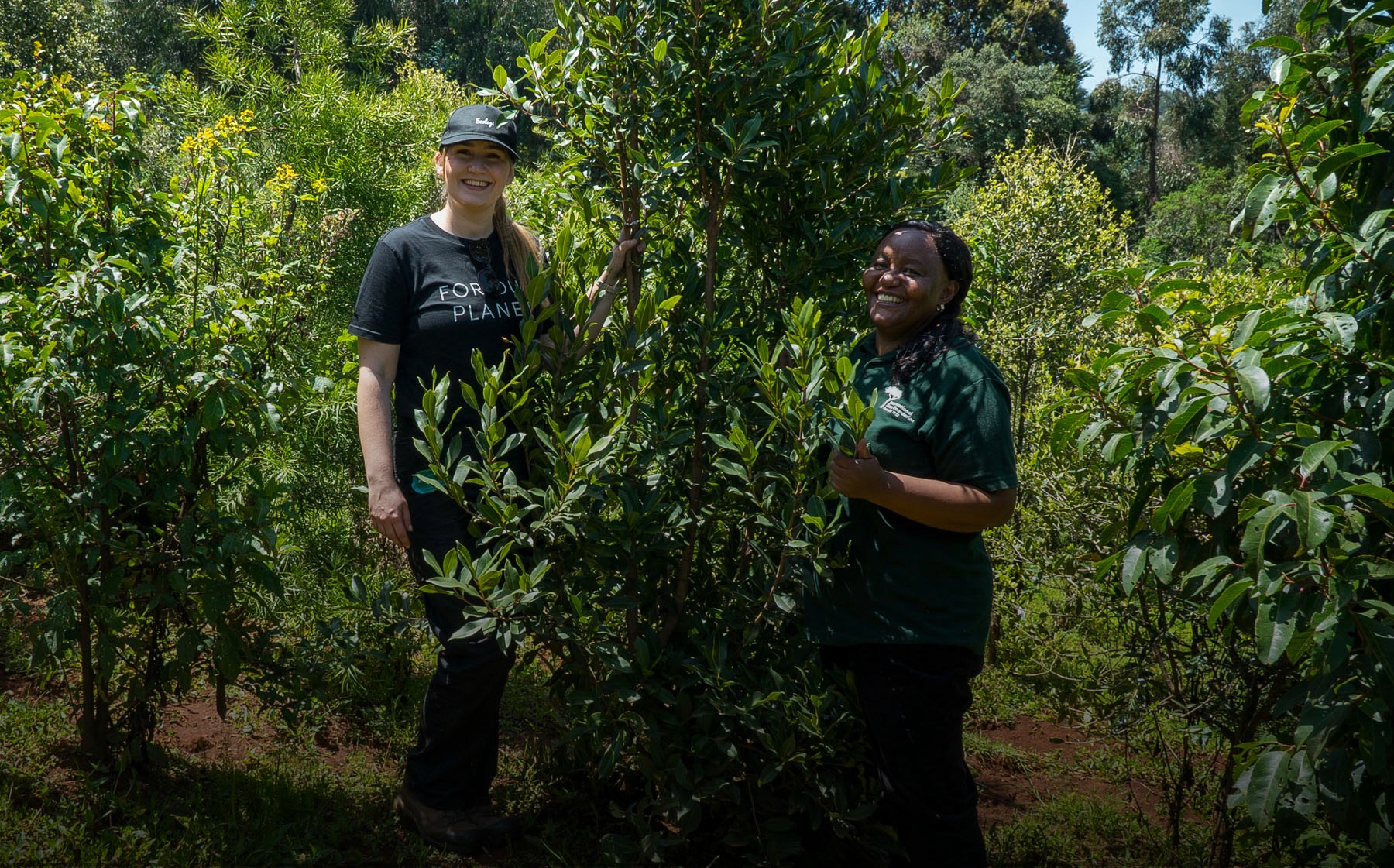
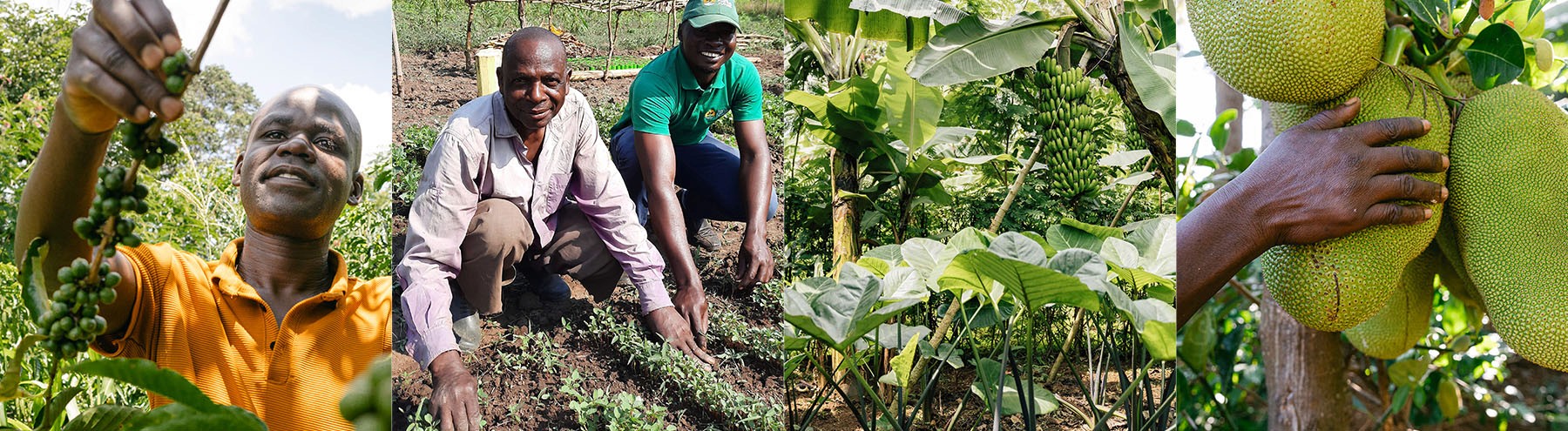
An example of an agroforestry project can be seen below. The Ecologi team visited this project in Uganda in 2025, and we witnessed the transformational effect that high-quality agroforestry projects can have on farmers, families and communities. The trees planted through this agroforestry project also had positive impacts on biodiversity and soil health by removing the use of artificial fertilisers and insecticides, and creating diverse plots supporting a range of different native species. This ‘Forest Garden’ approach was recognised as a UN World Restoration Flagship in 2024, signifying its value as a means to producing outcomes for biodiversity and nurturing local leadership.
Planting Forest Gardens in Uganda
What is landscape restoration?
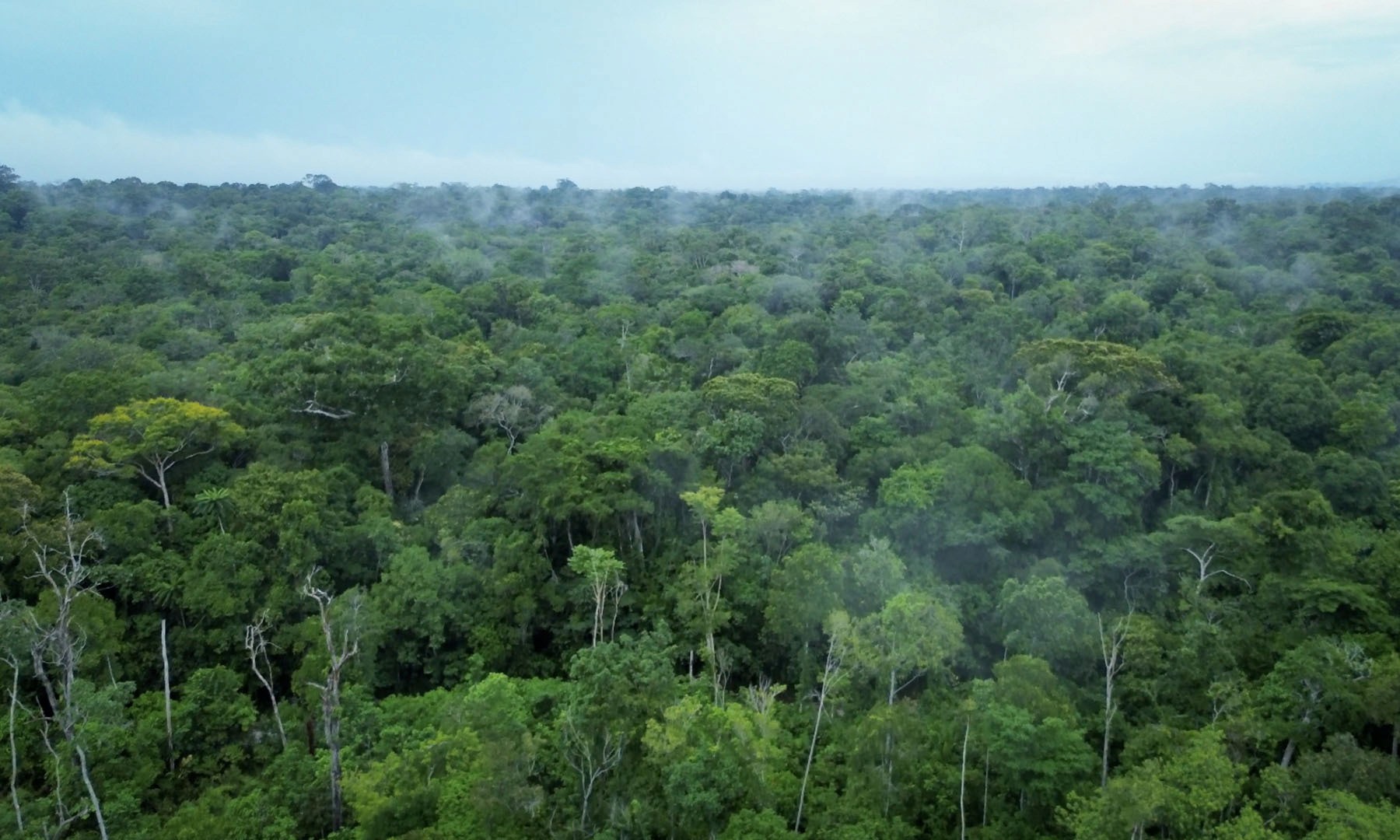
Landscape restoration is a holistic approach to restoring ecosystems. It goes beyond tree planting to consider how an entire landscape functions ecologically and socially, including biodiversity, water systems, soil health, and community outcomes.
In practice, this approach can include a combination of interventions such as restoring degraded forests, protecting existing ecosystems, improving water cycles, supporting local livelihoods, establishing protected areas, and working closely with communities and governments to ensure long-term stewardship.
Landscape restoration projects can vary widely in form, but what makes them effective is their focus on long-term impact, local collaboration, and restoring ecological function across a defined landscape.
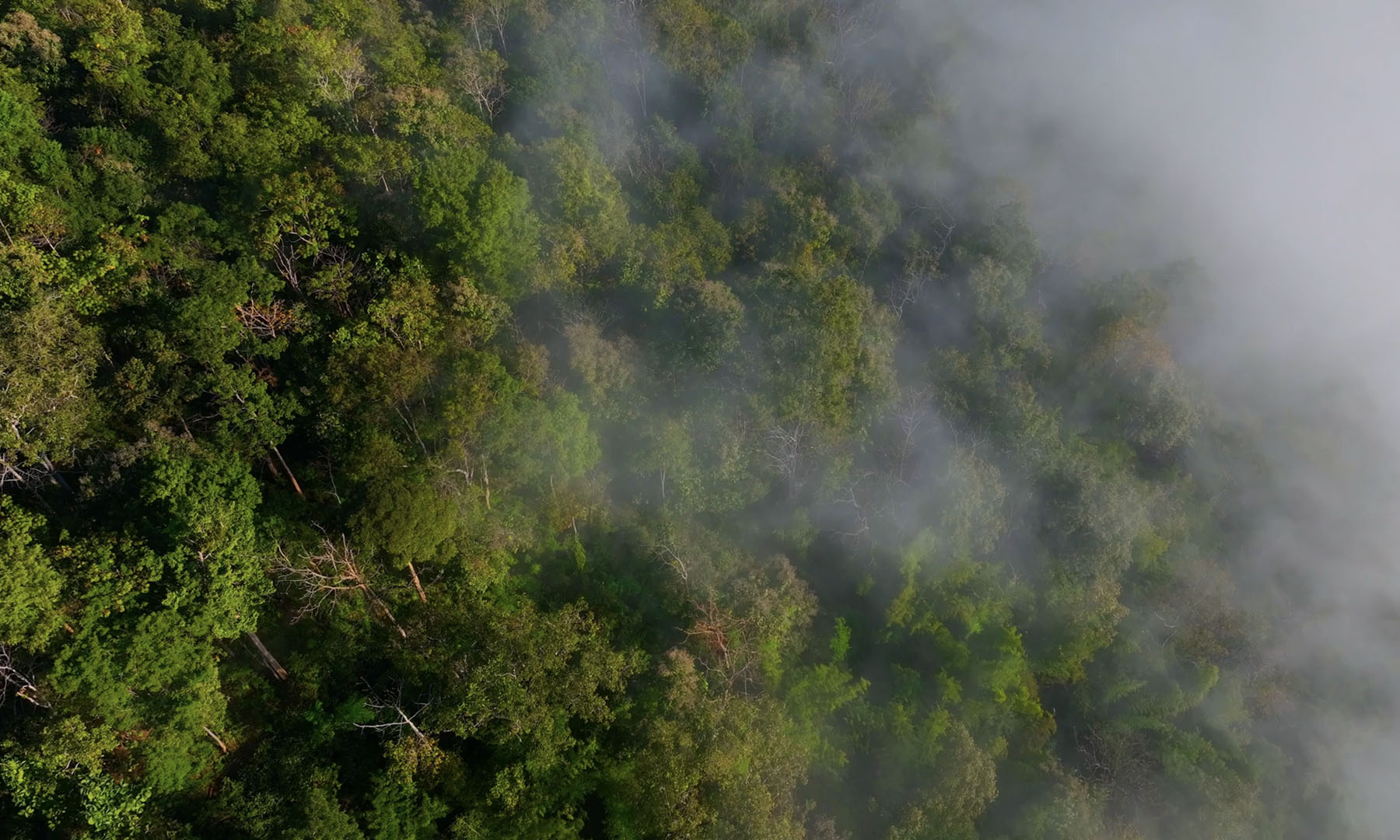
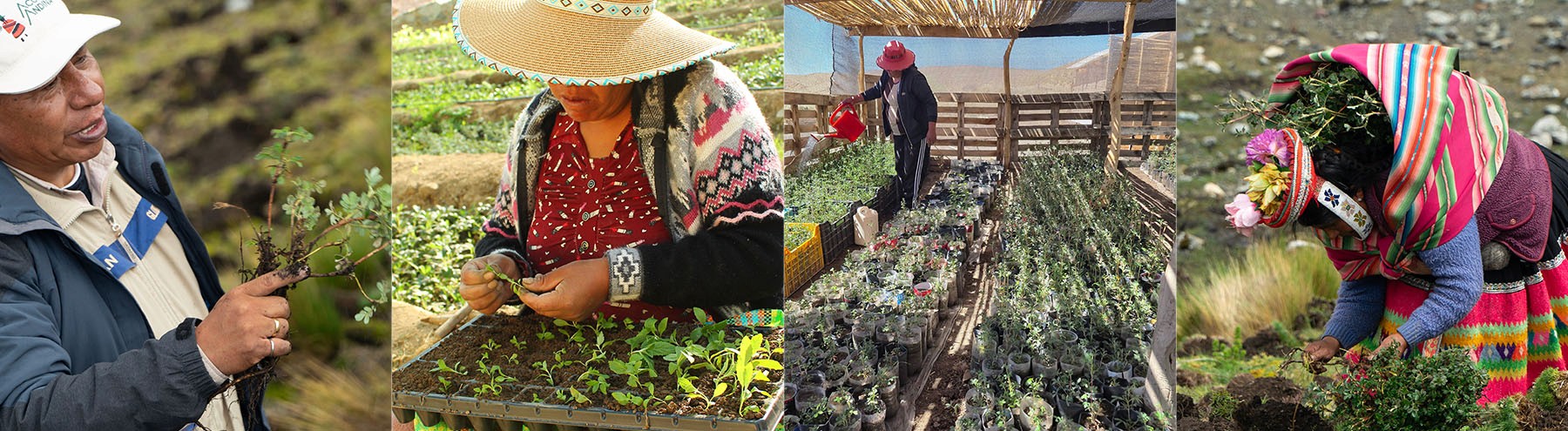
An example of a landscape restoration project can be seen below. The Ecologi team visited this project in 2024, and saw how the impacts of this project spread far and wide, across whole communities. Centering local leadership in project design enables project outcomes to support the real needs of local people, from financing solar panels on school buildings to building reservoirs to ensure a constant supply of water through the dry summer months. This initiative was also named a UN World Restoration Flagship in 2024, as well as being an Earthshot prize winner
Restoring native Polylepis Forests in the High Andes
Key differences between landscape restoration and agroforestry
There are a number of important differences between agroforestry and landscape restoration, including:
The scale at which they operate
Their main objectives
Who owns and manages the trees
How permanent the outcomes are likely to be
The types of benefits they deliver
How success is measured
The cost and complexity of delivery
How they are best positioned within a business nature strategy
We’ve summarised those differences here and explored each one in more detail below.
Category | Agroforestry | Landscape restoration |
|---|---|---|
Definition | Integrating trees into farmland to support sustainable agriculture and livelihoods | Restoring ecosystems and landscapes through holistic, multi-outcome interventions for long-term benefits for nature, people and the climate |
Scale | Individual farms, often grouped together to enable learnings to be shared | Landscape or ecosystem level |
Primary objective | Increasing productivity, climate resilience, and farmer income and wellbeing | Ecological recovery, biodiversity, ecosystem function, and community resilience and wellbeing |
Land ownership | Farmer-owned | Varies but often delivered through coordinated partnerships across shared landscapes with legal protections in place |
Permanence | No long-term control over trees | Strong long-term stewardship and protection |
Main benefits | Sustainable livelihoods, crop protection, soil protection | Biodiversity enhancement, water security, soil health, ecosystem resilience, sustainable livelihoods |
Project design | Tree-based intervention within agricultural systems | Multi-layered approach that may include planting, protection, governance, and community programmes |
Measurement | Often easier to communicate through farm benefits and trees distributed | Better measured through broader ecological and social outcomes |
Cost | Often lower-cost | Usually more expensive due to additional tree monitoring, management and protection costs, and community co-benefit initiatives |
Business use case | Scalable, accessible, practical intervention | Strategic, outcomes-based investment in long-term nature recovery |
Why “tree planting” doesn’t tell the whole story
Tree planting is a broad term that can refer to a range of different types of nature-based solutions. Focusing only on the number of trees planted often results in overlooking the outcomes of the projects within which they are planted. Depending on the outcomes businesses are seeking to fund, one type of tree planting project is likely to be better suited to their goals than others.
The purpose of different types of tree planting projects
Long-term protection and survival rates
One of the most important practical differences between agroforestry and landscape restoration is who controls what happens after trees are planted.
In agroforestry systems, trees are planted for a number of purposes. Each farmer will have their own requirements for what they look to gain from the trees, and they have full control over the trees distributed to them, including where on their land they are planted, and what happens to them once they have been planted. This supports strong local ownership and livelihood benefits as planting is precisely planned to maximise specific outcomes desired by the individual.
As well as providing shade and crop protection, stabilising soils and retaining moisture, and bearing fruits, nuts and other crops that farmers can use and sell to sustain their families, some agroforestry trees are planted to provide sustainable sources of other resources, such as timber and fuel wood. By using wood from their own land in a sustainable way, deforestation of other wood sources nearby is reduced, helping to protect existing forests from being harvested unsustainably. Indeed, agroforestry often forms an important part of landscape restoration projects, because this reduction in damage to forests is key to ensuring that trees planted to restore degraded forests are protected.
This means that one of the key metrics used to determine the success of a tree planting project - survival rate - can appear to demonstrate that many agroforestry projects are often not as “good” as landscape restoration projects. In reality, if a tree was planted to be harvested, and an existing tree was protected as a result, the tree has done its job.
Key to ensuring an agroforestry project is of a high quality is the education and training farmers receive about how to maximise the benefits of the trees they receive, and how to sustainably harvest if that is a desired outcome. Ultimately though, we cannot mandate what happens to their trees once they are planted.
Landscape restoration projects, by contrast, are designed with long-term protection and stewardship in mind.
They are often delivered through partnerships with local communities, local NGOs, and government agencies, with clear plans for ongoing restoration, monitoring, and protection.
Because of this, landscape restoration is generally better suited to delivering durable, long-term ecological outcomes at scale.
In short: Agroforestry tends to offer less certainty over long-term permanence because trees are under farmer control. Landscape restoration is intentionally designed for long-term stewardship and ecological restoration.
Biodiversity, water, soil, and livelihoods: what each approach delivers
Agroforestry projects focus on improving agricultural systems by protecting and supporting healthy soils, retaining moisture, protecting crops from grazing, and maximising the use of available space. Together, these actions result in increasing productivity, strengthening resilience to climate impacts, and supporting sustainable livelihoods.
Landscape restoration, on the other hand, is designed to deliver broader ecosystem benefits. These can include biodiversity protection and enhancement, reliable water cycles, reduced soil erosion, and increased resilience for both ecosystems and communities. The highest quality landscape restoration projects will incorporate substantial social benefits too, creating new, sustainable income streams for local people, delivering initiatives that support health and education, and championing marginalised members of communities.
In short: Agroforestry tends to prioritise productive land use and livelihood resilience, while landscape restoration targets ecological recovery and ecosystem services alongside social benefits.
Cost and complexity: why not all tree projects are priced the same
While agroforestry can be relatively low-cost, effective landscape restoration projects require a much broader set of activities. These can include ongoing community engagement, training and biodiversity monitoring, and long-term tree maintenance and project management. As a result, landscape restoration projects are often more expensive than agroforestry projects. The additional cost reflects the long-term nature and complexity of actions required to deliver meaningful, lasting outcomes for both people and nature.
This is a crucial point for businesses.
If your goal is to fund the planting of as many trees as possible, lower-cost agroforestry projects may be a climate solution that will give you the outcomes you’re seeking, such as supporting sustainable livelihoods. Funding agroforestry is a meaningful way to support some of the people most affected by - and least responsible for - climate change, enabling them to protect and enhance their income streams in a sustainable way, bringing genuine benefits for farmers, their families and their communities. For example, increased income enables farmers to pay their children’s school fees, and healthy, diverse crop yields support healthy living.
If you are looking to fund the restoration of ecosystems, and expect the trees you fund to be managed and protected to increase tree coverage in the long-term, funding landscape restoration is likely to be the best option for you. Through landscape restoration projects, trees and landscapes can be protected, while also supporting local communities, and the goal is to restore degraded land by accelerating natural processes to help healthy, resilient ecosystems become established. With this comes protected and healthier habitats for wildlife, enhanced ecosystem services, and landscapes that support health, culture and sustainable livelihoods.
That is why the two interventions should not be treated as interchangeable, even though they both involve tree planting.
How to decide: landscape restoration or agroforestry (or both)?
Many businesses want a simple answer: which is better?
The reality is that the right choice depends on what outcomes you are trying to support.
Choose agroforestry if your priority is:
Supporting farmer livelihoods
Strengthening agricultural resilience
Improving productivity on working land
Funding scalable tree-based interventions
Connecting climate and nature action to rural economic development
Agroforestry can be especially compelling where business value chains are closely connected to farming systems or where community livelihoods are central to the desired impact.
Choose landscape restoration if your priority is:
Restoring ecosystems at scale
Supporting biodiversity and water security
Funding long-term, holistic nature recovery
Demonstrating broader nature-positive outcomes
Investing in projects with stronger governance, protection, and monitoring systems
Landscape restoration can be especially compelling for businesses seeking robust nature-positive storytelling, ecosystem resilience, and outcomes that go beyond tree counts.
In many cases, the answer is: fund both!
In practice, agroforestry and landscape restoration are not always separate approaches. Many high-quality landscape restoration projects include agroforestry as one component within a wider strategy.
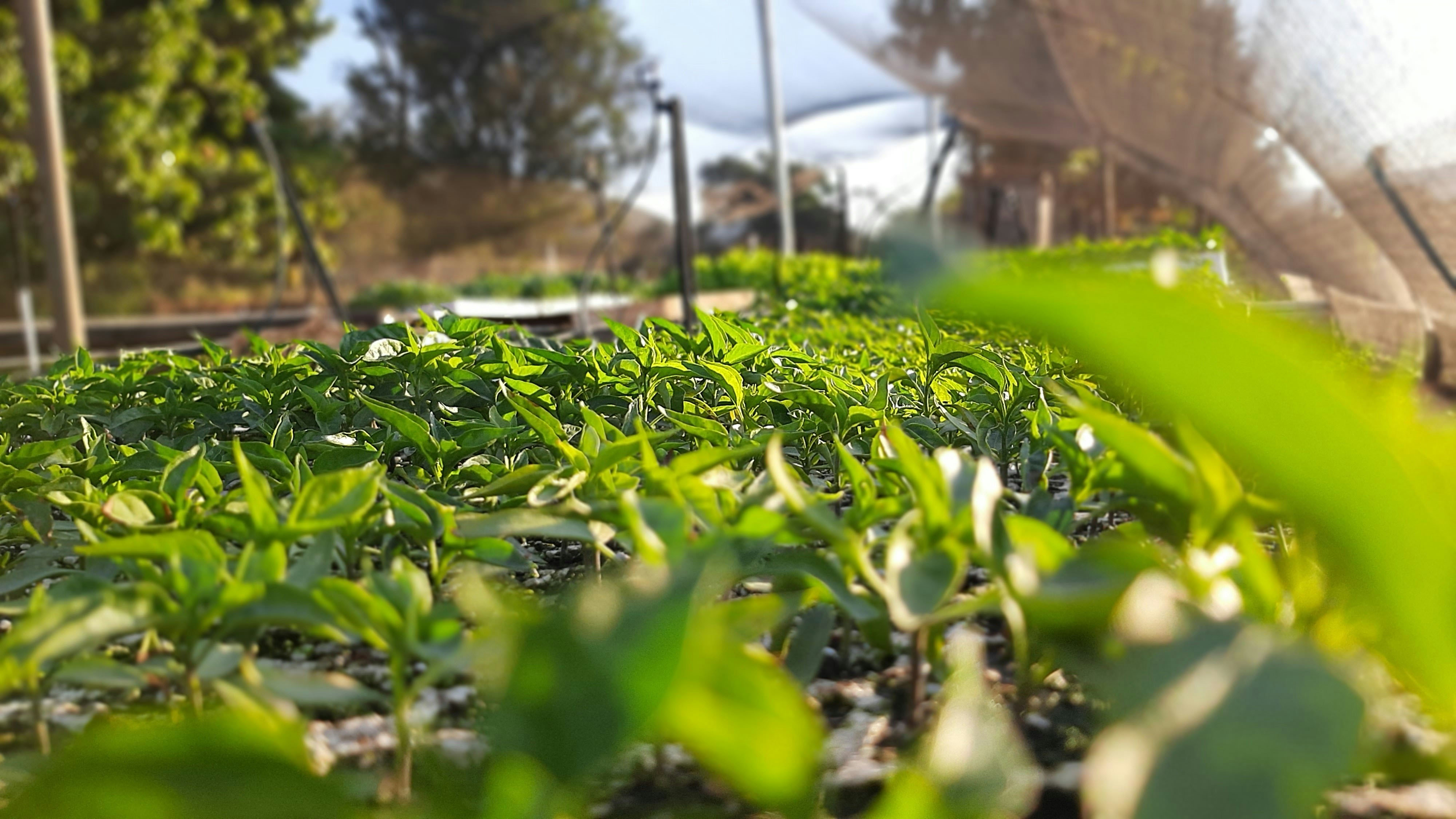
For example, in 2022 Ecologi began supporting a project in Kakamega, Kenya. The main purpose was to restore the last fragment of tropical rainforest in Kenya forest, but to support that outcome, 30,000 fruit trees were distributed to 408 farmers locally to support sustainable livelihoods, improved diets, and help protect soils, as well as increase local buy-in for the forest restoration work to help protect the forest.
This highlights an important point: agroforestry and landscape restoration are not opposites. Agroforestry can be one tool within a broader landscape restoration model, alongside other interventions designed to restore ecosystems at scale.
A practical framework for businesses funding nature
If your business is deciding how to support nature, these four questions can help.
1) What scale of impact are you trying to support?
If you want to improve outcomes on small-holder farms, agroforestry may be the right fit.
If you want to restore ecosystem function across a wider geography, landscape restoration is likely the better option.
2) What outcomes matter most to your stakeholders?
If your stakeholders care about farmer resilience, livelihoods, regenerative agriculture, and sustainable land use, agroforestry may resonate strongly.
If they care about biodiversity, water security, ecosystem resilience, and measurable nature-positive outcomes, landscape restoration may be more suitable.
3) How important is long-term permanence?
If long-term protection and stewardship are especially important, landscape restoration may offer stronger foundations, as projects are typically designed around governance, community ownership, and ongoing protection.
If your goal is to support useful and immediate benefits in agricultural systems, agroforestry can still be highly valuable, even if long-term control is less certain.
4) Are you still thinking in tree counts - or in outcomes?
One of the most important shifts in the sector is moving beyond counting trees as the primary measure of success.
Instead of focusing only on how many trees are planted, businesses are increasingly being encouraged to consider the wider outcomes their funding enables.
That means asking:
What ecosystem is being restored?
Who is involved in delivering and maintaining the project?
What happens after planting?
How is success measured?
What long-term social and ecological outcomes will endure?
Conclusion: fund outcomes, not just inputs
Agroforestry and landscape restoration both have an important role to play in nature recovery. But they are not interchangeable.
Agroforestry integrates trees into farmer-owned land to support livelihoods, productivity, and agricultural resilience. Landscape restoration is a broader, more holistic approach that restores ecosystems and the communities connected to them through long-term, multi-outcome interventions.
Ultimately, the most credible nature strategies are those that move beyond simple inputs and focus on outcomes: stronger ecosystems, more resilient communities, stronger biodiversity, cleaner water, healthier soils, and lasting positive change.
Build your nature strategy with confidence. Work with Ecologi.
Funding nature is about more than planting trees. It means understanding which interventions are right for which landscapes, what outcomes they are designed to deliver, and how to communicate your contribution with confidence and credibility.
Whether you are looking to fund agroforestry, landscape restoration or both, Ecologi ensures that the projects you contribute to are delivered with trusted partners and are of a high quality.
At Ecologi, we help businesses support high-quality nature projects with a stronger focus on outcomes.
Want to explore the right approach for your business?
Schedule a discovery call with our team, or learn more about how Ecologi assesses nature projects through our Nature Projects Assessment Framework.