Carbon avoidance

Fuel-efficient cookstoves in Uganda

Fuel-efficient cookstoves in Uganda

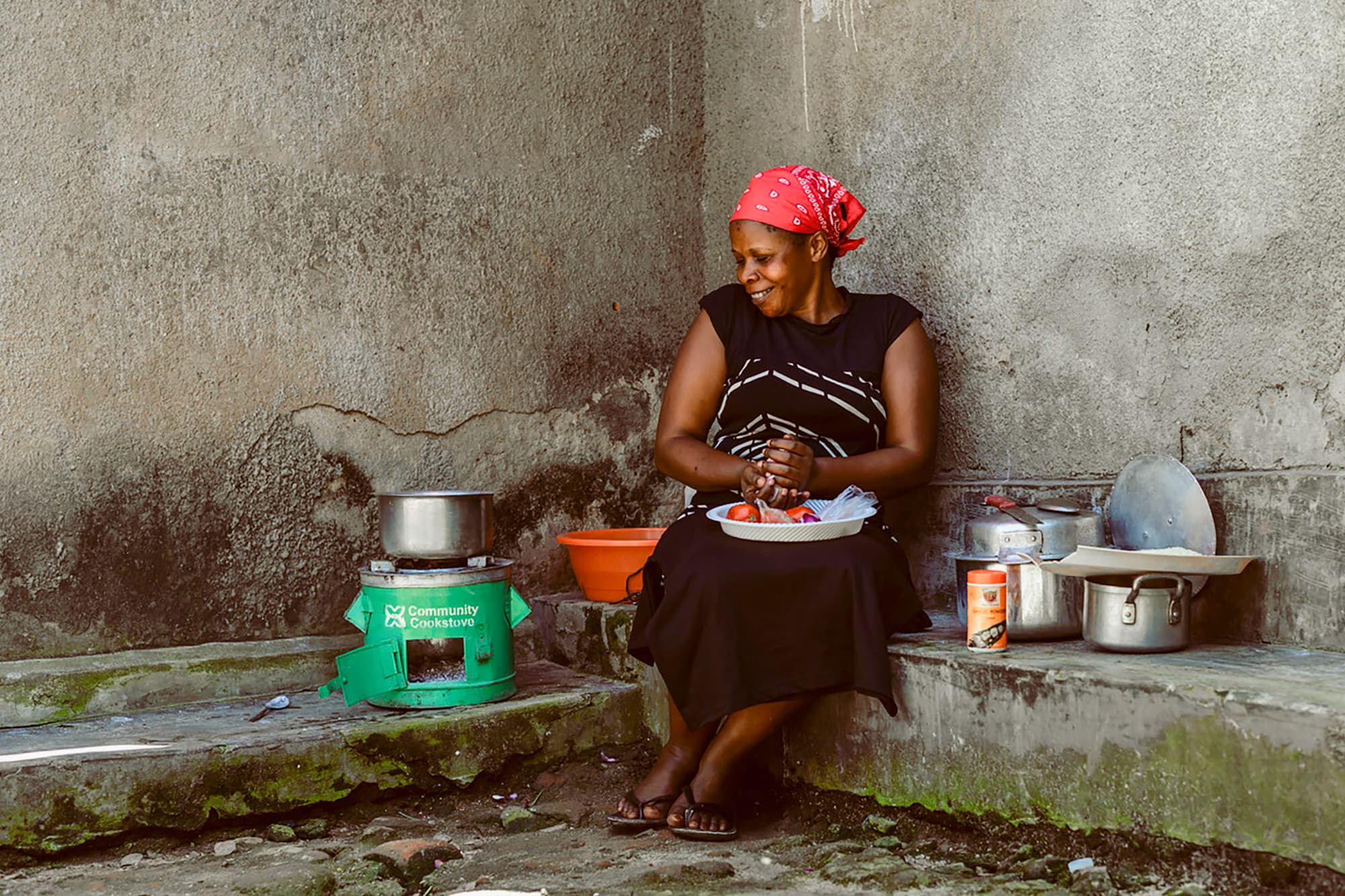
According to the World Bank, around 42% of Ugandans live on less than $2.15 per day. Rural families, especially women, face long hours collecting firewood and cooking over smoky open fires. The lack of access to clean cooking remains very acute in sub-Saharan Africa with only 17% of the population having clean cooking access. These aren’t just environmental challenges; they’re deep, structural issues of time, health, equity, and access.

Almost 490,000 premature deaths per year are related to household air pollution from the lack of access to clean cooking facilities, with women and children the worst affected. That’s why clean cookstoves are not solely a climate solution – they are a societal one.

The purpose of the project is to support clean cooking interventions that reduce greenhouse gas (GHG) emissions from the burning of non-renewable woody biomass and/or charcoal for cooking in Uganda.

UpEnergy

UpEnergy, headquartered in Uganda, is at the forefront of this change, fighting energy poverty and climate change by delivering affordable, life-improving technologies to low-income communities across Africa.

They are responsible for every part of the project, from the engineering and continuous R&D of the stoves to data analytics, MRV, carbon finance, and registry compliance.

The entire stove manufacturing process is done in-house, including sourcing, moulding, and crafting the clay and metal bases, as well as painting and final assembly. Even the distribution centres and sales teams are fully localised and managed internally. It’s an incredibly impressive, self-sufficient operation, and we were fortunate to tag along during our site visit to see how each sector functions seamlessly together.

Locations

Uganda

Timeline

Follow the latest milestones and updates from this project.

Dec 2025

Design Certification Renewal (CP2) Validation

  • Finalised updated VPA Design Document Version 7.0 on Dec 09, 2025
  • KBS Certification Services Limited completed Validation Report on Dec 16, 2025
  • Approved Design Certification Renewal for Crediting Period 2 (CP2) under updated methodology TPDDTEC v4.0 with an estimated average annual reduction of 192,328 tCO2e
Sep 2025

Ecologi Site Visit, Uganda 2025

The Ecologi team visited UpEnergy’s Uganda office in Kampala in May 2025, for routine project assessment and to gain deeper insights into how this project operates on the ground. Our team observed the full lifecycle of the Community Carbon cookstoves right from the initial manufacture. Speaking with the local team, we were able to see just how impactful the scaling of UpEnergy’s Community Carbon programme has been over the last couple of years that the project has been supported by Ecologi. We toured the newly expanded production site, which has been enabled for this local manufacturer through the support of carbon finance from UpEnergy.

Jan 2024
Fourth Monitoring Period

Fourth Monitoring Period

Ended 31st December 2024

Within the period:

  • Over 587,000 tonnes of CO₂e were avoided
Jan 2023
Third Monitoring Period

Third Monitoring Period

Ended 31st December 2023

Within the period:

  • 616,492 tonnes of CO₂e were avoided
Aug 2022

Finalisation of VPA Design Document (Version 5.0) for VPA 1

  • Completed VPA-DD Version 5.0 reflecting large-scale program adjustments and eligibility criteria compliance
Dec 2021

Gold Standard Design Certification Awarded

  • Obtained formal Gold Standard Design Certification for VPA 1 (GS10967)
  • Validated baseline scenarios, additionality, and targeted SDG contributions
Dec 2021
Second Monitoring Period

Second Monitoring Period

Ended 31st December 2022

Within the period:

  • 612,951 tCO2 tonnes of CO₂e were avoided
Nov 2021

Execution of First Project Monitoring Survey

  • Conducted initial household sampling and biomass consumption surveys across project sites in Uganda
  • Monitored specific fuel consumption, device usage rates, and reported household savings
Sep 2021
Local stakeholder consultation

Local stakeholder consultation

A physical local stakeholder consultation meeting was conducted and invitations were sent to stakeholders along with feedback forms and non-technical summaries via email.

Jan 2021

Initial VPA Design Document (VPA-DD) Submission for VPA 1

  • Formally submitted the initial VPA Design Document under Gold Standard ID 10967
  • Outlined technical specifications for Improved Cookstoves and Electric Pressure Cookers (EPC)
Jan 2021
First monitoring period

First monitoring period

Ended 30th November 2021

Within the period:

  • 47,488 tonnes of CO₂e were avoided
Jan 2021

Project creation

  • Initiated the 20-year Programme of Activity (PoA) period running through Dec 31, 2040
  • Commenced the 5-year crediting period for VPA 1 (Community Carbon Efficient Cooking Programme) in Uganda
  • Launched physical distribution of Improved Cookstoves (ICS) to residential end-users in Uganda

Benefits

Community Carbon, an initiative by UpEnergy, distributes fuel-efficient charcoal cookstoves that reduce household charcoal consumption by 45%–55%, significantly cutting greenhouse gas emissions. These stoves, with improved thermal efficiency, contribute directly to mitigating climate change by lowering the need for biomass fuel and reducing deforestation. From January to December 2024, over 587,000 tonnes of CO₂e were avoided.

Through these projects, UpEnergy not only reduces emissions but also funds the Climate Resilience Impact Fund, reinvesting payments from emissions reductions into high-impact programmes. These efforts amplify the project's climate impact by supporting initiatives that empower women and girls, who are critical agents of change in addressing climate challenges.

Sustainable development goals

These Sustainable Development Goals show the wider outcomes this project supports beyond its headline impact.

No Poverty

By reducing household fuel costs through fuel-efficient cookstoves, the project enables families to save money and invest in essential needs like education and healthcare. This indicator is measured by the percentage of users reporting money saving due to reduction in purchased fuel consumption in project.

Good Health and Well-Being

The project significantly reduces indoor air pollution by lowering exposure to harmful smoke, improving respiratory health, and reducing the risk of premature deaths caused by hazardous cooking methods. This SDG is measured by the percentage of users reporting reduction in smoke/PM after shifting to the cleaner cookstoves.

Affordable and Clean Energy

The initiative promotes access to affordable, sustainable, and cleaner cooking technologies for low-income communities, bridging the energy gap in areas without modern energy infrastructure. This SDG is measured by the number of households with operational stoves.

Decent Work and Economic Growth

By locally manufacturing the cookstoves, the project stimulates economic activity, creates jobs throughout the supply chain, and fosters entrepreneurship within the community. This is measured by the number of jobs or new entrepreneurship activities created due to the project.

Responsible Consumption and Production

The fuel-efficient stoves reduce the reliance on unsustainable biomass fuels like charcoal and firewood, encouraging responsible use of natural resources and promoting sustainable consumption practices. This is measured by the average % fuel savings reported by users in the project and the reduction in use of non-renewable biomass per household calculated during the estimation of emission reductions.

Climate Action

By cutting greenhouse gas emissions and reducing deforestation, the project contributes directly to global efforts to combat climate change and promotes sustainable energy practices. This is monitored by the total greenhouse gas emissions reduction per year.

Life on Land

The project helps protect forests and local ecosystems by reducing the demand for wood and charcoal, preserving biodiversity and supporting the long-term health of natural habitats. This is monitored annually by the reduction in use of non-renewable biomass per household calculated during the estimation of emission reductions.

Verification

These partners help deliver the project and verify its impact.

Supplier

UpEnergy

UpEnergy

UpEnergy builds high-quality decarbonisation projects that improve lives. They do this with support from partners who believe in a just energy transition in which low-income people are prioritised by climate finance.

Verifier

Gold standard

Gold standard

This project is verified by the Gold Standard.