Case study
University of Derby: leading climate innovation in higher education
Restore
Large Business
Education

At a glance
Location
UK
Company size
1,000-5,000 FTE
Industry
Education
Services used
The University of Derby wanted to follow UK Green Building Council (UKGBC) guidance for 'net-zero carbon construction'
Overall climate journey
Carbon removal and avoidance credits

The issue
As part of the University of Derby’s wider sustainability strategy, and along with their goals to protect the environment, prevent pollution, and to achieve net zero by 2050, the University of Derby is tackling some of the hardest to abate emissions head-on.
Delivering net-zero embodied carbon at the Cavendish Building
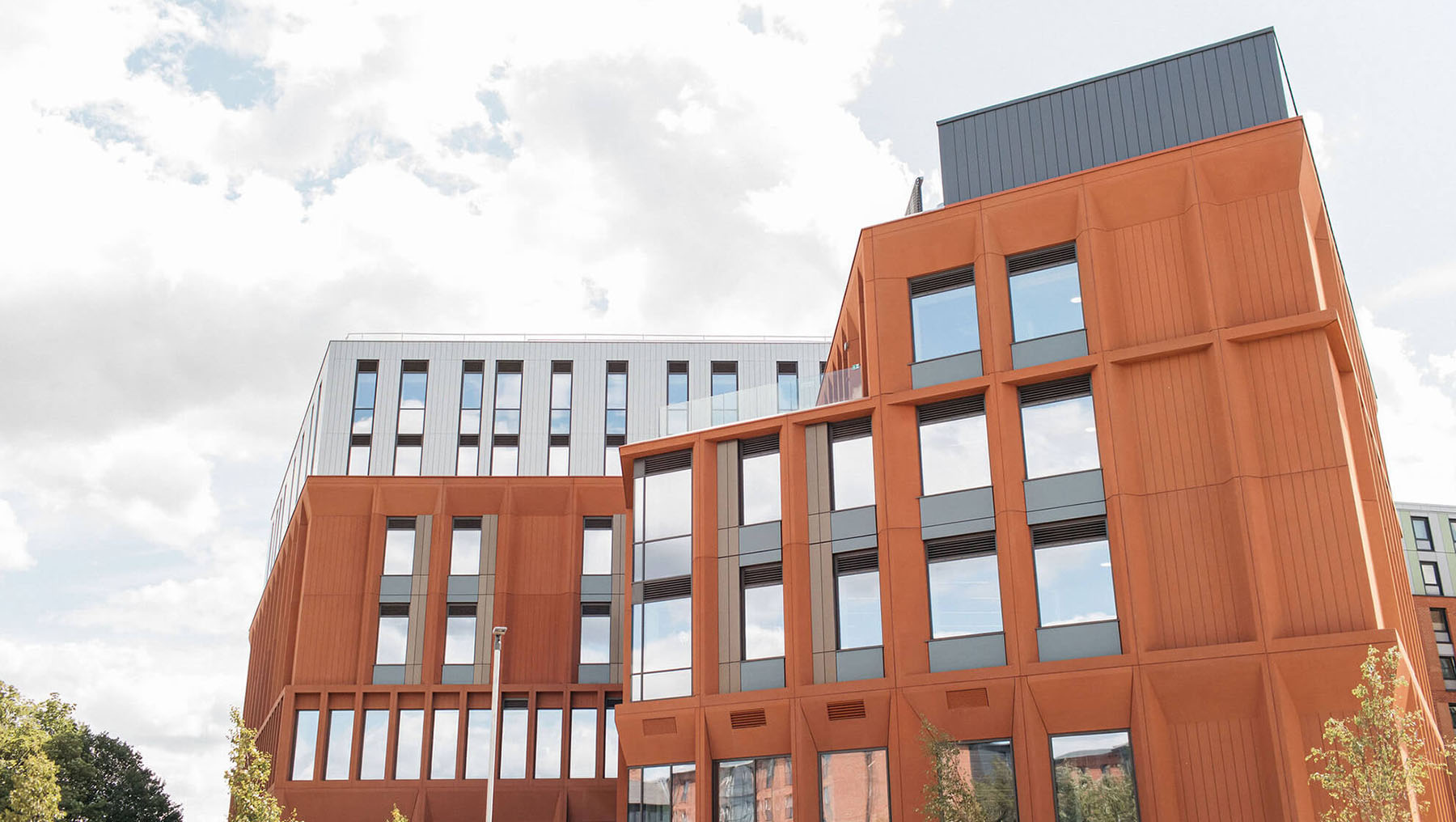
The University of Derby’s new Cavendish Building - a state-of-the-art centre for the Derby International Business School - is more than an architectural statement. It exemplifies how universities can lead the transition to a net-zero built environment through science-led, high-integrity carbon management aligned with UK Green Building Council (UKGBC) guidance.
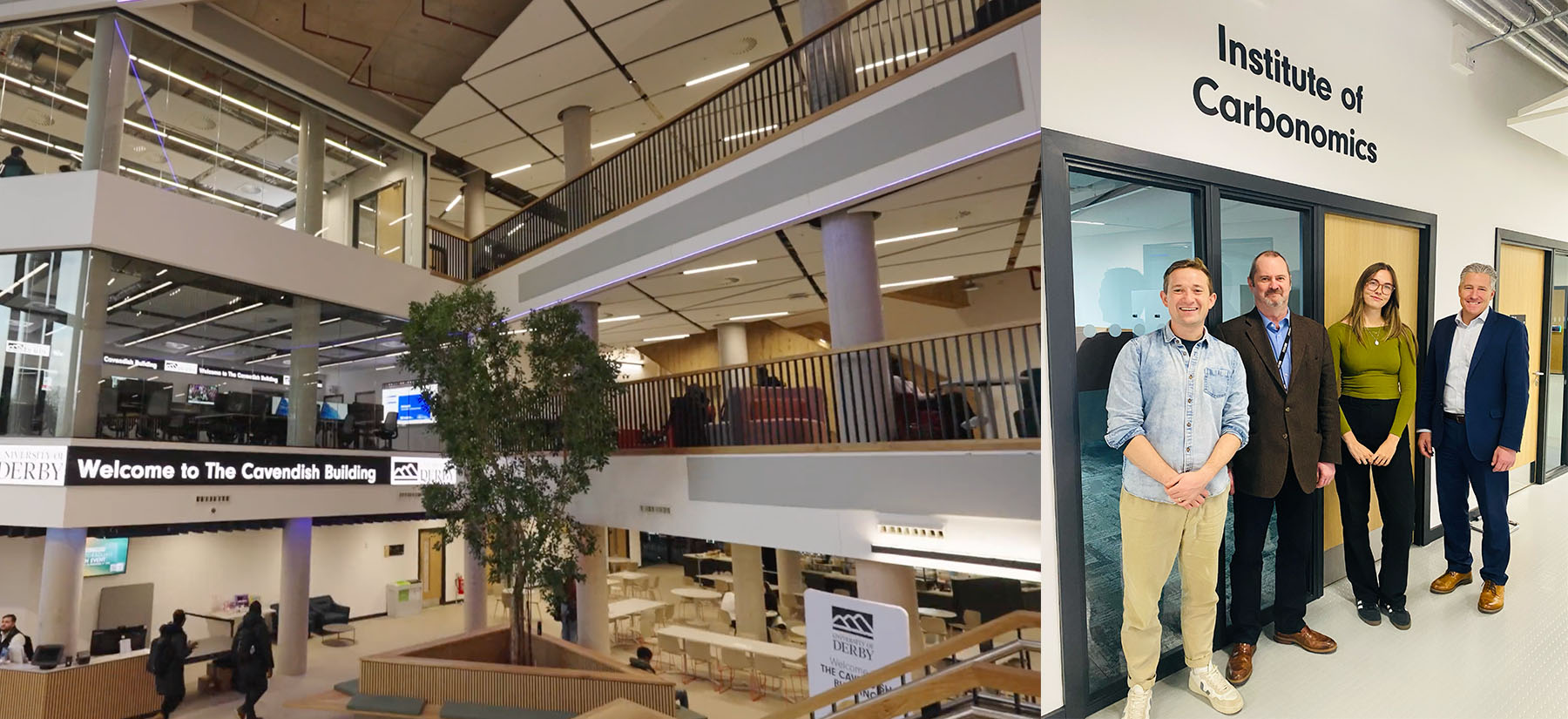
The University of Derby partnered with CPW, a leading UK environmental building services consultancy firm, which selected Ecologi as its climate solutions provider and used the UKGBC guidance (2021) to ensure that the new Cavendish Building is aligned with the UKGBC’s definition for “net-zero carbon construction”.
The solution
The University of Derby has embedded sustainability into the very foundations of its construction process. In line with the UKGBC’s Carbon Offsetting and Pricing Guidance (2024), the University applied a robust internal carbon fee of £70/tCO2e, reflecting best practice internal carbon pricing when the building was first proposed back in 2021.
This early commitment ensured that emissions were minimised wherever possible through careful material selection and low-carbon construction methods. The remaining 6,652 tCO2e of residual embodied carbon was addressed through a credible and transparent offsetting plan at a cost of £70 per tonne.
This pool of money was then used to support several projects, both locally and around the world, that aimed to mitigate these residual emissions and help secure funding for projects to address the climate crisis.
As part of their commitment to cutting carbon, the project team took several meaningful steps to reduce emissions during construction. From the outset, the contractor and supply chain signed up to a contractual obligation to minimise CO₂ output, with a specialist consultant from CPW to oversee material choices, logistics, and construction methods.
As a result, recycled materials were used wherever feasible as materials often make up a major element of any construction project. A key contributor to the project’s carbon savings was the innovative design of the structural concrete frame.
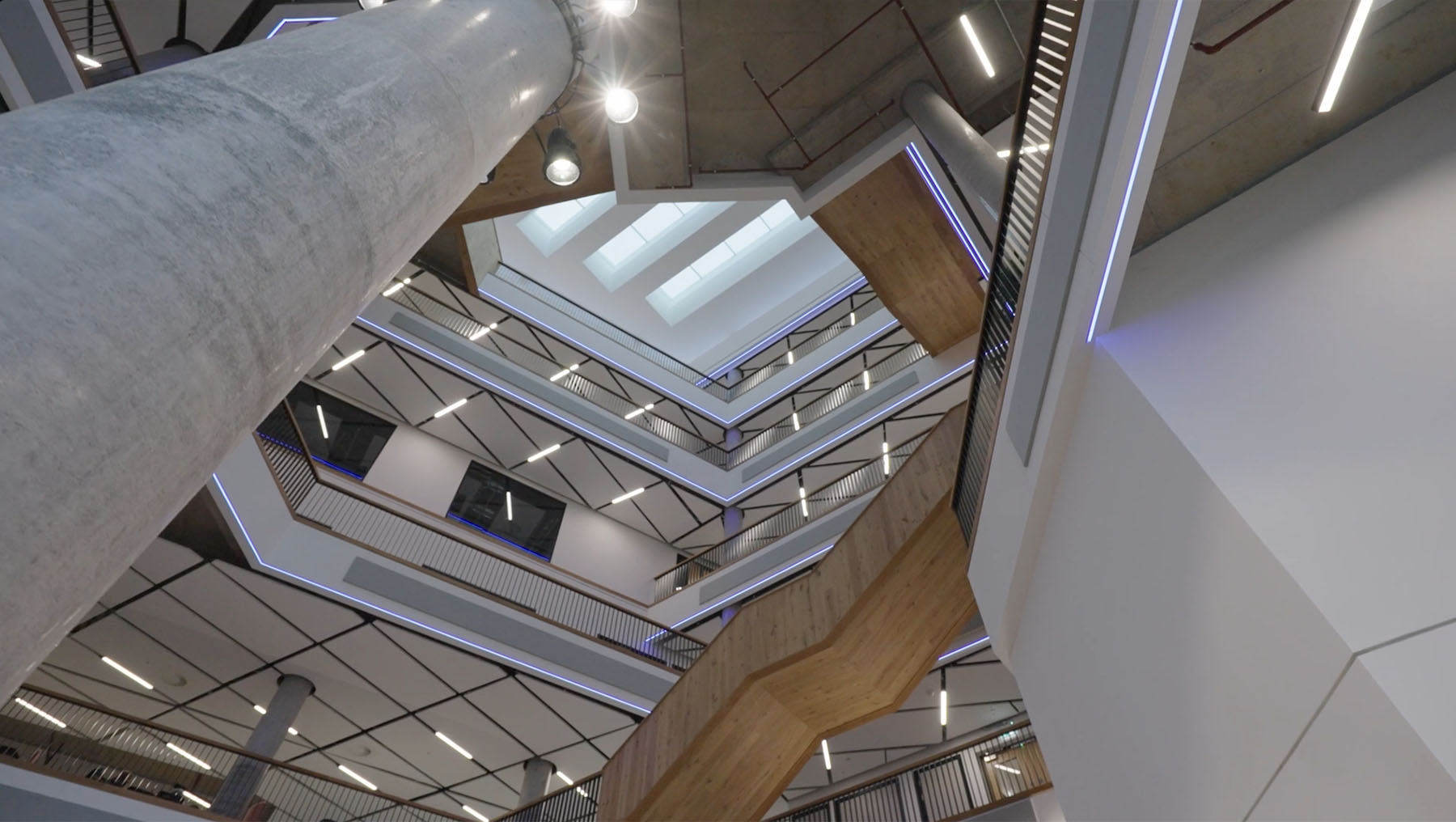
This element, often the largest source of embodied carbon in a build (around 40-50% of the embodied carbon content of the building), was reimagined using post-tensioning technology to reduce concrete volume without compromising strength.
Additionally, the concrete was mixed off-site with low-carbon cement alternatives, achieving the necessary performance while significantly reducing embodied emissions.
These actions drove the majority of the project's emissions reductions, demonstrating how innovative design and sustainable sourcing can make a real impact, especially when underpinned by a carbon fee that incentivised innovative thinking on emissions reduction.
The results
Offsetting Strategy
Aligned with the Oxford Principles and UKGBC Framework “Net Zero Carbon Building Standard” (2021) in reference to the Cavendish Building.
Scope definition: The University focused on construction emissions, setting a £70/tCO2e carbon fee to account for embodied emissions in line with UKGBC guidance.
Reducing impacts first: As required, the University reduced emissions through material selection and efficient processes before turning to carbon credits for the residual emissions.
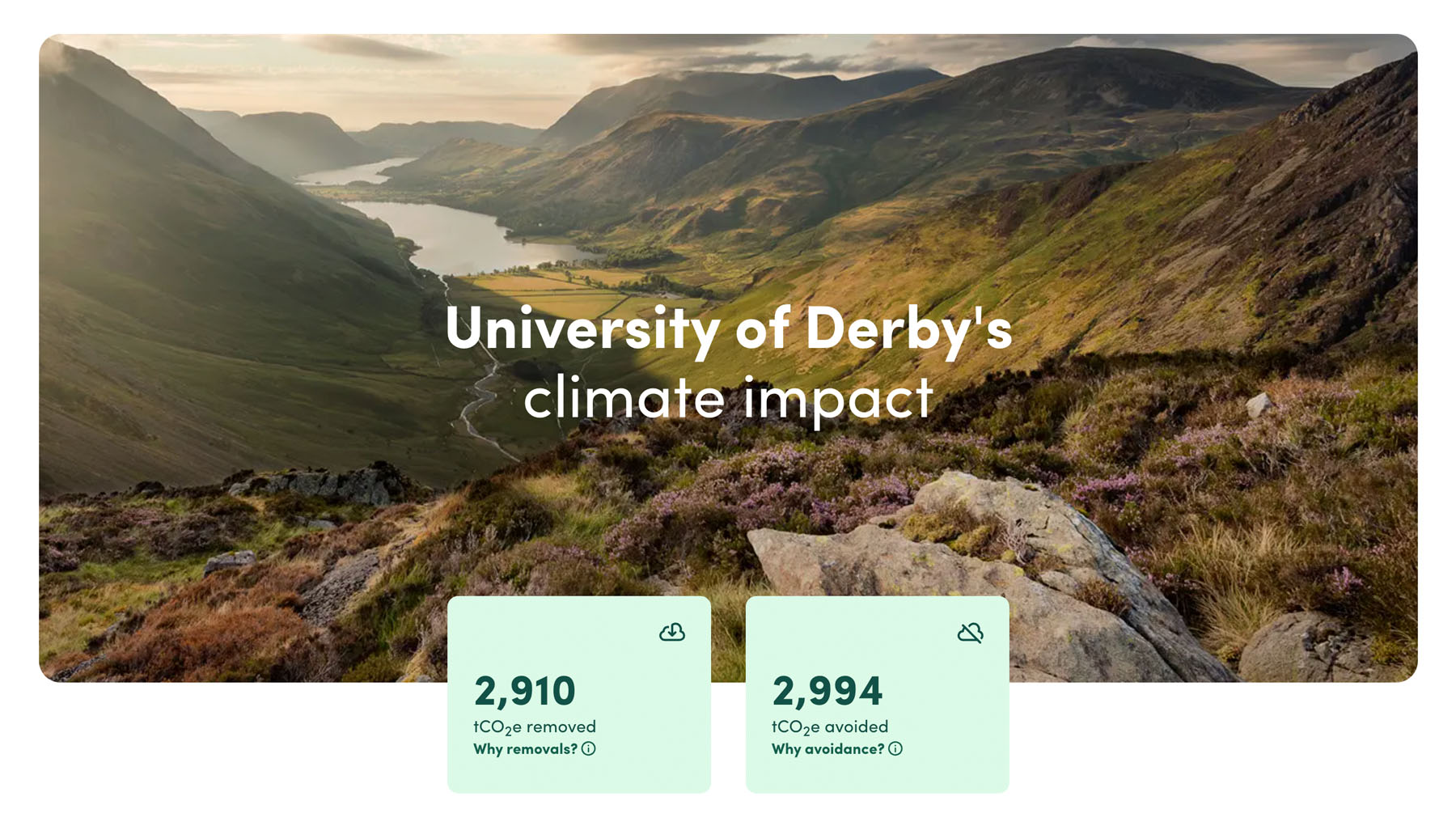
Offsetting strategy: The University applied a £70 per tonne carbon price to the 6,652 tCO2e of residual emissions from the build. This generated a fund which they used to invest in high-quality carbon credits. The selected carbon portfolio followed the Oxford Principles Net Zero Aligned Carbon offsetting standard, with a 55-45% split of carbon removals to carbon avoidance credits.
Transparency: Credits are fully traceable via Ecologi’s platform, meeting UKGBC’s disclosure requirements - (to view the University of Derby’s Ecologi Profile, click here.)
Prioritise high-durability, nature-based solutions with long-term impact.
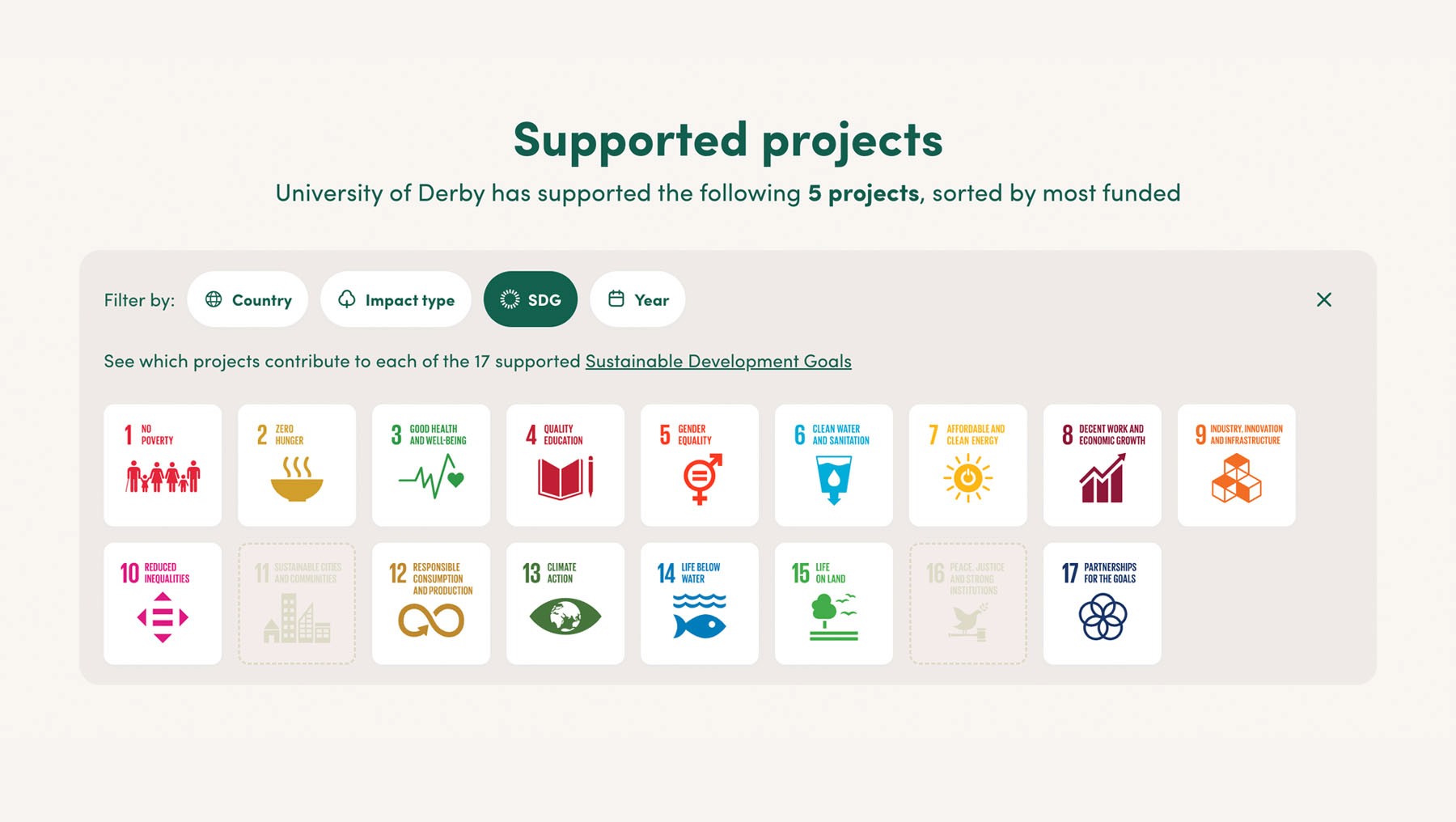
The project portfolio spans verified removals (biochar, blue carbon, afforestation) and high-integrity avoidance (REDD+), all independently validated and delivering significant co-benefits to biodiversity, clean water, and health - and also SDG 4 (Quality Education) as well as others.
Transition Fund
The remaining budget left after the carbon credits were purchased was invested in a Transition Fund. The Transition Fund follows the ‘Leading approach’ as set out in the UKGBC guidance; “This finance, which is separate and additional to funds put aside for carbon offsetting, can be termed a “transition fund”. The investment does not need to go to certified carbon credits, but can be used to support efforts to reach Global Net Zero.
For the University of Derby’s transition fund, they chose to support the restoration of peatlands in the Goyt Valley, Derbyshire. The charity leads this effort, Moors for the Future, striving to protect & restore Moorlands across the Peak District. Specifically, this funding will restore peatlands damaged by wildfires in April 2025, following an abnormally hot and dry Spring.
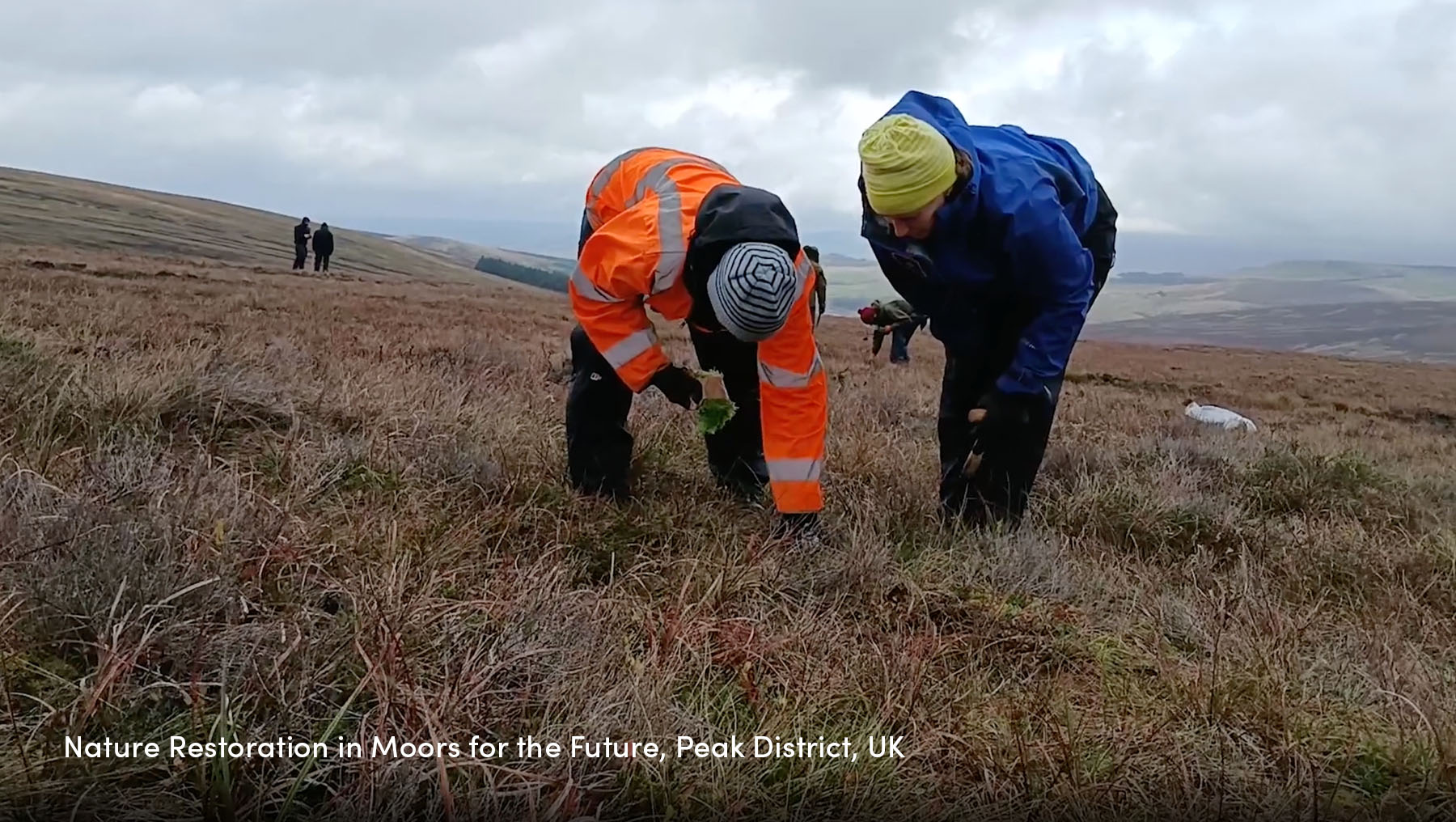
Peatlands are vital carbon sinks which provide critical habitats for multiple endangered species, whilst helping to hold & slow water flows, stabilising periods of flooding and drought. These ecosystems are increasingly threatened by a changing climate, and efforts to protect and restore them are crucial to the fight for Net Zero.
This Transition Fund links in with the University’s research into the correlation between microbial life in soils & the resilience of peatland ecosystems.
What's next
University of Derby as a Net-Zero Leader
This initiative reflects the University of Derby’s commitment to future-focused education and action. It integrates sustainability not just into the curriculum or policy, but into infrastructure - the very spaces where future leaders will learn.
In doing so, the University of Derby sets a new benchmark for how universities can go beyond compliance, using the UKGBC framework as a blueprint for responsible climate leadership in the built environment.
We were very keen not to be seen as greenwashing, or making claims that we couldn’t back-up. Ecologi impressed us in their approach, their transparency, and the portfolio of projects. And they’ve also got a level of credibility which other companies weren’t offering.
Jaime Oliver, Senior Sustainability Consultant at CPW for University of Derby