Case study
Swindon Borough Council: Building the foundations for climate leadership
Reduce
Calculated carbon footprint
Swindon Borough Council provides essential services for more than 220,000 residents across the borough, from housing and education to infrastructure and waste management. With around 2,500 employees, the council plays a central role in guiding the town’s future.
Like many local authorities, Swindon has committed to reaching net zero by 2050. But before it could accelerate progress, the council needed a clearer understanding of its emissions and where action would have the greatest impact.
Working with Ecologi, Swindon carried out a detailed carbon footprint across Scopes 1, 2 and 3, helping the council build one of the most comprehensive emissions datasets in the local authority sector.

At a glance
About Swindon Borough Council
Location
Swindon, UK
Company size
~2,500 employees
Industry
Local government
Services used
Calculated carbon footprint, identified emissions reduction opportunities and developed a climate strategy
Overall climate journey
Emissions measurement and reporting

The issue
Local authorities are key to delivering the UK’s transition to net zero by 2050. Under the updated National Planning Policy Framework, councils are expected to ensure local planning policies support national climate targets and contribute to significant reductions in greenhouse gas emissions.
To deliver on that responsibility, Swindon Borough Council needed a clearer understanding of its own operational footprint so it could lead the way in decarbonisation across the wider borough. For Strategic Lead for Sustainability and Climate Change Edward Jones, that process needed to start with credible data.
He had already estimated Swindon’s emissions internally before partnering with Ecologi. But without external validation, the figures lacked the authority needed to guide strategy across the organisation.
Edward had also seen consultancy reports in the past that felt generic and disconnected from the realities of a local authority. He was looking for a partner that would take a more collaborative and practical approach.
His own previous experience with Ecologi helped shape the decision, as he had already used the platform to fund tree planting. When he discovered that Ecologi had expanded into measurement and strategy, it felt like a natural fit.
The fact that Ecologi had not previously worked with a local authority like Swindon was also part of the appeal.
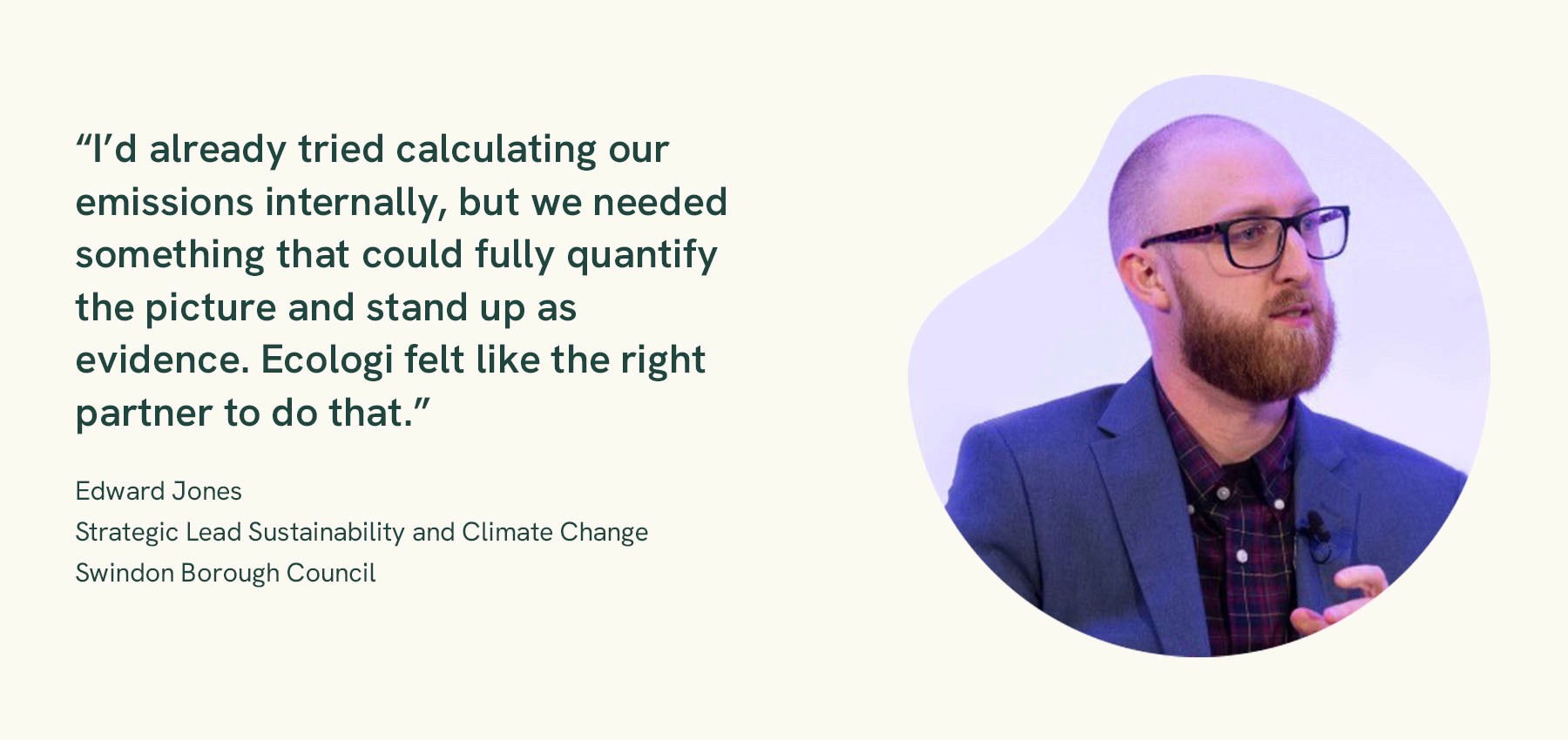
“It was exciting that this was something new for both sides. When it’s a new challenge, people bring a different level of energy.”
Edward also appreciated that Ecologi was based in the South West, close to Swindon, and that the Ecologi Zero platform was cost-effective and easy to use compared with the consultancy reports he had seen before.
The solution
Working with Ecologi, Swindon carried out a detailed carbon footprint covering Scopes 1 and 2 and key elements of Scope 3, helping the council build one of the most comprehensive emissions datasets in the local authority sector.
While many councils focus primarily on operational emissions, Swindon deliberately chose to go further. The council wanted to understand its full footprint, including emissions linked to services, procurement and housing.
This level of detail demonstrates Swindon’s ambition to lead on climate action and aligns with the council’s wider Build a Greener Swindon mission, introduced in 2023.
The footprinting process confirmed where emissions were concentrated and provided the evidence needed to prioritise action.
For Edward, the value of the analysis was not that it uncovered unexpected problems, but that it validated the council’s assumptions and provided a solid foundation for decision-making.
“It confirmed the areas we believed were important and gave us the evidence to support those priorities.”
The process was also supported by Swindon’s transparency as a public authority. Because detailed financial spend data and asset registers were publicly available, Ecologi was able to quickly access and analyse large parts of the council’s operations.
The results
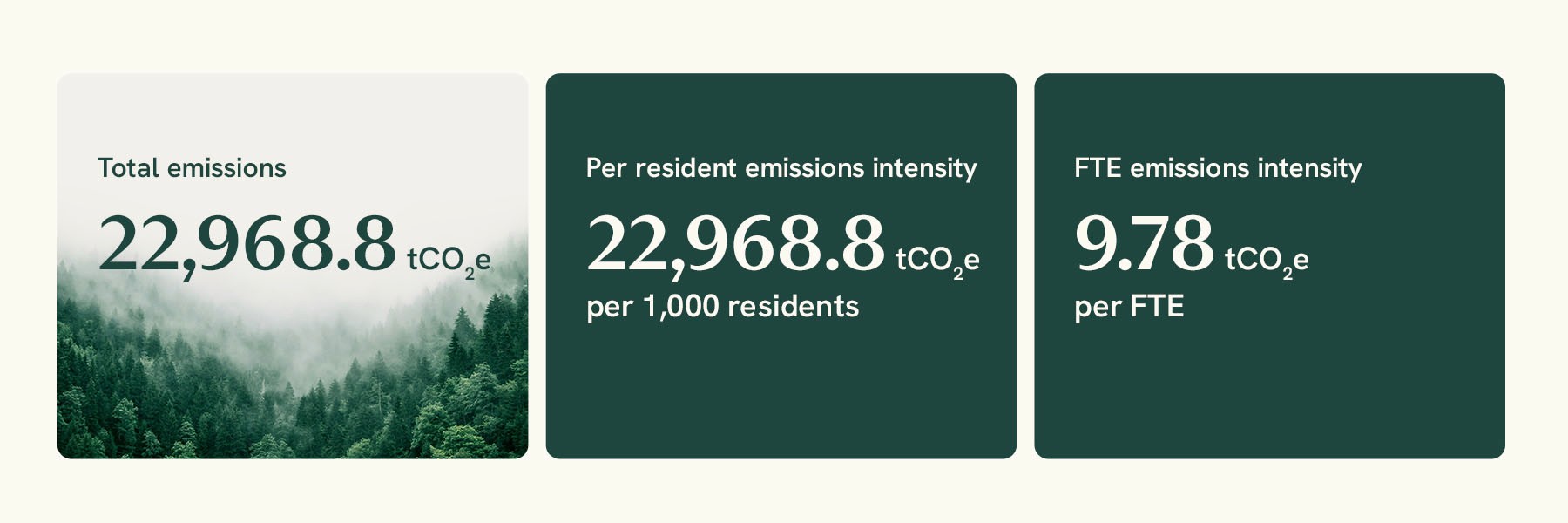
The analysis established a baseline footprint of 22,968.8 tonnes of CO₂e for the 2024–25 reporting year, covering Scopes 1, 2 and key elements of Scope 3.
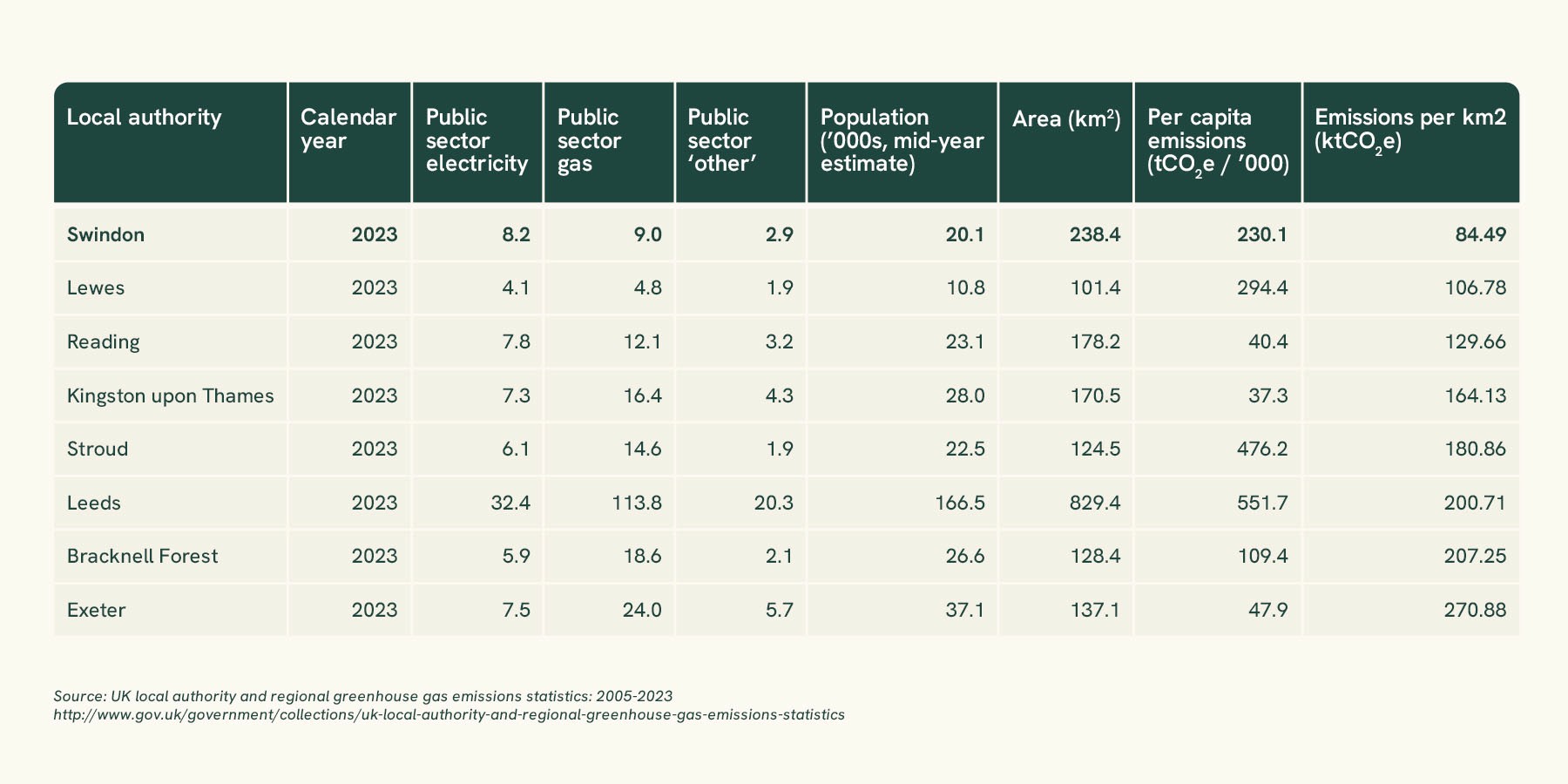
As part of the benchmarking, Ecologi compared Swindon’s utilities emissions against data from other local authorities using Department for Energy Security and Net Zero statistics. This found that Swindon’s emissions intensity per square kilometre was already lower than several comparable councils, highlighting the relative efficiency of its operational footprint.
While they were starting from a good place, the analysis helped Swindon move from passive emissions reductions to deliberate climate action. In recent years, some emissions reductions had already occurred through operational changes, including:
Renewing the refuse vehicle fleet
Switching street lighting to LED
Energy efficiency improvements across council assets
However, these changes were largely driven by infrastructure upgrades or cost savings rather than climate strategy.
The new emissions data is now helping the council prioritise targeted reductions. One example is the decision to introduce HVO (Hydrotreated Vegetable Oil) fuel for parts of the refuse fleet. If sourced correctly, HVO can reduce emissions from those vehicles by around 80%.
For Swindon, the significance of the decision goes beyond the technical benefits. Approving the switch required political support and meant committing additional funding specifically to reduce emissions, a major step for a council operating under financial constraints.
More broadly, the work with Ecologi is helping Swindon build a long-term strategy rooted in the needs of its residents.
The council is already improving air quality, expanding green spaces and exploring energy efficiency upgrades across council housing. These actions not only reduce emissions but also contribute to lower energy bills, healthier neighbourhoods and greater resilience against climate change.
For Edward, the connection between climate action and everyday life is what matters most.
“If a resident has solar panels, a battery and a heat pump, they’re living a more comfortable life. That’s a win-win for people and planet.”
Edward Jones, Strategic Lead Sustainability and Climate, Swindon Borough Council