Carbon removal
WIF Mangrove project, Myanmar
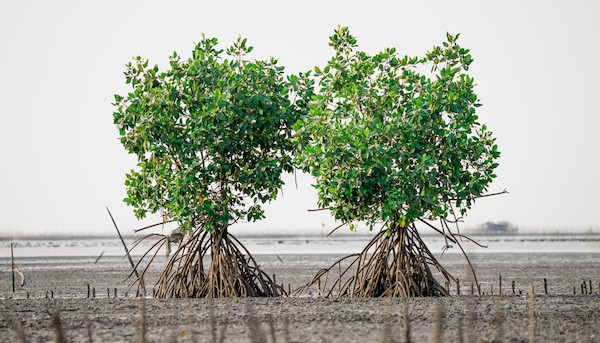
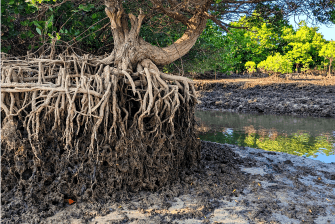
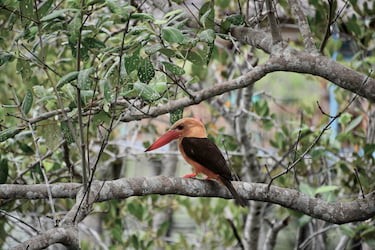
The Worldview International Foundation (WIF) is leading a large-scale reforestation project in Myanmar’s Ayeyarwady Division, aiming to restore 2,146.48 hectares of degraded mangrove land over 20 years (2015–2035). Centred in Shwe Thaung Yan Township, the initiative targets carbon sequestration, biodiversity conservation, disaster risk reduction, and poverty alleviation.
Additionality
The mangrove restoration project in Myanmar’s Ayeyarwady Delta demonstrates a high likelihood of additionality. Its significant scale and scope exceed what would typically occur in a "business-as-usual" scenario, particularly given the region's ongoing mangrove deforestation and the limited impact of existing national and international policies.
The project is highly dependent on carbon finance and does not generate revenue from timber or non-timber products, further emphasizing its reliance on external support for its existence. Unlike common practices in Myanmar, it uniquely integrates ecosystem restoration with education, subsidies, and livelihood development to comprehensively address deforestation.
Effective mangrove restoration is not widespread in Myanmar, and past governmental efforts, such as post-cyclone Nargis planting, have generally had limited long-term success. This project significantly surpasses prior initiatives, aiming to restore 2,100 hectares at a density of 5,000 trees per hectare, a considerable increase compared to previous limits of under 250 hectares and 3,000 trees per hectare. Given that mangrove loss in the delta has exceeded 70% since 1974 and projections indicate total loss by 2035, the project represents a critical intervention against severe deforestation trends, proving its essential contribution to restoration efforts that would not otherwise occur. Satellite imagery further confirms substantial reforestation in areas that were heavily degraded before the intervention, indicating that natural regeneration was unlikely without this effort. The continuous planting has been funded for five years following project initiation, reinforcing its additionality.
Permanence
The mangrove restoration project in Myanmar’s Ayeyarwady Delta shows strong additionality, as large-scale restoration of this kind would not occur without carbon finance. With over 2,100 hectares planted at densities exceeding prior national efforts, the project addresses decades of severe mangrove loss in the delta, where over 70% of cover has disappeared since 1974. Satellite imagery confirms extensive reforestation in areas unlikely to regenerate naturally, reinforcing the project’s role in reversing long-term degradation.
Risks to permanence stem mainly from land tenure insecurity and encroachment, exemplified by the loss of 36.6 hectares to a hotel construction project. While this accounts for less than 2.2% of carbon stocks, it highlights weak enforcement of property rights. Natural risks, such as fire, pests, and flooding, remain low, with data showing minimal burn activity in the area. Droughts occur roughly once a decade and may intensify under climate change, though mangroves have proven resilient to cyclic climatic variability. Cyclone risk is more significant: while rare in the Ayeyarwady Delta, events like Cyclone Nargis (2008) demonstrate the potential vulnerability of certain species, particularly within the Rhizophoraceae family. Sea-level rise is projected at 0.1 ± 0.1 m by 2040, with mangroves likely able to adapt through sediment accumulation and species’ broad salinity tolerance, though landward migration is constrained in some areas.
To address these risks, the project increased its risk buffer contribution to 24% in 2022 (up from 10%), after it was determined that prior agreements with government bodies were not legally binding. Community engagement further strengthens permanence: the project invests in education, livelihood development, and local employment, while deploying patrols to mitigate community-driven degradation.
In summary, permanence is supported by the project’s scale, community integration, and adaptive species mix, but it remains exposed to land tenure challenges, climate extremes, and long-term governance risks.


The project provides basic food items (rice, cooking oil, onion, potato, egg and beans) to 597 vulnerable households affected by the economic crisis and global pandemic. It also provides nutritious food to vulnerable households who is suffered more pressure on the resources due to natural disasters and global pandemic, etc. The project aims to increase the number of local people who improved skills, including technical, and vocational skills for employment and entrepreneurship and more production field on agricultural and aquacultural sectors.
Increased the access to educational facilities by the school children in 20 school in the project areas 100 % of school in project targeted villages are covered. The project supports school multimedia equipment, solar panel & battery set, solar lamps, school items (books and umbrella), raincoats, and teaching materials such as school desks & chairs, and whiteboard to all targeted schools in the project area. 8 teachers were received monthly teacher salary under scholarships program. Total 525 students have benefitted from providing 8 teachers in three targeted area schools.
43% of women are positioned in leading roles in the village development committee in the targeted villages.
With contribution of community, 1 sub-projects supported well excavation and fencing in one targeted village in project area to access safe drinking water. 100% of population in one targeted village is covered.198 peoples received four clean hygiene awareness which covered 686 population for promoting their personal hygiene and sanitation in three targeted villages and provided hygiene & sanitation items (soap, tooth paste, tooth brush, bowl, nail clipper and plastic bucket).
The project supports the financial to access the electricity within the villages. The total of 3,036 People (100% of population) from three project villages are covered and the people have accessed the electricity for their education and other livelihood sector.
With contribution of community, the project has supported 6 infrastructure projects on promoting the access the smooth transportation, for better drainage and to protect the agricultural land, houses and people from flooding in five targeted villages. The 6 projects are 1 box culvert construction, 2 drainage construction, 2 bridge constructions, 1 school roof repairing and those projects covered 100% of population in five targeted villages.
The project has avoided the emissions of 340,744 tonnes of carbon into the atmosphere from 2015 to 2023. Mangrove restoration will reduce the numbers of local people which can be affected from future coastal storms.
About
Live
2026
ARR
2
4
5
6
7
9
13
Impact partner
WIF develops high-integrity mangrove restoration projects that bring global climate goals and local priorities together -regenerating ecosystems, building with communities, and generating verified carbon credits.
Verifications
Verification: Verified Carbon Standard and Climate, Community and Biodiversity Standard