Carbon removal
Wastewater Alkalinity Enhancement in New England
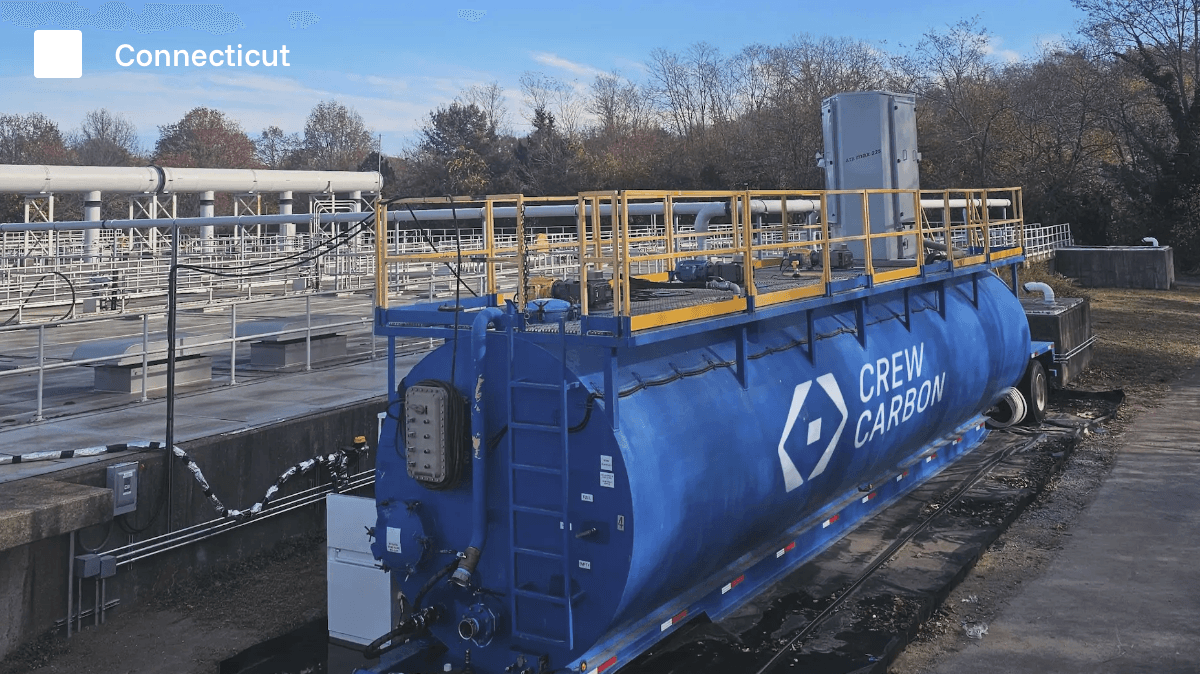
Wastewater alkalinity enhancement (WAE) is a method of carbon dioxide removal (CDR) that involves adding alkaline materials to wastewater treatment plants (WWTPs) to increase the water's capacity to absorb and store CO₂. This process serves a dual purpose: it aids in standard wastewater treatment operations and contributes to climate change mitigation by reducing CO₂ emissions.
The Project
The WAE Project is a marine carbon dioxide removal initiative deployed at municipal wastewater treatment facilities serving the New England region, including the Greater New Haven Municipal Water Pollution Control Authority in Connecticut. The project uses fine-grained natural minerals, primarily calcium carbonate, which are mixed into wastewater treatment reactors as a controlled slurry. During treatment, these minerals react with carbonic acid formed from biogenic CO₂ in the wastewater, increasing alkalinity and converting CO₂ into dissolved bicarbonate and carbonate ions. These stable carbon forms are discharged with treated effluent into the ocean, where they are expected to remain stored for at least 1,000 years.


The Wastewater Alkalinity Enhancement (WAE) project directly supports SDG 6 by integrating carbon removal into standard wastewater treatment processes. By adding calcium carbonate to treatment reactors, the project enhances alkalinity in a controlled manner that aligns with existing treatment goals, helping to manage acidity caused by biogenic CO₂. This improves operational efficiency at wastewater treatment plants while ensuring treated effluent meets environmental discharge standards, supporting safe and sustainable water management.
By deploying WAE at municipal wastewater treatment facilities serving urban populations in the New England region, the project strengthens the sustainability and resilience of essential urban infrastructure. Integrating climate mitigation into wastewater services helps cities reduce their environmental footprint without requiring major new infrastructure, supporting cleaner coastal waters and healthier communities while advancing climate-smart urban systems.
The New England WAE Project directly advances SDG 13 by delivering verified, durable carbon dioxide removal that reduces the concentration of greenhouse gases in the atmosphere. By integrating enhanced weathering into municipal wastewater treatment systems, the project captures biogenic CO₂ and converts it into stable dissolved carbon forms that are stored in the ocean for over 1,000 years. This long-term storage aligns with SDG 13’s emphasis on sustained climate mitigation rather than temporary emissions reductions.
WAE supports ocean health by increasing alkalinity in treated effluent before it enters marine environments, helping counter ocean acidification while enhancing the ocean’s natural carbon storage capacity. The discharge of stable dissolved carbon forms minimizes ecological risk and contributes to healthier marine chemistry, supporting long-term protection of coastal and marine ecosystems connected to municipal wastewater outflows.
About
Live
2026
Wastewater Alkalinity Enhancement
6
11
13
14
Impact partner