
Reforestation
Mount Elgon Plant It Forward, Uganda
What is the Plant It Forward program?
Regenerative agroforestry nonprofit Trees for the Future (TREES) is rooted in education and training, empowering farmers to restore their land in ways that benefit both their livelihoods and the planet. As demand for sustainable solutions increases and their programs gain popularity across target regions, the organisation has acknowledged the challenge of reaching every farmer in need.
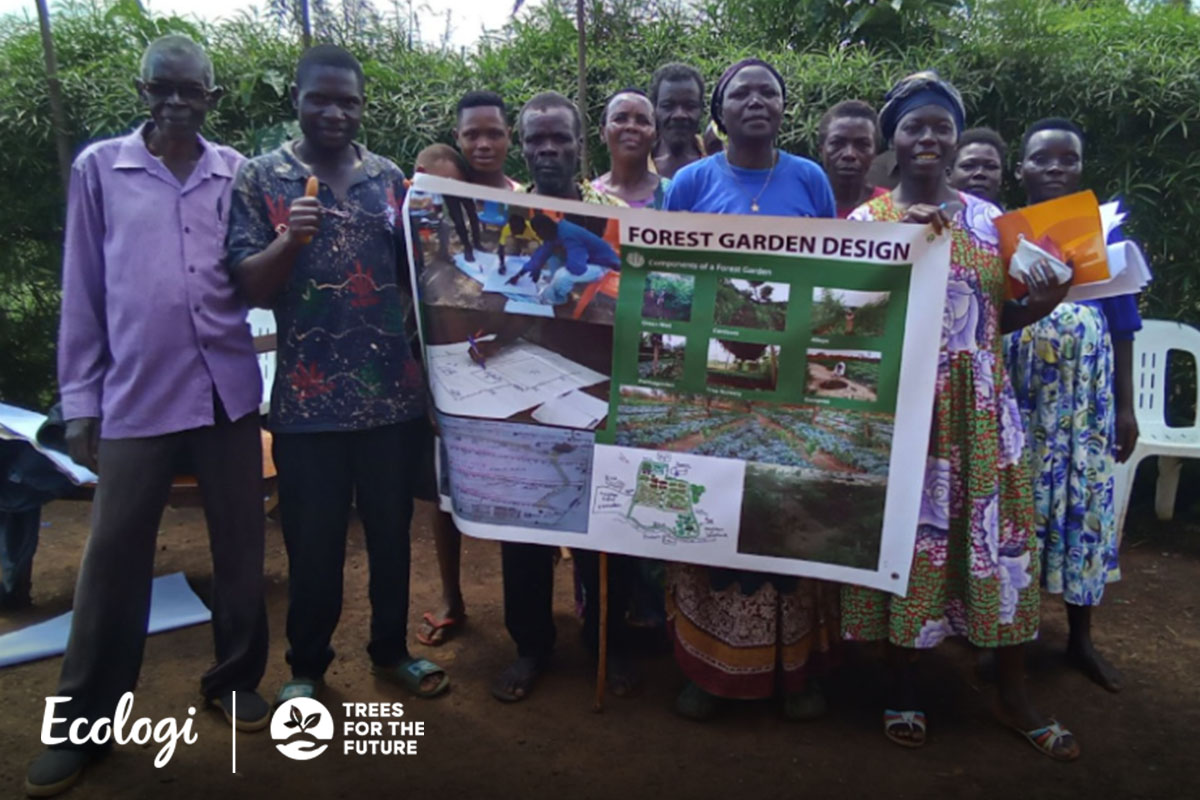
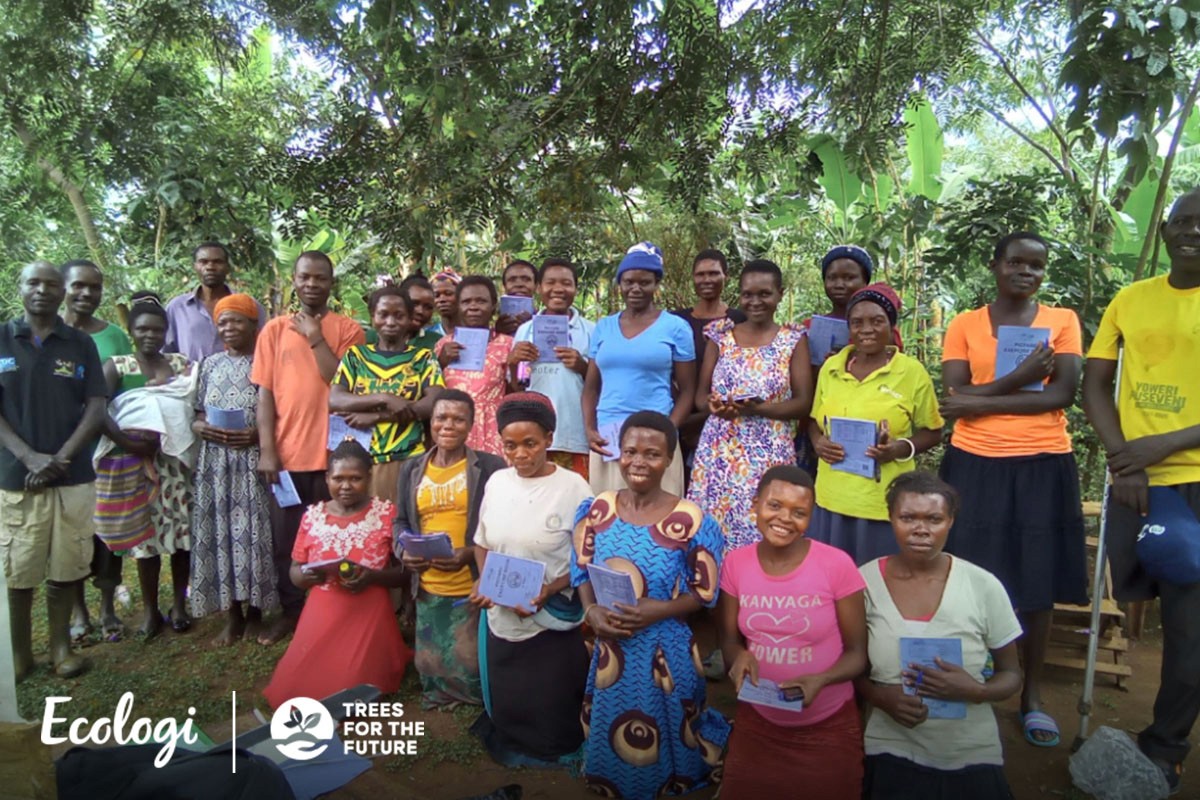
TREES’ community-based model positions the organisation well to expand its reach through a network of trained local leaders. Across Senegal, Kenya, Tanzania, and Uganda, TREES employs 180 field trainers, known as technicians, each responsible for working with 150–200 farmers. These farmers are grouped into cohorts of roughly 25, with each group led by a standout farmer who demonstrates strong leadership and a quick mastery of agroforestry practices. These lead farmers support technicians with hands-on training and help guide their groups through the program. Over time, TREES has observed many lead farmers sharing their knowledge with neighbouring farmers on their own.
While TREES’ traditional Forest Garden program relies on full-time staff and spans four years, the pilot Plant it Forward initiative has shown that TREES can expand its impact more rapidly. By tapping into the expertise of lead farmers and top graduates, the organisation can efficiently scale and replicate the Forest Garden model, powered by people who understand the transformation firsthand because they have already achieved it on their own land.
The project
Since its inception last year, the farmers of this Plant It Forward (PIF) project have planted more than 946,000 trees (an average of 4,149 trees per farmer).
Community farmers are signing up because they’ve seen and heard of the benefits that it has brought to their neighbours. In 2025, when Ecologi visited the project, farmers at the market were telling us that they wanted this PIF project, along with the same opportunities that the other farmers had.
Project timeline


The project aligns with this SDG because the benefits of the restoration will enable additional source of revenue through restoration of the land.
The project will provide access to nutritious food changing we grow, share and consume our food.
Farmers are given a choice of crops to plant based on what grows well in the region, so they can grow food they want to eat and sell ensuring healthy lives and promote well-being for all at all ages.
Through this project, farmers receive education regarding more sustainable and profitable land management.
Farmers, no matter whether they are male or female, are all treated equally through this project. Female farmers are empowered to take control of their household finances and provide an income for their families.
This project is equipping farmers with the skills and equipment they require to increase their household income and provide for their families.
Farmers trained by this programme are bringing their produce to markets, selling to members of their communities, providing a more varied and reliable source of food for their communities.
This project supports nature by promoting regenerative agroforestry practices that restore degraded land, increase biodiversity, and sequester carbon.
By teaching farmers to plant diverse trees and crops together, the program helps create Forest Gardens that capture carbon in both soil and biomass, reducing greenhouse gas levels over time. These practices also prevent erosion, improve water retention, and stabilise local microclimates, making farms more resilient to droughts, floods, and shifting weather patterns.
About
Live
2025
Agroforestry
1
2
3
4
5
8
10
11
13
15
Fund this project
Funded directly through our Global trees in our marketplace. Alternatively speak to a climate expert to support your wider climate action strategy.
Impact partner
Trees for the Future is a nonprofit organisation focused on land restoration in developing communities around the world.