Carbon removal
Improved Forest Management (IFM) in the United States

Project Context
Improved Forest Management (IFM) is one of the most scalable and durable nature-based climate solutions in the United States; however, it has historically been limited to large landowners due to high costs, lengthy timelines, and complex requirements. Small, non-industrial private forest owners collectively steward nearly 40% of US forests, but most are excluded from carbon markets despite representing one of the largest untapped opportunities for carbon storage and ecosystem restoration.
In rural New England, many small landowners manage forests under short-term financial pressure rather than long-term stewardship. Fewer than 15% have forest management plans at the time of harvest, and many are approached by loggers offering immediate cash without consideration of long-term ecological or financial outcomes. This often results in repeated short harvest cycles that reduce carbon storage, degrade habitat, and limit future timber value.
Apollo was designed specifically for this context. The program enables small landowners to extend harvest cycles to grow bigger trees and adopt more sustainable management practices by providing carbon revenue that rewards patience. Larger, older trees store more carbon, support healthier ecosystems, and ultimately deliver greater long-term value to landowners. By keeping the majority of revenue in local communities and focusing on forests where real improvement is possible, Apollo aligns climate impact with rural economic resilience.
Project Summary
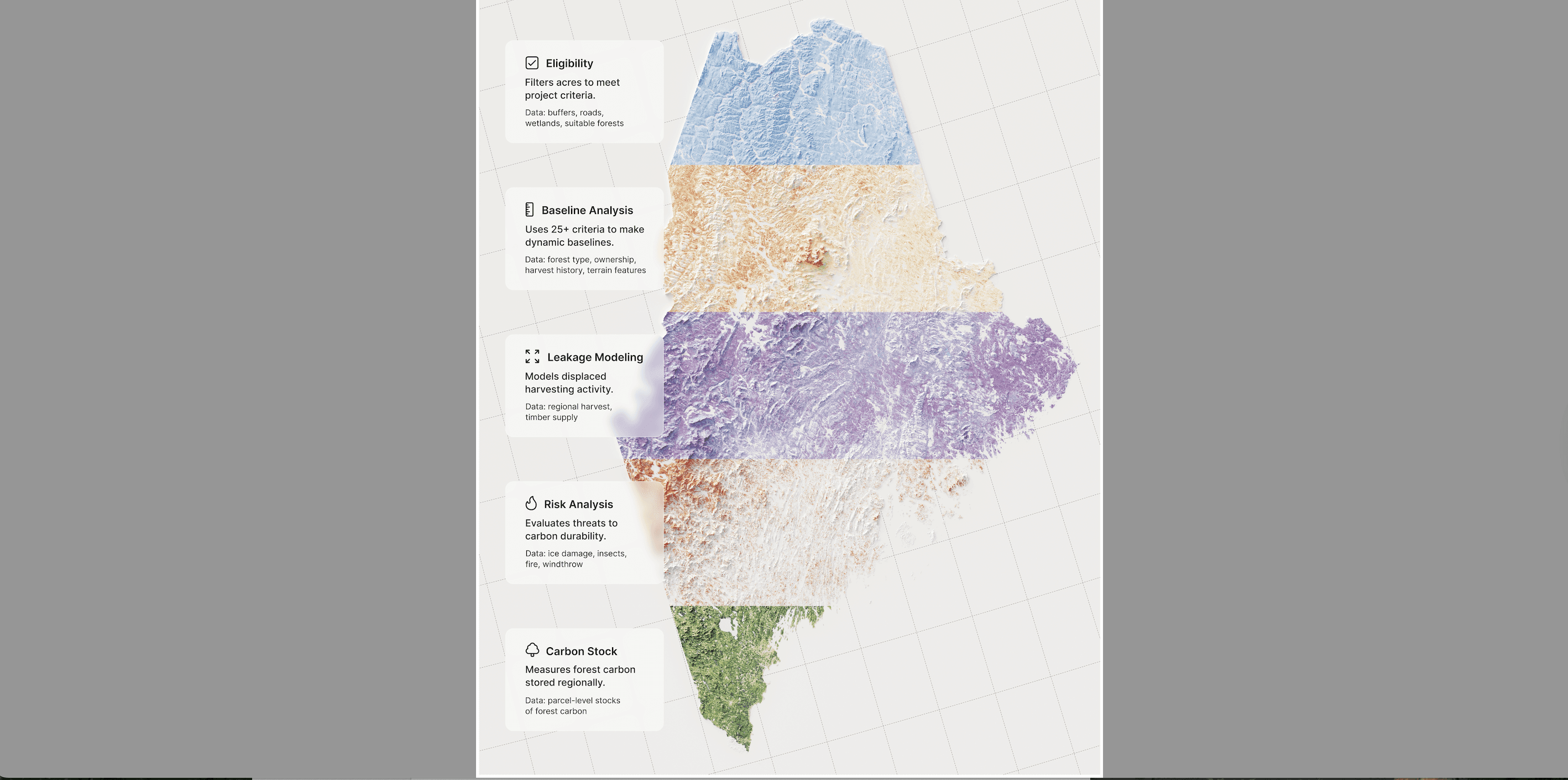
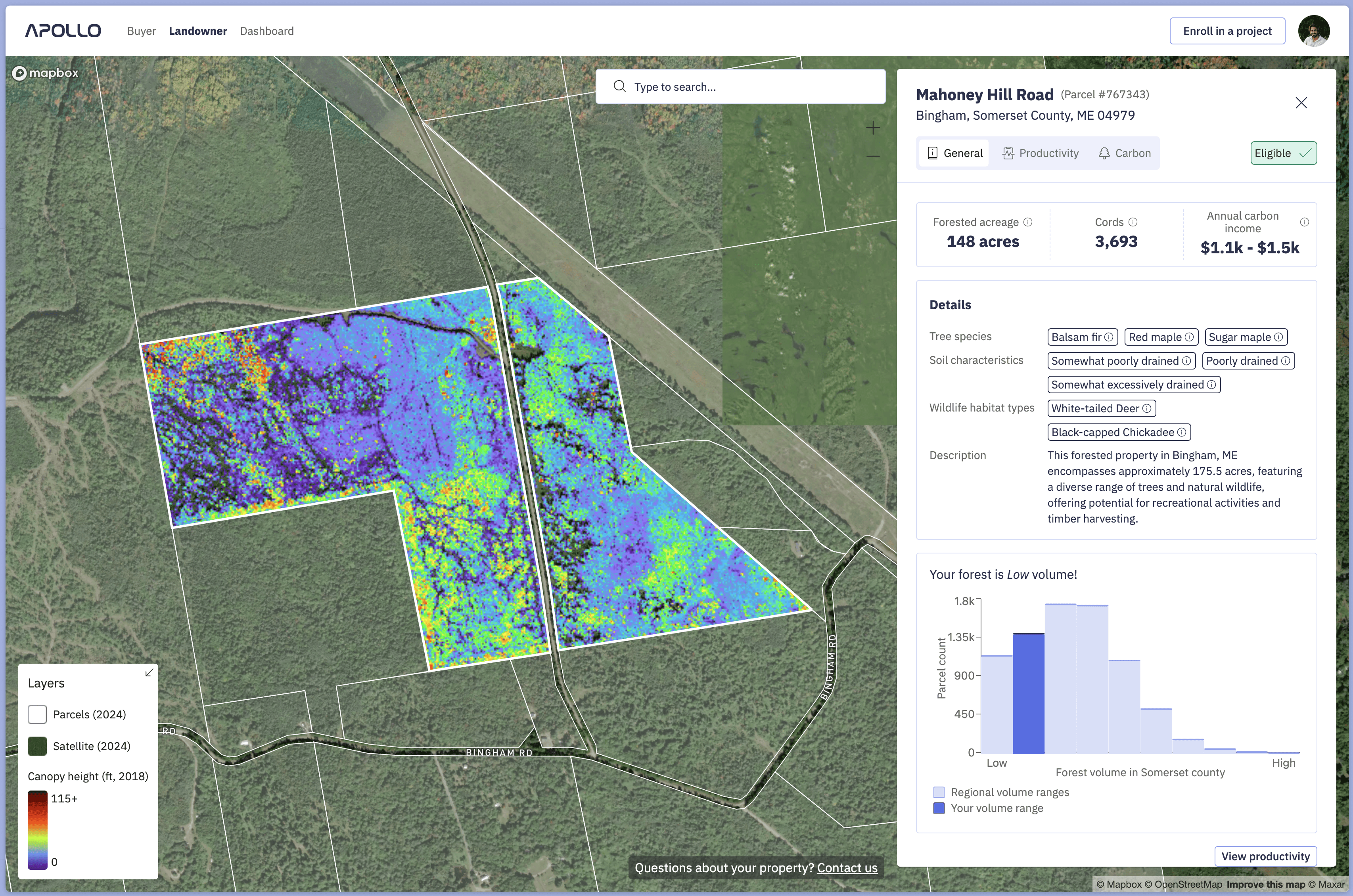
Apollo generates Improved Forest Management (IFM) carbon removal credits by helping small landowners shift from short-term, aggressive harvests to longer forest growth cycles that increase carbon storage and improve forest health. Using AI, LiDAR, and satellite data, the program measures forest carbon stocks across entire regions, allowing projects to be developed without upfront costs and monitored annually with high precision.
Credits are verified under Isometric’s IFM Protocol and issued conservatively under a dynamic baseline framework that compares project forests to similar, non-enrolled forests over time, ensuring that only true improvements are credited. Additional safeguards include minimum contract lengths that exceed biological rotation age, explicit modelling of market leakage, and conservative permanence accounting that results in significantly fewer credits issued than conventional programs.
Every Apollo credit is insured against non-delivery through Kita and backed by full transparency with carbon accounting data, maps, and revenue flows shared publicly. The pilot phase is underway in Maine, enrolling 37 landowners across 20,000 acres, with expansion planned across the Northeastern United States and beyond. Through this approach, Apollo unlocks high-integrity carbon removals while strengthening rural economies and supporting long-term forest stewardship.
Project timeline
Scale-up of annual monitoring, credit issuance, and landowner onboarding through automation.
Regional expansion into greater New England and eventually globally
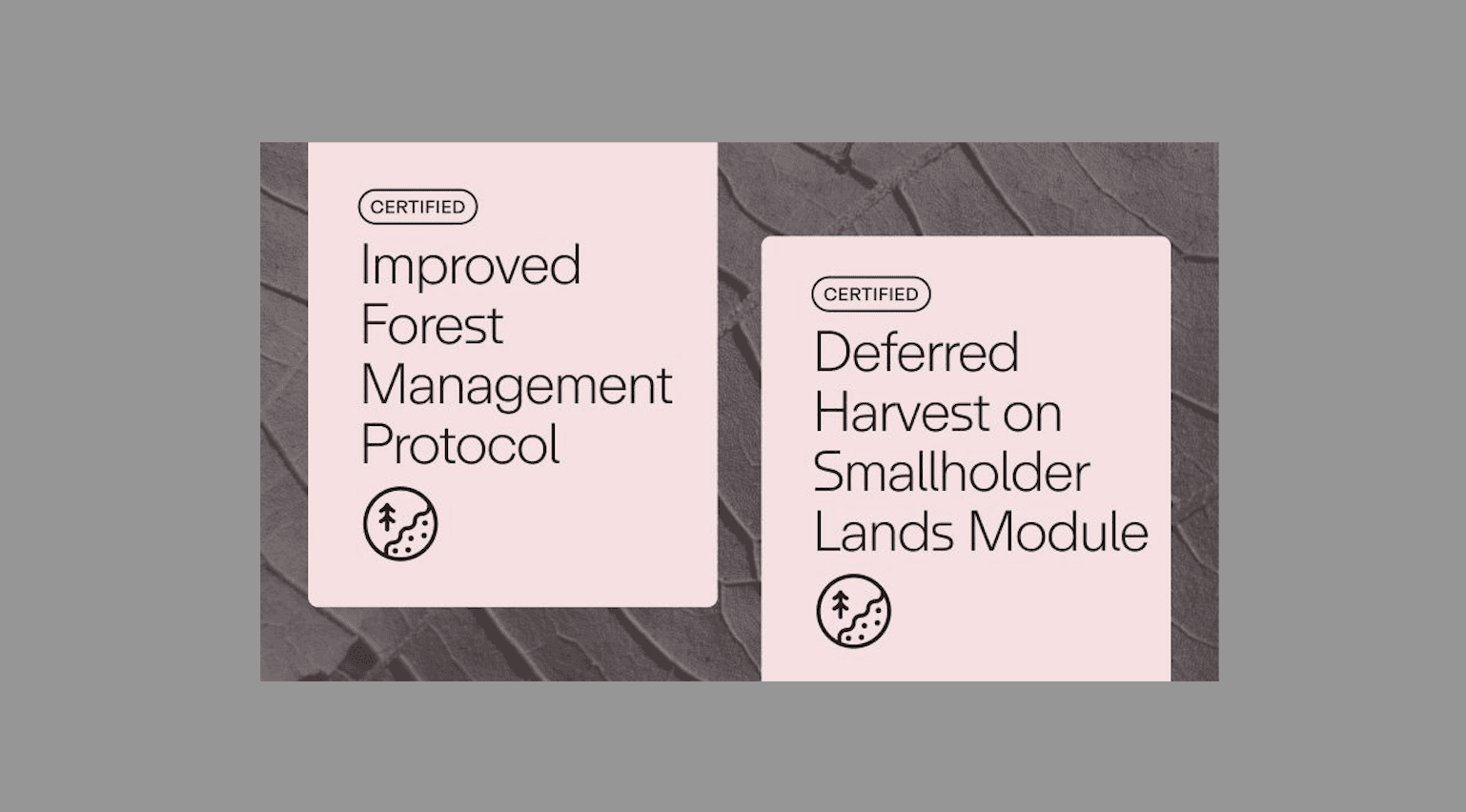
Validation and verification under Isometric’s IFM Protocol.
First issuance and delivery of insured Apollo carbon removal credits under Isometric’s IFM Protocol.
Expansion of landowner enrollment across Maine.
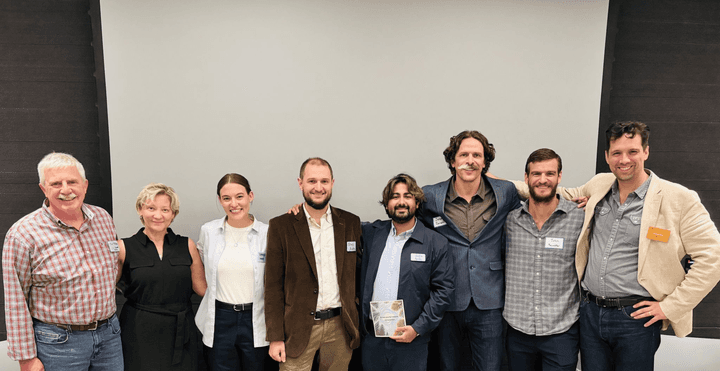
Public launch of Apollo and onboarding of the pilot cohort in Maine.
37 landowners enrolled across ~20,000 acres
Additional ~50,000 acres secured under signed MOUs
Registry, insurance, and first buyer partnerships finalised
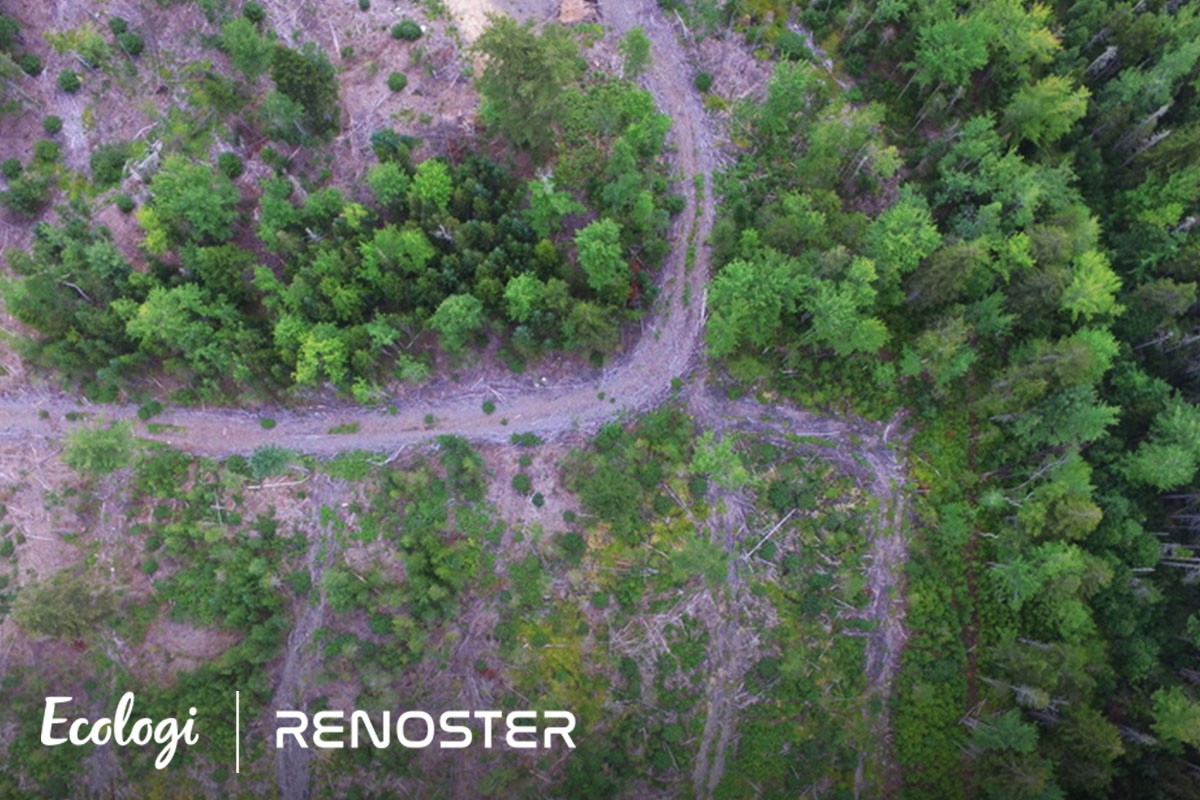
Research, model development, and pilot design for a small-landowner IFM program in New England, including remote sensing validation, forest economics modelling, and methodology development.


Apollo creates a new, stable revenue stream for small landowners in rural communities, with 65% of proceeds flowing directly to participants. This supports local forestry economies and enables landowners to invest in long-term forest stewardship rather than short-term extraction.

Apollo generates high-integrity forest carbon removals by extending harvest cycles and increasing long-term carbon storage in working forests. Annual monitoring, conservative crediting, and standardised permanence accounting ensure that climate benefits are measurable and durable.
By incentivising longer rotations and improved forest management, Apollo supports healthier forest structure, improved habitat quality, and greater ecosystem resilience across privately owned forests in the Northeastern United States.
About
Live
2026
Improved Forest Management (IFM)
8
13
15
Impact partner

Renoster is moving from analysis to action. Evolving from a carbon project ratings agency to a carbon removal supplier with the launch of Apollo, their new forest carbon program, which is designed to deliver high-quality nature-based carbon credits.