Carbon removal
Aperam BioEnergia in Brazil
Biochar
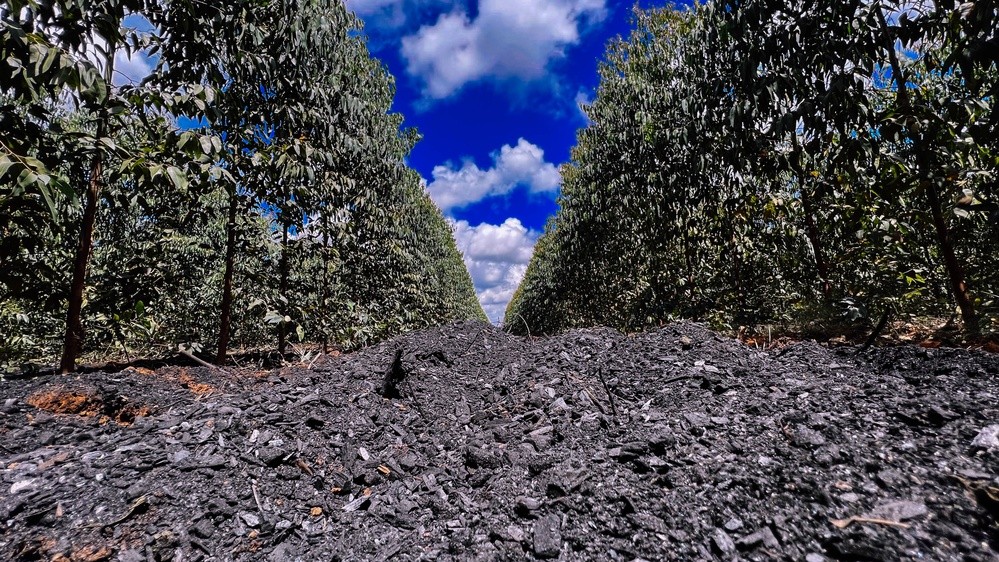
Biochar is a stable, carbon-rich material produced through the pyrolysis of biomass (typically plant-based residues) under high temperatures (350°C to 1000°C) in a low-oxygen environment. This thermal decomposition process prevents the biomass from fully combusting and instead stabilises the carbon it contains, locking it into a solid form for the long term.
If the same biomass were left to decompose or be openly burned, it would release carbon dioxide (CO₂) back into the atmosphere. However, pyrolysis transforms it into biochar, which can persist in soils for hundreds to thousands of years, making it a durable carbon sink. In addition to carbon storage, biochar is considered a soil-improving technique that retains water and enhances soil structure and nutrient uptake.
The project
The Aperam BioEnergia biochar project is situated in Capelinha, Brazil. The main objective of the project is the production of charcoal and sustainable forest management. The initiative transforms forest residues into a valuable climate solution. Previously, waste from Aperam's forest was left to decay, now, with Aperam's first biochar project, that same material is brought to one of Aperam's 6 production units and it's transformed into Biochar through pyrolysis and applied to the soil, where it not only serves as a durable carbon removal from the atmosphere but also acts as an important natural component for soil improvement.
Why Brazil?
In Brazil, a major driver of deforestation and biodiversity loss is the expansion and occupation of low-productivity cattle ranching. Over 70% of Brazilian pasturelands are considered degraded, supporting fewer than one animal per hectare.
Biochar has proven effective in restoring these degraded soils. When applied to pastures, it has increased grass (Brachiaria) productivity by 27%, improved macronutrient availability, reduced soil acidity, and sequestered carbon, supporting both agricultural productivity and climate regulation.


This project supports SDG 13 by reducing emissions through carbon sequestration and sustainable biochar production.
About
Live
2025
Biochar
13
Verifications

Verification: Puro Earth
Puro.earth certifies carbon removal suppliers based on its Puro Standard.
Find out more here.