
Solar project in Rajasthan, India




Context
The energy demand in India is growing rapidly, and this has major implications for the global energy market. The Government of India has made remarkable progress in providing access to electricity to rural populations, whilst also integrating a high share of renewable energy sources into the grid.
Solar energy is particularly important, with India being the third-largest solar market in the world, and in 2018, India’s investment in solar energy was greater than in all fossil fuel sources of electricity generation combined. However 74% of electricity still comes from coal power plants, which not only emit CO2 but also contaminate local water sources and cause long term health issues for employees.
Project
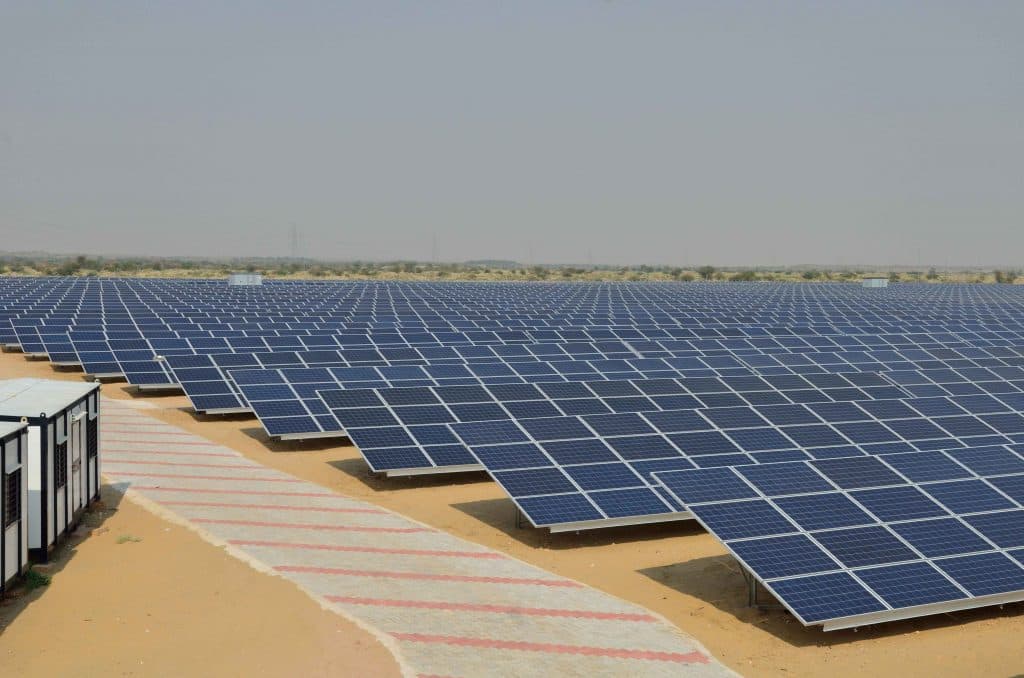
This Gold Standard certified project involves the installation of a 20 megawatt solar power project in Rajasthan, northern India. This will generate clean, renewable electricity that will then be exported to the Indian electricity grid.
This project will displace 35,951 megawatts per year of electricity from the grid that would otherwise be generated by fossil-fuel based power plants. Therefore it will avoid 35,149 tonnes of CO2e per annum.
The implementation of this solar energy project will also provide job opportunities for local people, during erection, commissioning and maintenance of the solar plant. The electricity supply in the nearby area will also be improved which directly and indirectly improves the economy and lifestyle of the area.
Verification
This project is verified by the Gold Standard. You can view it on the Gold Standard registry here.

Climate Solution #8
Utility-scale solar photovoltaics
The sun provides a virtually unlimited, clean, and free fuel at a price that never changes. Solar farms take advantage of that resource, with large-scale arrays of hundreds, thousands, or in some cases millions of photovoltaic (PV) panels. They operate at a utility scale like conventional power plants in the amount of electricity they produce, but dramatically differ in their emissions.
In many parts of the world, solar PV is now cost competitive with or less costly than conventional power generation. In tandem with other renewables and enabled by better grids and energy storage, solar farms are ushering in the clean energy revolution.
The significant increase of the solution use could avoid 44-119 gigatons of greenhouse gases emissions depending on the climate mitigation ambition and electrification of demand side sectors.