

Carbon removal
Restoring blue carbon ecosystems


Overview
Site
Benefits
Verification
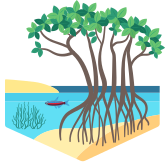
What is blue carbon?
Blue carbon is the carbon held in coastal habitats, including mangrove forests and seagrass meadows. These ecosystems absorb carbon as they grow and can store it in the sediments beneath them. Protecting and restoring them supports long-term carbon storage, while providing nurseries for marine life and helping protect shorelines from erosion.
Project summary
Context
The ocean is a large carbon sink, and huge volumes of carbon are stored at the interchange between land and sea – on the coast. Coastal wetland ecosystems like salt marshes, mangroves, and seagrasses absorb carbon dioxide from the air and store it as carbon in soil and underwater sediment. In the long term, these blue carbon ecosystems can store up to five times as much carbon as tropical forests.
The IPCC uses blue carbon as one example of a nature-based carbon dioxide removal method which, as well as absorbing carbon, can enhance biodiversity, ecosystem services, employment and local livelihoods. Restoring and protecting coastal ecosystems is therefore a climate solution which works to both mitigate climate change and contributes to climate adaptation and sustainable development.
What's the difference between carbon avoidance and carbon removal?
Carbon avoidance represents the prevention of carbon emissions that would have entered the atmosphere without the intervention of a carbon avoidance project. Examples include clean cookstoves, which result in less fuel being burned and therefore less carbon being emitted into the atmosphere, and the protection of rainforests under threat of deforestation which keeps carbon, that would have been emitted through deforestation, locked away in trees and soils.
Carbon removal is the process of taking carbon out of the atmosphere and locking it away so that it cannot contribute to further climate change. There are several methods for removing carbon from the atmosphere, each bringing a unique set of co-benefits. For example, creating biochar from waste vegetation creates a very stable form of carbon which can be incorporated into soil to improve soil fertility and bacterial biodiversity. Blue carbon projects bring benefits for biodiversity and local communities such as protection from storm surges, and ARR (Afforestation, Reforestation and Revegetation) projects provide habitats for native animals and provide local people with important ecosystem services.
One factor required for a carbon removal project to be of a high quality is the carbon must be locked away for a long period of time. This is known as permanence, and means project developers must ensure that carbon sequestered by the project is protected.
Projects
Through our supported blue carbon projects, you can fund the removal of carbon dioxide through the restoration of natural blue carbon sinks.
The majority of blue carbon projects available today are restoring mangrove ecosystems – but new projects are starting all the time. By funding blue carbon projects through Ecologi, you’ll be supporting a range of projects around the world which contribute to locking up carbon in these incredible coastal ecosystems.
Verification
The units of carbon removal from the blue carbon projects we support are third-party verified tonnes, measured according to a methodology from a leading carbon standard. This will usually be the Verified Carbon Standard, or the Gold Standard.
When our community purchases tonnes of verified carbon removal through blue carbon projects, Ecologi retires verified carbon credits. Retirement evidence can be found on our Public Impact Ledger.


Climate Solution #40
Coastal wetland restoration
Like forest and peatlands, coastal wetlands are subject to severe degradation. Restoring mangroves, salt marshes, and seagrasses reduces greenhouse gas emissions. It also enhances their ability to support biodiversity and provide ecosystem services. Protecting 6.06–7.19 million hectares of currently degraded coastal wetlands and allowing natural regrowth to occur would sequester 0.76–1.00 gigatonnes of carbon dioxide-equivalent greenhouse gases by 2050.
Locations
Global
Benefits
SDGs supported

Verification
These partners help deliver the project and verify its impact.
Verifiers

Verified Carbon Standard
The Verified Carbon Standard (VCS) Program is the world's most widely used greenhouse gas (GHG) crediting program.

Climate, Community and Biodiversity Standard
Projects developed under the CCB Program must follow a rigorous assessment process to be certified. The CCB Standards are managed by Verra but were developed through a multi-stakeholder process by the Climate, Community & Biodiversity Alliance, a partnership of CARE, Conservation International, The Nature Conservancy, the Rainforest Alliance and the Wildlife Conservation Society.