
Delivering clean drinking water to Haiti
Context
Haiti is the poorest country in the Western Hemisphere, with over 6 million Haitians living below the poverty line of US$2.41 per day. Haiti is also highly vulnerable to natural hazards, mainly hurricanes, floods and earthquakes, with more than 96% of the population exposed to these natural hazards.
In January 2010, a 7.0 magnitude earthquake rocked the country, resulting in an estimated 300,000 deaths and over $8 billion dollars in damage. Since then millions in Haiti still lack clean water and sanitation. Only 55.2% of the population have access to an improved water source, while close to 70% does not have direct access to safe drinking water.
Project
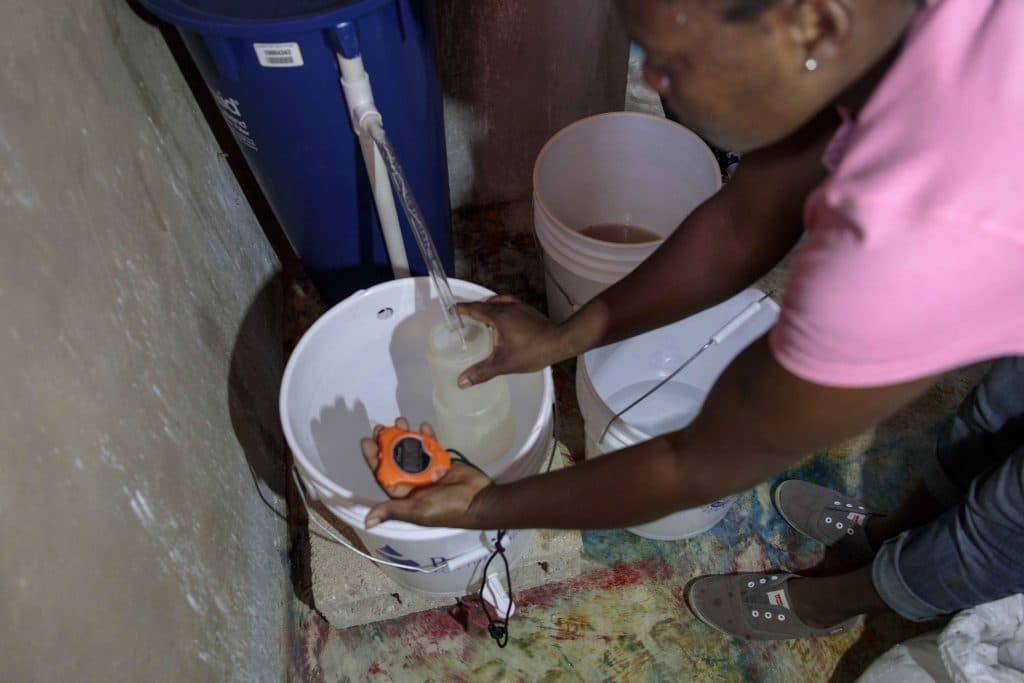
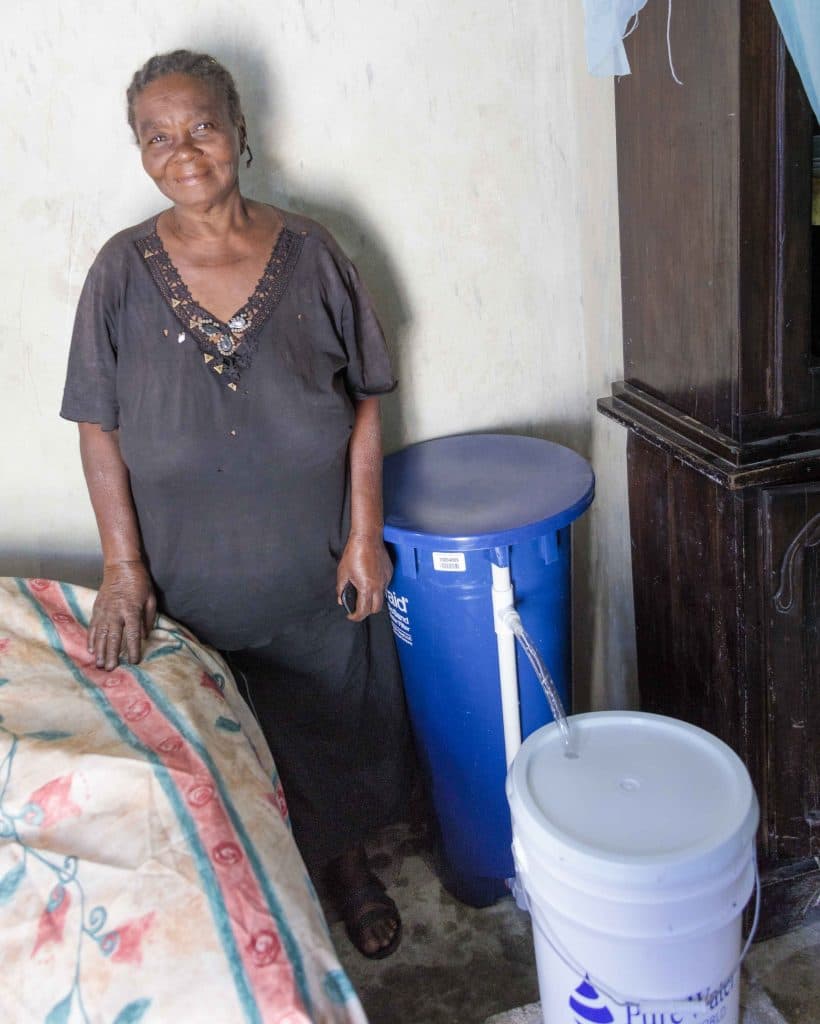
This project provides water filters that allow access to clean, safe drinking water by the citizens of Haiti. By supporting this project, you’ll be helping 2,580 families, delivering over 250 million litres of water to their homes.
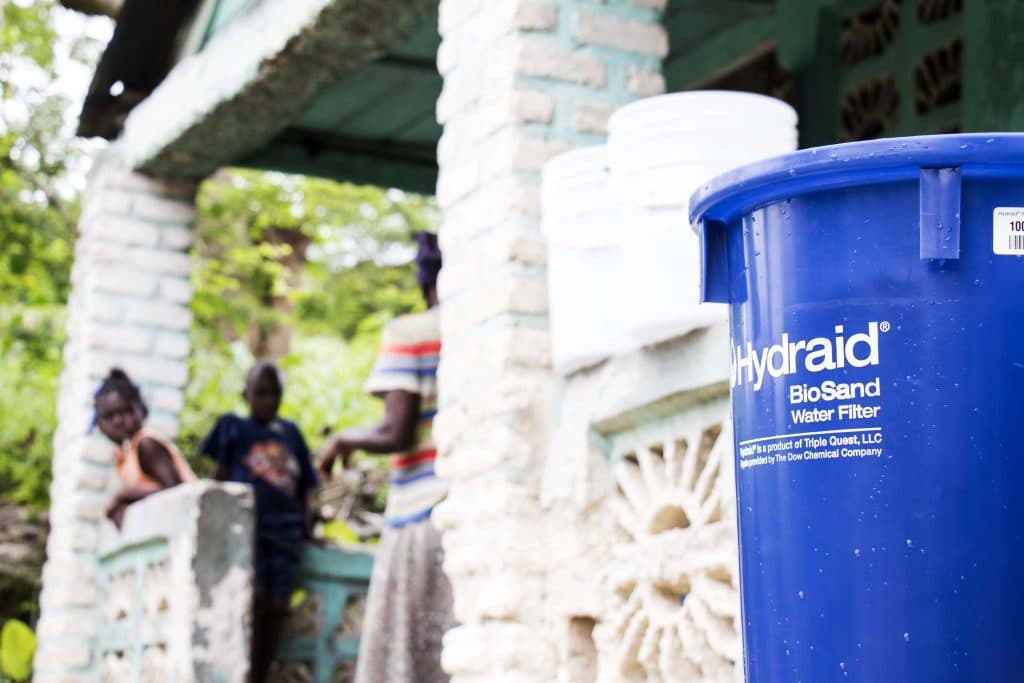
The Hydraid water filter provides a simple, safe and effective household water filter that will operate for 10 years or longer. The water filter consists of enclosed layers of sand, gravel and a biological surface layer that consumes pathogens to clean water. One filter can provide a family of 8-10 in developing countries with enough safe water to meet all their daily domestic water consumption needs.
This project also works to abate CO2 emissions that are released when wood is burned to purify water. Many local people typically use wood fuel on inefficient fires to purify their drinking, cleaning and washing water. This process results in the release of greenhouse gas emissions from the combustion of wood. By providing safe water, this project ensures that households consume less firewood during the process of water purification and therefore reduce greenhouse gas emissions from the combustion process.
Verification
This project is verified by the Gold Standard. You can view it on the Gold Standard registry here.
Climate Solution #71
Water distribution efficiency
Project Drawdown defines water distribution as: reducing water leakage or oversupply of regional water, which reduces pumping and pressurization electricity and associated greenhouse gas emissions. This solution replaces conventional water system management with no specific leak detection program.
Water utilities are among the biggest consumers of electricity globally, corresponding to about 1% of total electricity use in the world. Up to 80 percent of that energy is used for pumping alone. However, a significant amount of water is lost in the distribution network (e.g. by pipe leakage, meter error, and unauthorized consumption): the global average loss is estimated at 35 percent.
This has a direct impact on the production cost of water, as well as on the available quantity of potable water. Saving just half of these losses would supply water to an additional 100 million people.