

Carbon avoidance
Wind power in India
Overview
Site
Benefits
Verification
Context
As India’s economic growth accelerates, its energy consumption and greenhouse gas emissions accelerate along with it. India’s electricity consumption has increased 459% since 1990, and its emissions have increased by 335%. 74% of this electricity still comes from coal power plants, which not only emit CO2 but also contaminate local water sources, and cause long term health issues for employees, and local people living nearby.
The Government of India has made remarkable progress in providing access to electricity to rural populations, whilst also integrating a high share of renewable energy sources into the grid. However there is a need to increase this further and quickly. Wind power is an efficient way to displace fossil fuel resources whilst simultaneously encouraging economic and environmental development.
Project
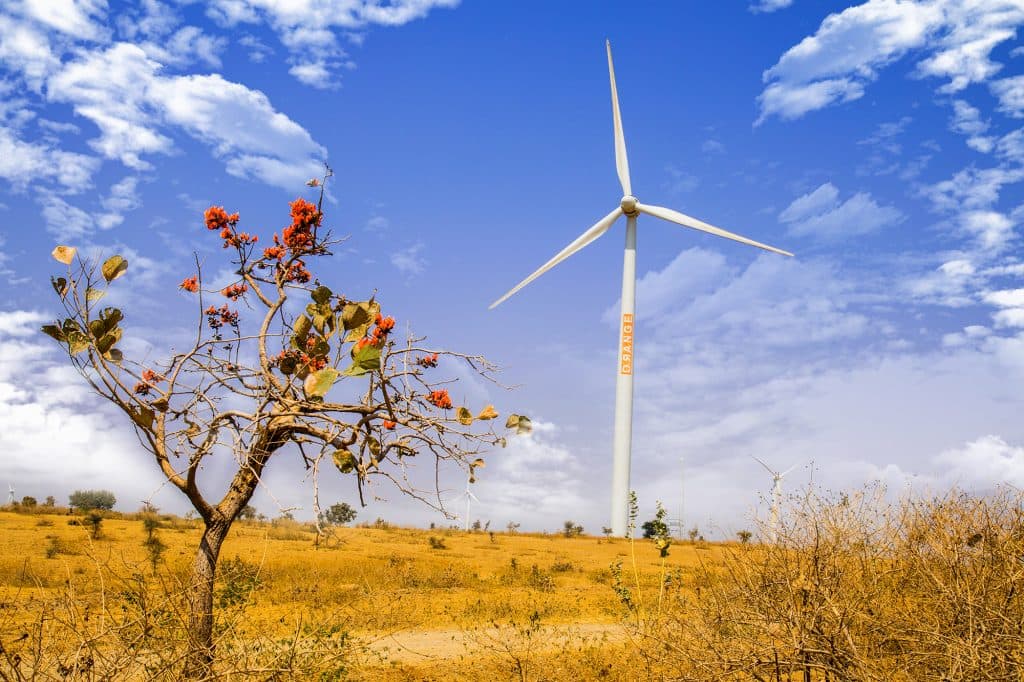
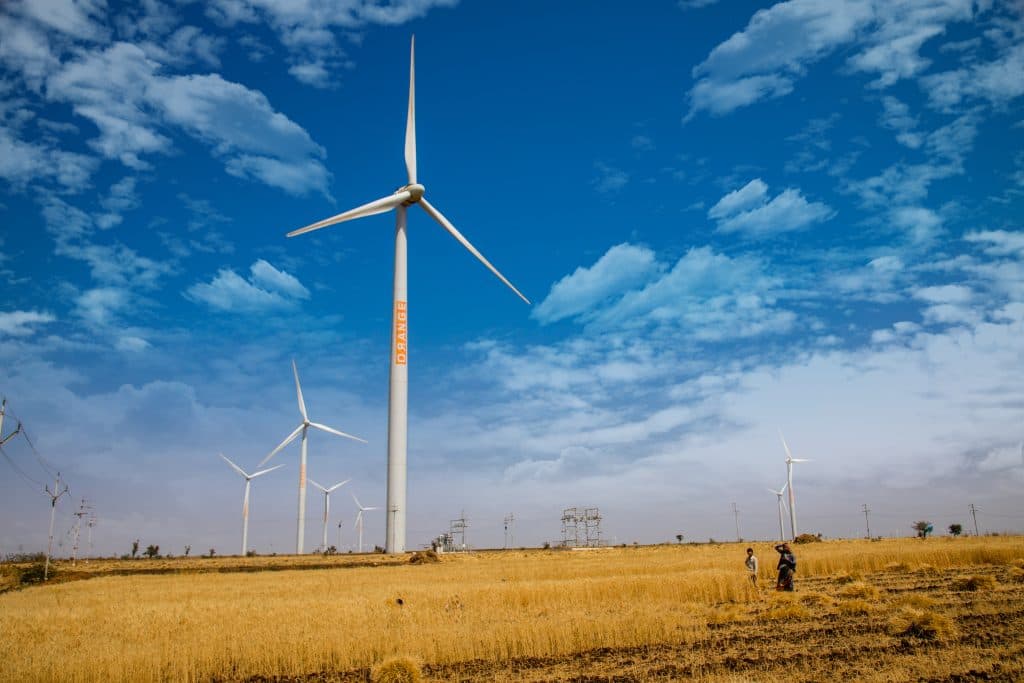
This Wind Power Project in Madhya Pradesh involves the installation of a wind power plant in the villages of Mandsaur & Ratlam districts of Madhya Pradesh state, India.
The purpose of the project activity is to generate electrical power using wind energy through the installation of 67 wind turbines of 1,500 kW capacity each. The total installed capacity of the project is 100.5 MW. The project will therefore generate 180 GWh of clean electricity annually, which is equivalent to powering 42,000 households every year.
This clean, renewable electricity will be exported to the grid, displacing electricity generated by fossil fuels such as the coal mines, and therefore causing a reduction in CO2 emissions. The project is projected to avoid the release of 172,729 tonnes of CO2e annually.
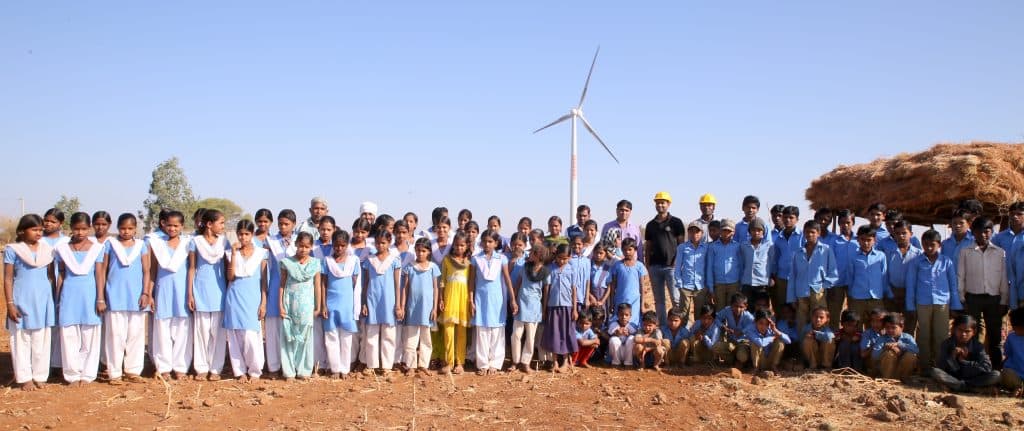
The project also runs a large outreach and community programme which includes: the provision of necessary school supplies to over 5,000 local children; the development of sanitation facilities such as toilets in public places; and running awareness programs on nutrition, ante-natal/post-natal care, sexually transmitted infections (STIs) and hygiene.
The construction of the wind power plan has directly led to the employment of 730 people, and will lead to the permanent employment of 76 people.
Verification
This project is verified by the Gold Standard. You can view it on the Gold Standard registry here.

Climate solution #2
Onshore wind turbines
Onshore wind turbines generate electricity at a utility scale, comparable to power plants. They replace fossil fuels with emissions-free electricity.
Today, 314,000 wind turbines supply nearly 4 percent of global electricity, and it will soon be much more. In 2015, a record 63 gigawatts of wind power were installed around the world.
Onshore wind farms have small footprints, typically using no more than 1 percent of the land they sit on, so grazing, farming, recreation, or conservation can happen simultaneously with power generation. What’s more, it takes one year or less to build a wind farm—quickly producing energy and a return on investment.
Photos
Locations
Madhya Pradesh, India
Benefits
Sustainable development goals
These Sustainable Development Goals show the wider outcomes this project supports beyond its headline impact.


Verification
These partners help deliver the project and verify its impact.
Verifier

Gold standard
This project is verified by the Gold Standard.