

Carbon avoidance
Solar PV electricity generation in Indonesia


Overview
Site
Benefits
Verification
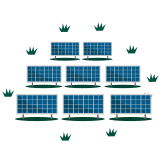
What is renewable energy?
Sunlight, wind and flowing water generate electricity without burning fossil fuels. Renewable energy projects bring cleaner power to reduce emissions from electricity generation.
Project summary
Context
Indonesia is a country in Southeast Asia and Oceania, between the Indian and Pacific oceans. It consists of more than seventeen thousand islands, including Sumatra, Java, Sulawesi, and parts of Borneo and New Guinea.
Indonesia currently has 33 gigawatts (GW) of operating coal-fired power generation, and is still planning to add another 31 GW. This is the fourth largest coal pipeline in the world (after China, India and Turkey) and 6% of the global share. A significant shift from coal expansion to renewable energy generation is needed – and Indonesia has great potential for wind, solar and geothermal energy, all clean alternatives to fossil fuels.
Project
This project is situated in Pringgabaya, on the island of Lombok, Indonesia. The project provides renewable solar energy to a grid which is currently dominated by fossil fuels, helping to displace those polluting energy sources with cleaner power.
The project has a total installed capacity of 42 MW, across four solar installations: three of 7 MW and one large one of 21 MW. By providing this electricity to the grid and displacing energy produced through fossil fuels, this solar installation generates emissions reductions estimated at just 34,000 tonnes CO2e per year.
The project includes 18 community development activities, as well as providing 69 local jobs.
Verification
This project is verified by the Gold Standard. You can view it on the Gold Standard registry here.

Climate Solution #8
Utility-scale solar photovoltaics
The sun provides a virtually unlimited, clean, and free fuel at a price that never changes. Solar farms take advantage of that resource, with large-scale arrays of hundreds, thousands, or in some cases millions of photovoltaic (PV) panels. They operate at a utility scale like conventional power plants in the amount of electricity they produce, but dramatically differ in their emissions.
In many parts of the world, solar PV is now cost competitive with or less costly than conventional power generation. In tandem with other renewables and enabled by better grids and energy storage, solar farms are ushering in the clean energy revolution.
The significant increase of the solution use could avoid 44-119 gigatons of greenhouse gases emissions depending on the climate mitigation ambition and electrification of demand side sectors.
Photos
Locations
Pringgabaya, Indonesia
Benefits
SDGs supported


Verification
These partners help deliver the project and verify its impact.
Verifiers

Gold standard
This project is verified by the Gold Standard.