

Carbon avoidance
Istanbul landfill gas extraction, Turkey


Overview
Site
Benefits
Verification
What is greenhouse gas capture?
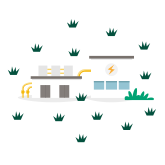
Landfill waste releases methane, a greenhouse gas at least 28 times stronger than CO2. Landfill gas projects capture it at the source, avoiding emissions by burning it or converting it into energy.
Project summary
Context
Turkey still generates over 80% of its energy from fossil fuels. The burning of fossil fuels (coal, oil and gas), is responsible for around three-quarters of global greenhouse emissions.
However a significant amount of emissions are also generated from the production of waste. Turkey produces almost 30 million tonnes of municipal solid waste each year. 90% of the waste produced ends up in landfills, where it decomposes and releases methane gas. Methane is around 34 times more potent a greenhouse gas than carbon dioxide and, when released into the atmosphere, has a significant impact on warming.
Project
The waste from Istanbul’s 15.4 million residents is taken to two landfill sites: Kömürcüoda Landfill Area which contains 30 million tonnes of municipal solid waste (MSW); and The Odayeri Landfill Area which contains over 55 million tonnes of MSW. This project involves the development and construction of waste-to-energy facilities at both the Odayeri and Komurcuoda landfill sites.
These facilities will capture the gas released from the landfill waste, and use it to power turbines and generate electricity. This will both prevent environmentally damaging methane from being released into the atmosphere, and export clean electricity to the grid, replacing energy that would otherwise be generated by fossil fuels.
The funding of this project therefore directly prevents the equivalent of 1,500,000 tonnes of CO2 from entering the atmosphere every year. Project activity will also lead to the creation of local employment, both during construction and operating phases.
Verification
This project is verified by the Gold Standard. You can view it on the Gold Standard registry here.

Climate solution #58
Landfill methane capture
Landfills generate methane as organic waste decomposes. Rather than getting released as emissions, that methane can be captured and used to produce electricity.
Over the course of a century, methane has 34 times the greenhouse effect of carbon dioxide. Landfills are a top source of methane emissions, releasing 12 percent of the world’s total. Landfill methane can be tapped, captured, and used as a fairly clean energy source for generating electricity or heat, rather than leaking into the air or being dispersed as waste.
The climate benefit is twofold: prevent landfill emissions and displace coal, oil, or natural gas that might otherwise be used.
Photos
Locations
Istanbul, Turkey
Benefits
SDGs supported


Verification
These partners help deliver the project and verify its impact.
Verifiers

Gold standard
This project is verified by the Gold Standard.