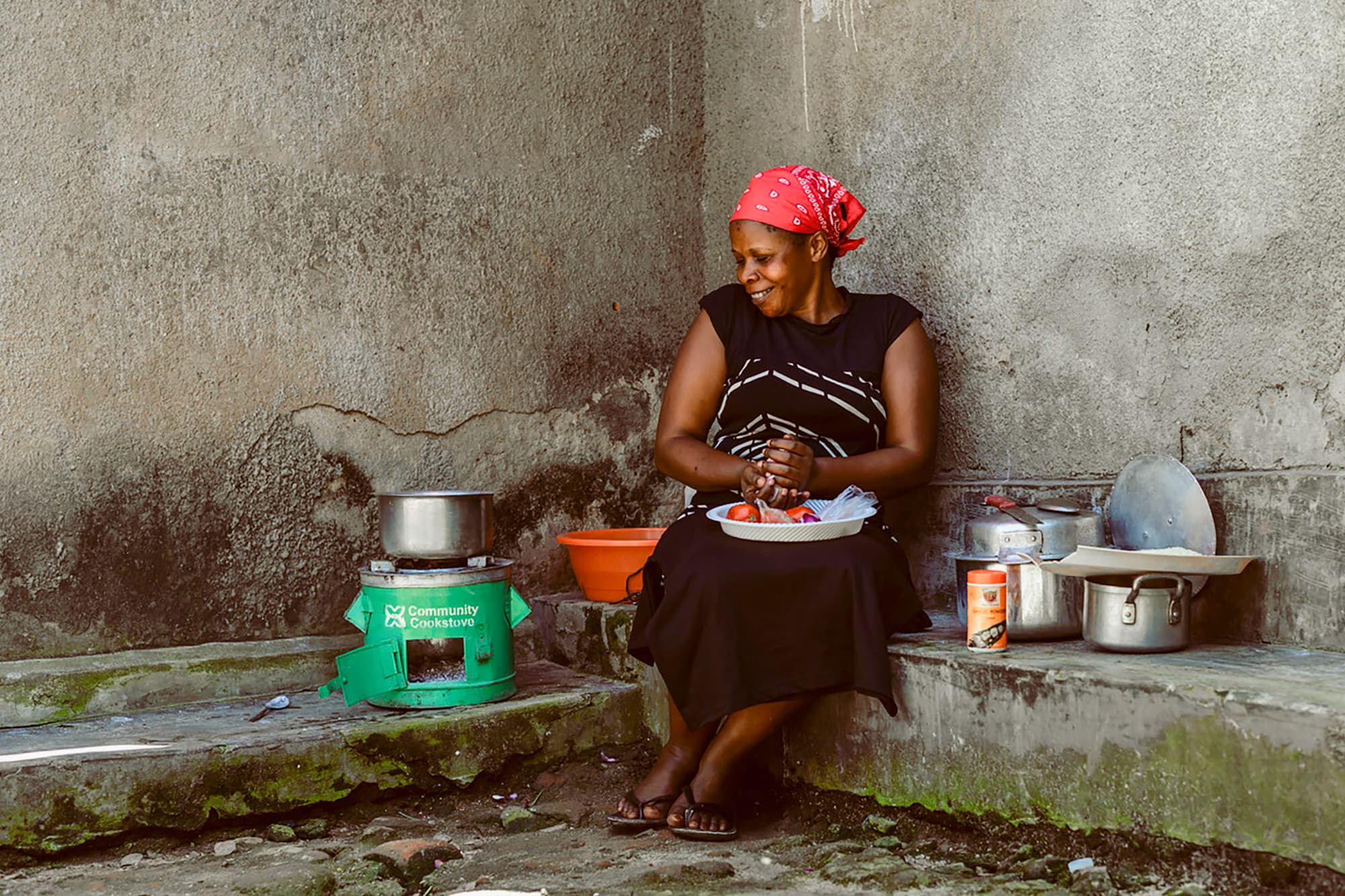
According to the World Bank, around 42% of Ugandans live on less than $2.15 per day. Rural families, especially women, face long hours collecting firewood and cooking over smoky open fires. The lack of access to clean cooking remains very acute in sub-Saharan Africa (SSA), where around 85 % of the population lacks clean cooking access.
These aren’t just environmental challenges; they’re deep, structural issues of time, health, equity, and access. SSA has the highest exposure to air pollution globally due to widespread use of polluting biomass fuels and technologies, leading to premature deaths.
Other pollution-related diseases include tuberculosis, premature mortality, and low birth weights, which slowly damage health over a long period of time. Most women and young children are the worst affected, exposing these vulnerable groups to a high risk of pollution-related diseases, which account for the second-highest incidence of reported health issues after malaria in Uganda. That’s why clean cookstoves are not solely a climate solution – they are a societal one.
The purpose of the project is to support clean cooking interventions that reduce greenhouse gas (GHG) emissions from the burning of non-renewable woody biomass and/or charcoal for cooking in Uganda.